Most supplements work by adding something to your body - more antioxidants, more cofactors, more building blocks. Sulforaphane works differently. It does not act as an antioxidant itself. Instead it activates the genetic programs that make your body produce its own antioxidants and detox enzymes at scale.
This is a fundamentally different - and in many ways more powerful - approach. Instead of suppying the army, sulforaphane trains and deploys the factory that builds it.
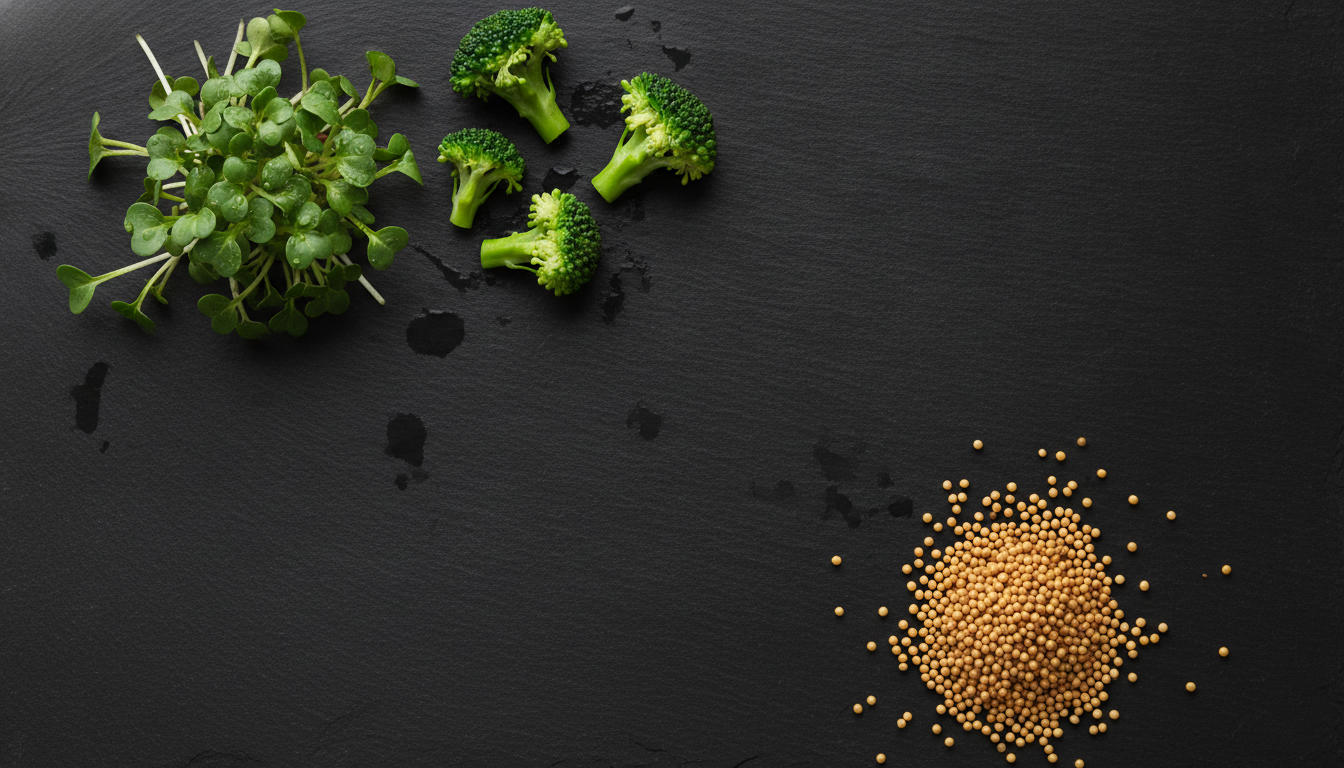
The compound comes from broccoli sprouts - one of the most biochemically dense foods on earth per gram. But getting meaningful amounts requires understanding how sulforaphane is actually formed, because that chemistry is more important than any number on a label.
The NRF2 Pathway - Your Built-In Defense System
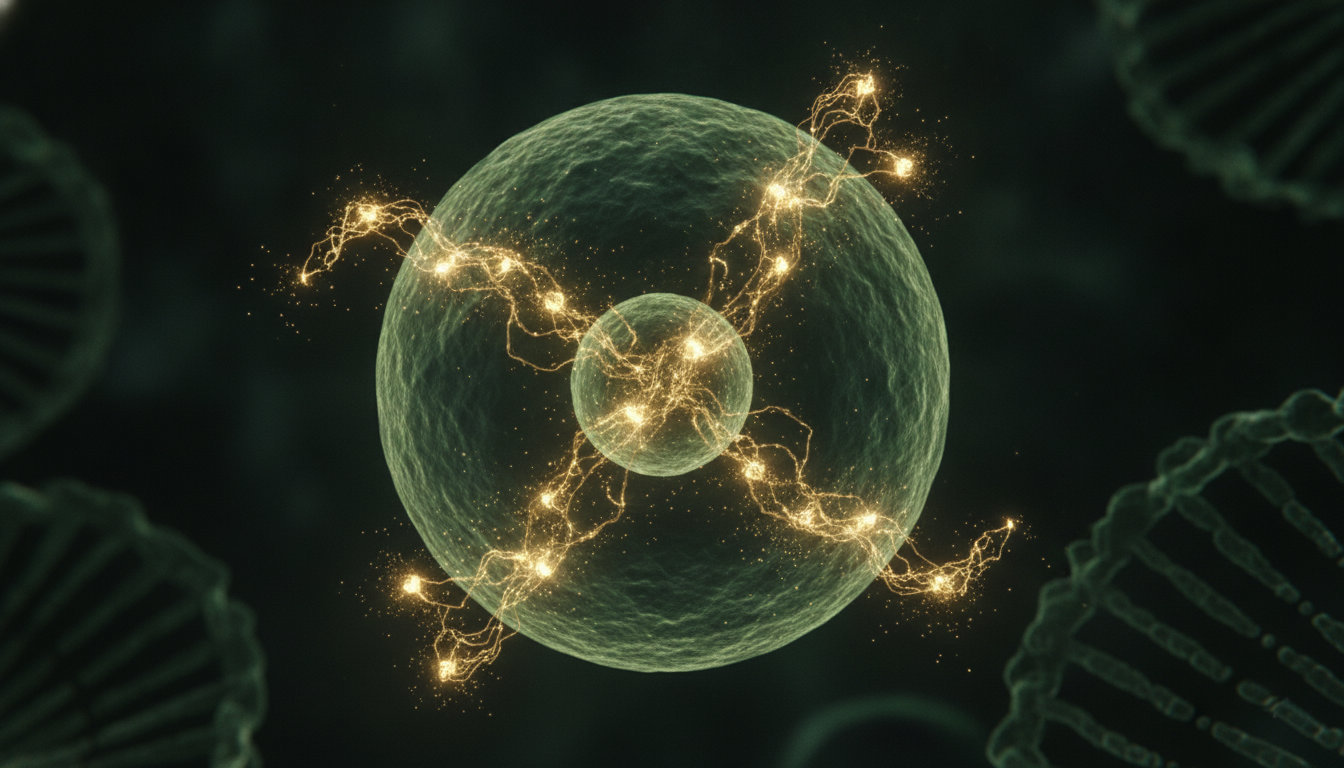
NRF2 (Nuclear Factor Erythroid 2-Related Factor 2) is a transcription factor - a protein that controls the expression of multiple genes simultaneously. Under normal conditions NRF2 is held inactive by a protein called KEAP1. When sulforaphane enters the cell, it modifies KEAP1 in a way that releases NRF2, which then travels to the cell nucleus and activates the Antioxidant Response Element (ARE) - a genetic switch that turns on a cascade of protective genes.
The genes activated by NRF2 include enzymes that produce glutathione, enzymes that neutralize reactive oxygen species, phase II liver detoxification enzymes that conjugate and excrete toxins, and anti-inflammatory regulators. A single dose of sulforaphane can activate over 200 protective genes simultaneously - no other dietary compound comes close to this breadth of effect.
NRF2 activity also declines with age, which is one reason older cells become increasingly vulnerable to oxidative damage. Sulforaphane is one of the most potent known NRF2 activators from a dietary source.
The Stability Problem - Why Most Supplements Fail
This is the most critical practical point about sulforaphane, and it is almost universally misunderstood in the supplement industry.
Sulforaphane does not exist in broccoli. What broccoli contains is glucoraphanin (a stable precursor) and myrosinase (an enzyme). When broccoli is chewed or chopped, the cell walls break, allowing myrosinase to contact glucoraphanin and convert it to sulforaphane. This conversion only happens in raw or lightly processed broccoli - heat above approximately 60°C destroys myrosinase, which is why cooked broccoli delivers almost no sulforaphane despite containing glucoraphanin.
This means many broccoli supplements on the market that contain glucoraphanin without myrosinase may deliver little to no active sulforaphane. The label may show impressive glucoraphanin content, but without the enzyme to activate it, you are not absorbing meaningful sulforaphane.
Look for three things: (1) The label specifies active sulforaphane content, not just glucoraphanin - these are different compounds. (2) The product contains myrosinase - often added as mustard seed powder, which is rich in this enzyme. (3) The manufacturer specifies how much sulforaphane is actually delivered after conversion - the Johns Hopkins lung cancer trial used Avmacol, which delivered 20-35% of its glucoraphanin content as sulforaphane in vivo. If a product does not specify delivery efficiency, assume it is low. Alternatively, fresh broccoli sprouts grown at home are the most reliable and cheapest source.
What the Clinical Evidence Shows
A 2025 comprehensive review from Johns Hopkins (one of the leading sulforaphane research centers globally) synthesized the clinical trial data and concluded: sulforaphane demonstrates potential for regulating redox and inflammatory pathways, improving metabolic and cardiovascular outcomes, and exerting anti-cancer and neuroprotective effects. For healthy subjects specifically, sulforaphane enhanced detoxification markers and reduced inflammation.
The most rigorous cancer prevention data comes from a Phase II randomized trial in former smokers at high lung cancer risk. Twelve months of sulforaphane supplementation significantly reduced the Ki-67 proliferation index - a validated surrogate marker for cancer risk - compared to placebo. This is particularly notable because it used human subjects, ran for a year and used an objective tissue biomarker rather than self-reported outcomes.
Brain evidence is promising but earlier stage. Sulforaphane has shown effects on neuroinflammation markers, and trials in autism spectrum disorder have shown behavioral improvements in some patients. A 2025 comprehensive analysis from Johns Hopkins confirmed neuroprotective effects across multiple mechanisms, though large-scale neurological trials are still underway.
NRF2 activation is protective against cancer initiation in normal cells - it helps healthy cells resist DNA damage and carcinogen exposure. However, research has shown that in cells where cancer has already developed, chronic NRF2 hyperactivation can actually accelerate tumor growth by protecting cancer cells from oxidative stress and chemotherapy. This does not mean sulforaphane causes cancer - it means the context matters. For cancer prevention in healthy individuals, the evidence is strongly supportive. For anyone with existing cancer under active treatment, discuss sulforaphane use with your oncologist before supplementing.
Food vs Supplement - The Case for Growing Your Own
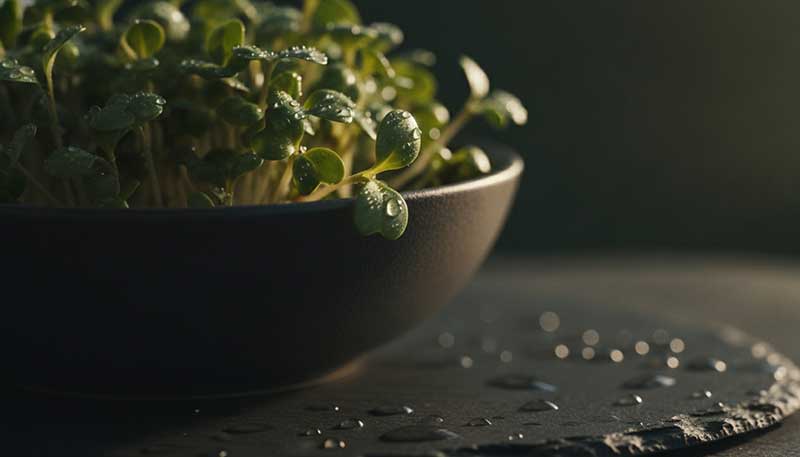
Fresh broccoli sprouts are genuinely the gold standard for sulforaphane delivery. Three-day-old sprouts contain 20-100 times more glucoraphanin than mature broccoli, and because they are raw and intact, the myrosinase is fully active. Chewing them well (or blending them) ensures good cell disruption and maximum conversion.
Growing broccoli sprouts at home takes 3-5 days, costs almost nothing, and delivers consistent daily doses. A large mason jar, some sprouting seeds and water is all you need. This is the most reliable, cheapest and freshest sulforaphane delivery method available.
For people who cannot or will not grow sprouts, a quality supplement with active sulforaphane content and myrosinase is a valid alternative - but the label scrutiny described above is essential.
These are complementary, not redundant. NAC provides cysteine for glutathione synthesis - it adds to the raw material supply. Glutathione supplements attempt to deliver glutathione directly (with limited bioavailability). Sulforaphane activates NRF2 which turns on the enzymes that produce glutathione, heme oxygenase-1 and dozens of other protective proteins. It is the upstream switch that powers the whole antioxidant factory. Together, sulforaphane (NRF2 activator) + NAC (glutathione precursor) + ALA (glutathione recycler) is one of the most complete cellular antioxidant protocols available.
Dosing
| Source | Daily Dose | Notes |
|---|---|---|
| Fresh broccoli sprouts (3-day-old) | 30 - 100g (1-3 large handfuls) | Chew well or blend; raw only - heat destroys myrosinase |
| Quality supplement (active SFN stated) | 20 - 40mg sulforaphane | Must specify active sulforaphane content AND contain myrosinase |
| Glucoraphanin + myrosinase blend | Per label (check SFN conversion rate) | Look for 20-35% conversion efficiency; Avmacol or similar validated brands |
| Therapeutic / clinical protocols | 40 - 80mg sulforaphane | Consult a practitioner; used in cancer prevention and ASD trials |
| Not recommended | Cooked broccoli alone | Negligible sulforaphane content after heat; sprouts or supplements required |
Sulforaphane can be taken with or without food. Some users prefer cycling protocols (4-5 days on, 2-3 off) to mimic the hormetic response seen with dietary variation. Daily use is also well-tolerated. If taking alongside fasting or sauna protocols - both of which independently activate heat shock proteins and cellular defense - sulforaphane may amplify the hormetic response. Mild digestive discomfort when first introducing is common and typically resolves within 1-2 weeks as the gut microbiome adapts.
What It Stacks Well With
Quercetin
Both activate NRF2 through overlapping but distinct mechanisms. Quercetin also inhibits CD38 (protecting NAD+) and has direct anti-inflammatory effects. Together they provide broader NRF2 induction and complementary pathway coverage.
Curcumin
Curcumin independently activates NRF2 and inhibits NF-kB (inflammation). Combined with sulforaphane, the two provide simultaneous NRF2 activation and NF-kB suppression - a powerful anti-inflammatory and cytoprotective combination.
NAC
NAC provides cysteine for glutathione synthesis; sulforaphane activates the enzymes that make glutathione. Together they support both the raw material supply and the production machinery of the glutathione system.
Selenium
Selenium is a cofactor in glutathione peroxidase - the enzyme glutathione works through. Sulforaphane activates glutathione production; selenium ensures the downstream enzyme system runs efficiently. Genuine metabolic synergy.
Omega-3
Anti-inflammatory synergy. Omega-3 reduces pro-inflammatory signaling via COX/LOX pathways; sulforaphane reduces upstream NF-kB activity. Together they address inflammation from two different directions.
Fasting / Sauna
Both fasting and heat stress independently activate cellular defense pathways. Sulforaphane taken in a fasted state or around sauna sessions may amplify the hormetic response, stacking multiple NRF2-activating signals.