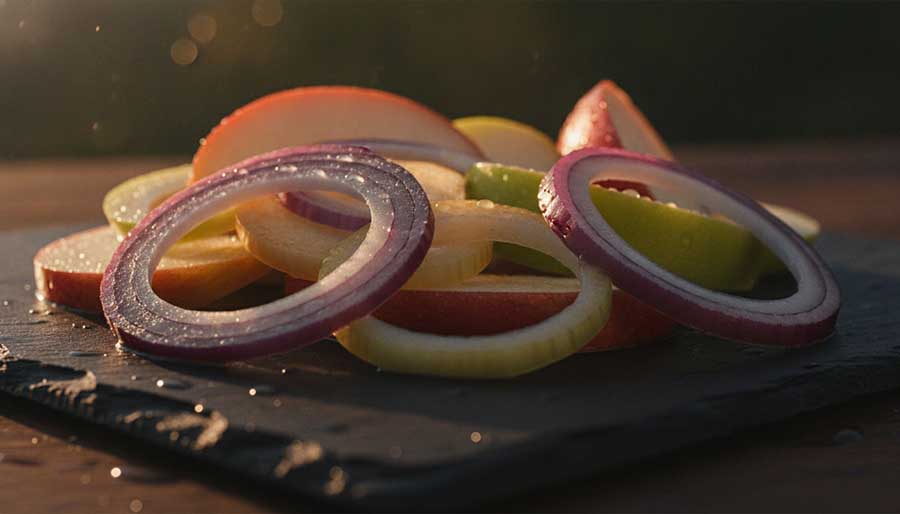
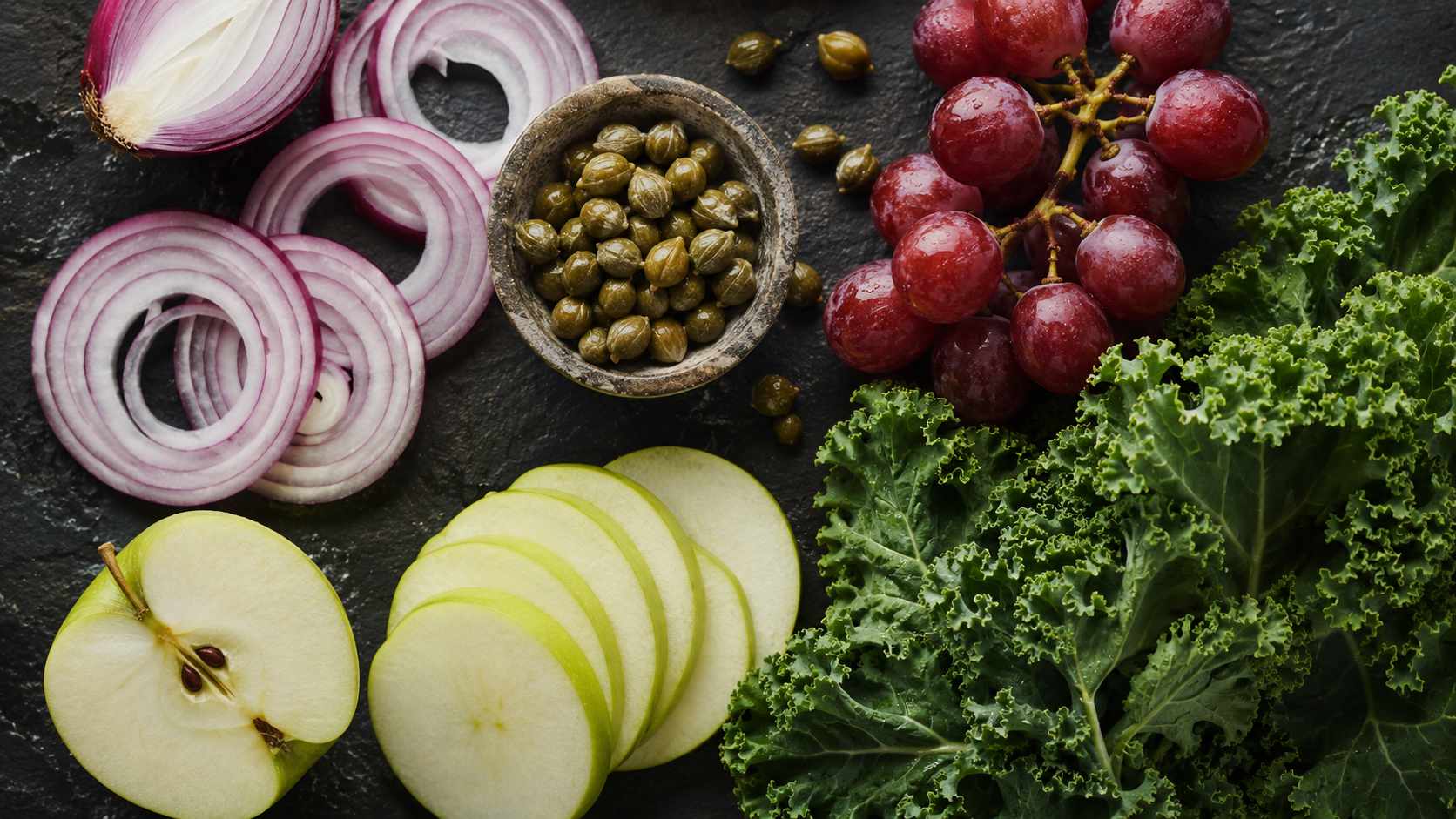
If supplements were a deck of cards, quercetin would be your wild card. It is not a one-hit wonder. It is a multitasker - antioxidant, anti-inflammatory, immune modulator, mast cell stabilizer, zinc transporter, and longevity sidekick all wrapped in one yellow-toned molecule found in apples, onions, capers and red wine.
It is also one of the most studied flavonoids in the scientific literature, with a body of evidence spanning cardiovascular health, immune function, cellular senescence, antiviral activity and metabolic support. While it may not be the flashiest compound in an anti-aging stack, it is one of the most versatile - and when paired strategically, it can unlock benefits far beyond what it delivers on its own.
The challenge with quercetin is not whether it works - it is getting enough of it into your bloodstream in the first place.
What Quercetin Actually Does
Quercetin is a flavonol - a subclass of flavonoid - found in significant concentrations in red and yellow onions, apples, capers, berries, kale, broccoli and green tea. It sits at the intersection of several major biological pathways, which is why researchers keep returning to it across so many different disease contexts.
Its antioxidant action is well established, but what distinguishes quercetin from simpler antioxidants is its ability to modulate inflammation at the cellular signaling level. It inhibits NF-kB, one of the master regulators of inflammatory gene expression, and suppresses several pro-inflammatory cytokines including TNF-alpha, IL-6 and IL-1beta. These are often chronically elevated as we age - a state researchers call inflammaging - and quercetin directly addresses this.
It also stabilizes mast cells, which are immune cells responsible for histamine release. This makes quercetin particularly useful for people with allergies, seasonal sensitivities, food intolerances or general histamine overload - effects that can be felt within days rather than months.
A 2025 clinical trial at the University of Montreal found that quercetin dramatically reduced the risk of post-operative atrial fibrillation in heart disease patients. Only 4% of those taking quercetin developed the complication versus 18% in the placebo group. The researchers also observed that quercetin prevented blood vessel dysfunction and reduced pro-inflammatory and senescent cell gene expression - making it one of the strongest human clinical results for quercetin to date.
The Zinc Ionophore Effect
During the COVID-19 pandemic, quercetin attracted significant attention for a specific mechanism: its ability to act as a zinc ionophore. This means it can transport zinc ions across cell membranes into the cell interior, where zinc exerts its most powerful effects.
Inside cells, zinc interferes with RNA-dependent RNA polymerase - an enzyme many RNA viruses depend on for replication. By shuttling zinc into cells, quercetin amplifies zinc's antiviral potential significantly. In vitro studies have confirmed that quercetin increases intracellular zinc concentrations, and that this correlates with reduced viral replication across multiple virus types.
An important nuance: the clinical evidence for this combination is strongest in people who are zinc deficient or marginally zinc sufficient - a group that includes a large proportion of older adults and those with chronic inflammatory conditions. If your zinc status is already optimal, the additional benefit is more modest.
Quercetin as a Senolytic Agent
One of the most exciting areas of quercetin research is its emerging role as a senolytic - a compound that selectively clears senescent cells. Senescent cells, sometimes called zombie cells, have lost the ability to divide but continue to secrete inflammatory compounds that accelerate aging throughout surrounding tissue.
Quercetin is not the most potent senolytic available - fisetin holds that distinction among natural compounds. But quercetin significantly enhances the senolytic activity of other compounds, particularly when combined with dasatinib (a pharmaceutical drug) or fisetin. The combination of dasatinib and quercetin (D+Q) is currently being tested in multiple clinical trials, including a 2025 pilot study investigating its potential to reduce age-related cognitive decline in psychiatric conditions.
For supplement users, the practical implication is this: quercetin used in a pulsed senolytic protocol alongside fisetin - typically 2 to 3 days per month at higher doses - is more effective than daily low-dose use for cellular cleanup purposes.
Cardiovascular and Metabolic Benefits
Meta-analyses of randomized controlled trials show that quercetin supplementation produces meaningful reductions in both systolic and diastolic blood pressure. The effect is dose-dependent: doses below 500mg per day show inconsistent results, while doses at or above 500mg daily show statistically significant reductions in clinical populations.
The proposed mechanism involves increased bioavailability of nitric oxide - the molecule responsible for blood vessel relaxation - as well as inhibition of ACE activity, the same pathway targeted by a major class of blood pressure medications.
Additional metabolic benefits supported by the literature include improved insulin sensitivity, reduced blood glucose in diabetic populations, better lipid profiles and reduced inflammatory markers associated with metabolic syndrome.
The Bioavailability Problem - and the Fixes
This is the critical issue with quercetin: standard quercetin powder in generic capsules has notoriously poor oral bioavailability. It is rapidly metabolized in the gut and liver, and only a small fraction reaches systemic circulation in meaningful concentrations.
Formulation matters enormously here. Research into different forms reveals a clear hierarchy:
Quercetin Dihydrate
The dihydrate crystalline form shows the highest bioavailability in comparative studies. Often used in pharmaceutical-grade applications.
Liposomal Quercetin
Fat-encapsulated in phospholipid vesicles. Bypasses gut metabolism and delivers quercetin directly into circulation. Significantly higher plasma levels than standard forms.
Quercetin Phytosome
Bound to lecithin or phospholipids (e.g. Quercefit). Well-studied enhanced form with improved absorption vs. standard quercetin. Widely available.
Standard quercetin aglycone powder can be modestly improved by combining with piperine (black pepper extract) or vitamin C. Taking any form with a fat-containing meal also meaningfully improves uptake. But if you are using quercetin therapeutically, enhanced formulations are worth the additional cost.
Quercetin inhibits certain cytochrome P450 enzymes in the liver, which are responsible for metabolizing many medications. This can increase or decrease the effective concentration of drugs including certain antibiotics (fluoroquinolones), statins, blood thinners and cyclosporine. If you take prescription medications, consult your doctor before adding quercetin to your protocol - particularly at doses above 500mg daily.
Dosing
| Purpose | Daily Dose | Notes |
|---|---|---|
| General antioxidant / allergy support | 250 - 500mg | Enhanced form preferred; with fat-containing meal |
| Cardiovascular / blood pressure | 500 - 1,000mg | Evidence supports 500mg minimum for BP effects |
| Immune / zinc ionophore protocol | 500 - 1,000mg | Combine with 15-30mg zinc; strongest in zinc-deficient individuals |
| Senolytic protocol (pulsed) | 500 - 1,000mg | 2-3 consecutive days per month; stack with fisetin |
| Not recommended | - | Pregnancy; concurrent use with certain medications without medical advice |
Split higher doses between morning and lunch rather than taking all at once. Some individuals find quercetin mildly stimulating, so evening use is not ideal. For daily use, consistent moderate dosing outperforms sporadic high doses in terms of sustained plasma levels and anti-inflammatory effects.
What It Stacks Well With
Zinc
The most evidence-backed quercetin pairing. Quercetin transports zinc into cells where it inhibits viral replication and modulates immune response. Use 15-30mg zinc alongside quercetin.
Fisetin
The premier natural senolytic combination. Fisetin is more potent at clearing senescent cells; quercetin amplifies the effect. Use together in pulsed monthly protocols.
Bromelain
Pineapple enzyme that enhances quercetin absorption and independently provides anti-inflammatory and anti-edema effects. Classic pairing for immune and allergy protocols.
Vitamin C
Modestly improves quercetin bioavailability and provides complementary antioxidant coverage. Together they regenerate each other after neutralizing free radicals.
Curcumin
Both inhibit NF-kB and inflammatory cytokines through overlapping pathways. Together they provide broader anti-inflammatory coverage than either alone.
Resveratrol
Quercetin inhibits CD38, an enzyme that degrades NAD+. By preserving NAD+ levels, quercetin ensures resveratrol has the sirtuin fuel it needs to function.