Selenium doesn't get the headlines that vitamin D or omega-3 gets, but it plays a genuinely central role in how you age. It's involved in selenoproteins that support your master antioxidant enzyme system, thyroid hormone activation, immune balance, and DNA repair. The amounts your body needs are tiny - this is a trace mineral measured in micrograms, not milligrams - but the consequences of getting it wrong, in either direction, are real.
That "either direction" part matters more than most coverage of selenium admits. The largest, most expensive prostate cancer prevention trial ever conducted found a small, much-discussed signal connecting selenium supplementation to increased diabetes risk - and the full story behind that signal, including a plausible biological mechanism and an important caveat about who was actually tested, is worth understanding rather than skipping past.

Why Selenium Matters
Selenium supports immune function in two directions simultaneously: it helps mount a strong defense against viruses, and it prevents your immune system from overreacting and attacking your own tissues. That balancing act is rare and valuable, and becomes increasingly important as you age. It's also one of the few nutrients with genuinely promising, consistent data on cancer-related mechanisms - particularly involving DNA repair, apoptosis (programmed cell death), and antioxidant defense, though as you'll see below, the clinical trial picture for cancer prevention specifically is more complicated than the mechanism alone suggests.
The SELECT Trial - What Actually Happened
SELECT (the Selenium and Vitamin E Cancer Prevention Trial) enrolled 35,533 men across more than 400 research centers, cost roughly $114 million, and was designed to test whether selenium, vitamin E, or both could prevent prostate cancer. It found no benefit for either supplement, and was stopped early - partly because vitamin E showed a non-significant trend toward increased prostate cancer risk, and partly because selenium showed a non-significant trend toward increased type 2 diabetes risk (hazard ratio 1.07, p=0.16).
The Mechanism - Why This Is Biologically Plausible, Not Just Statistical Noise
A fair, skeptical question is whether this kind of population-level signal reflects a real biological effect or just statistical noise from a large trial testing many outcomes. In this case, there's a genuinely interesting, mechanistically demonstrated explanation - not just a correlation.
Researchers studying this mechanism are explicit that "selenium concentrations in the habitual diet and in dietary supplements are probably not sufficient to induce overt diabetes in healthy individuals." The mouse models demonstrating this effect typically involve sustained, substantial selenium oversupply - not the kind of moderate, time-limited supplementation most people would actually take. The mechanism is real and worth knowing; the practical risk at typical supplement doses, especially for anyone who isn't already selenium-replete, appears to be low. The signal also seems to be sex-specific (limited to males in available data), adding another layer of uncertainty about how broadly it applies.
The Goldilocks Problem
Selenium is a classic Goldilocks nutrient. Too little and your antioxidant defenses collapse, alongside thyroid and immune dysfunction. Too much and you start experiencing fatigue, hair loss, a metallic taste in the mouth, brittle nails, and irritability - the classic signs of selenosis, which begin appearing around 800 mcg/day.
The therapeutic window is narrow, which is exactly why supplementation should be informed by your actual status rather than taken casually as a default "more is better" addition.
The Brazil Nut Problem
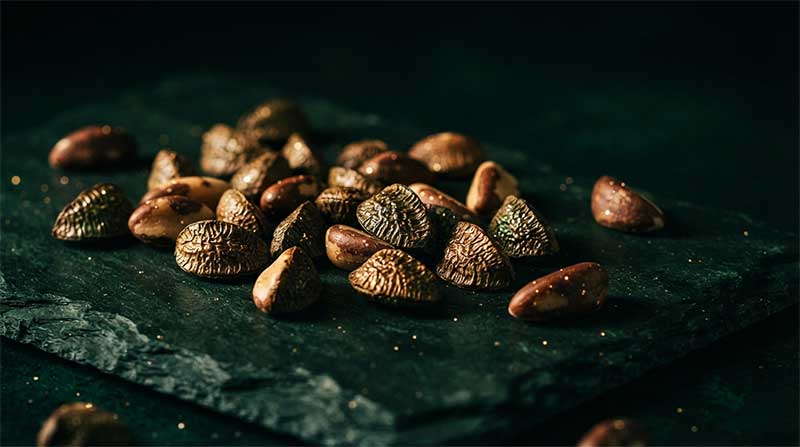
Brazil nuts are famous as a selenium source, but here's the issue: their selenium content varies wildly depending on the soil where they grew. One nut might contain 20 mcg, another 200 mcg - a tenfold difference, which is a real problem when the optimal daily range for most adults is 100-200 mcg and the upper limit is 400 mcg.
Eating two or three Brazil nuts daily sounds simple, but you genuinely can't know how much selenium you're getting. A standardized supplement form is far more reliable if you actually need to correct a deficiency. Other dietary sources - fish, meat, eggs, mushrooms - also depend heavily on soil selenium levels. If you live in a region with selenium-depleted soil (much of Europe falls into this category), diet alone may not be enough to optimize your levels - which is precisely the population where supplementation evidence looks most favorable.
Best Forms
L-Selenomethionine
Naturally occurring amino acid-bound form. Best absorbed and stored in tissues - ideal for correcting an actual deficiency.
Selenium-Enriched Yeast
Natural food-based complex, mostly selenomethionine. Used in several of the major clinical trials discussed above, including the reassuring UK PRECISE study.
Sodium Selenite / Selenate
Synthetic inorganic forms. Cheaper and less bioavailable - still used in some clinical settings but not ideal for daily supplementation.
Dosing
| Group | Daily Dose | Notes |
|---|---|---|
| Adults (general) | 100 - 200 mcg | Consistent daily use; check baseline status if supplementing long-term |
| Teenagers | 60 - 100 mcg | With food |
| Children under 12 | 20 - 60 mcg | Age-dependent, pediatrician supervision |
| Upper safe limit | 400 mcg | Do not exceed without medical supervision |
Take with food, preferably a protein-rich meal. Morning or midday works well - no need to split the dose at these amounts.
Check your multivitamin or other supplements before adding selenium - many already contain 50-200 mcg, and adding a full selenium supplement on top could push you toward the upper limit. If you're already eating a varied diet rich in seafood, meat, and eggs, or live somewhere with selenium-rich soil, a blood test before committing to long-term high-dose supplementation is a reasonable, low-effort way to know whether you're in the population where the evidence is favorable, or the population where it's neutral-to-uncertain.
What It Stacks Well With
Glutathione + NAC
The antioxidant triad - selenium, glutathione, and NAC work together to support cellular oxidative stress defense.
Vitamin E
Membrane protection - selenium and vitamin E are synergistic antioxidants that protect different parts of the cell.
Zinc
Immune and thyroid synergy - both are essential trace minerals that work together in immune modulation.
Iodine
Thyroid hormone activation - selenium and iodine are both essential for converting and activating thyroid hormones.
CoQ10
Selenium is involved in regenerating CoQ10 and supports related antioxidant pathways, a pairing increasingly noted in statin-related muscle symptom research.
Other Selenium Sources (Caution)
Double-check total intake across multivitamins, Brazil nuts, and any standalone supplement - the additive total matters more than any single source.