Your body has a built-in cellular recycling system called autophagy. It identifies and dismantles damaged proteins, dysfunctional organelles and cellular debris - the biological equivalent of taking out the trash and recovering usable materials. When autophagy runs efficiently, cells stay clean, functional and young. When it slows down, damaged components accumulate, and the result is accelerated aging, inflammation and increased disease risk.
Autophagy is activated by fasting, caloric restriction and certain compounds. Spermidine is one of the most potent natural autophagy activators known. And a landmark 2024 study revealed something even more significant: spermidine is not just one way to activate autophagy - it may be the mechanism through which fasting achieves its longevity effects.
If you fast, spermidine is why it works. If you do not fast, spermidine may give you some of what you are missing.
What Spermidine Is and Where It Comes From
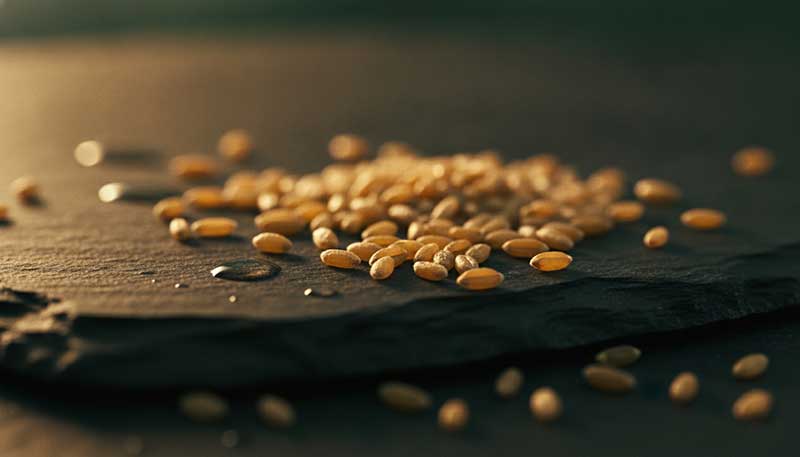
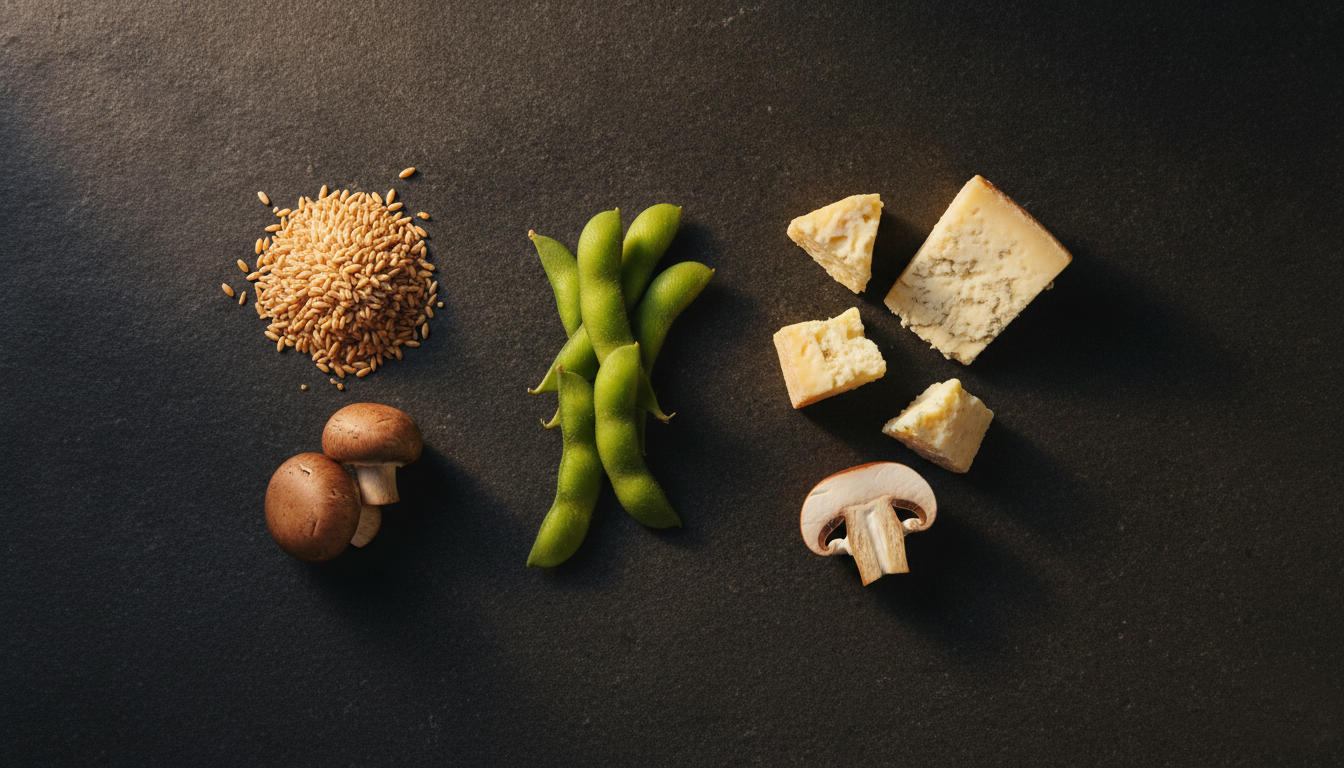
Spermidine is a polyamine - a naturally occurring compound found in virtually all living cells. Your body produces it endogenously from the amino acid ornithine, and you also consume it through food. It is found in particularly high concentrations in wheat germ, aged cheese, fermented soy products (natto, tempeh), mushrooms, legumes and certain green vegetables.
The critical issue: spermidine levels decline with age. This decline tracks closely with the age-related deterioration of autophagy, immune function and cognitive performance. It is one of several polyamines - putrescine and spermine are related compounds - but spermidine has received by far the most research attention for longevity applications.
Wheat Germ
Highest known food source. ~2.4mg per 100g. The basis for most supplement extracts.
Mushrooms
Good source, especially oyster and shiitake. Also rich in other longevity compounds.
Natto / Tempeh
Fermented soy products contain high concentrations. Also benefit from the fermentation process itself.
Aged Cheese
Cheddar, parmesan and other aged varieties contain meaningful amounts. The longer the aging, the more polyamines.
Broccoli / Peas
Consistent dietary sources. Easy to include daily in meaningful amounts alongside other spermidine-rich foods.
Supplements
Wheat germ extract standardized for spermidine. Allows consistent dosing that diet alone cannot reliably deliver.
The 2024 Discovery: Spermidine Is Essential for Fasting's Benefits
For years, scientists knew that both fasting and spermidine activated autophagy. What was not clear was whether these were parallel pathways or whether one depended on the other. A 2024 paper published in Nature Cell Biology answered that question decisively.
Researchers led by Frank Madeo's group confirmed that fasting causes an immediate surge in spermidine production in yeast, flies, mice and human volunteers. Critically, when this spermidine surge was blocked - either genetically or pharmacologically - the lifespan-extending, cardioprotective and anti-arthritic effects of fasting were eliminated. The conclusion: spermidine is not just one of fasting's effects. It is the essential mediator of fasting's longevity benefits. The same 2024 paper also showed this mechanism is phylogenetically conserved - meaning it has been preserved across hundreds of millions of years of evolution, which strongly suggests fundamental biological importance.
This finding has practical implications for supplementation. If you practice intermittent fasting, spermidine levels naturally rise during your fasting window and drive the autophagy that produces the benefits. If you do not fast - or fast irregularly - supplementing spermidine may recreate part of that signal.
What Autophagy Actually Does
Autophagy literally means "self-eating" in Greek. It is the process by which cells identify, engulf and break down damaged or dysfunctional components - misfolded proteins, damaged mitochondria, pathogens, cellular debris - and either recycle the components or eliminate them.
Without efficient autophagy, these damaged components accumulate. The consequences are directly connected to the hallmarks of aging: neurodegeneration, cardiovascular disease, cancer risk, immune dysfunction and loss of metabolic flexibility. Activating autophagy is one of the most direct interventions available at the cellular level.
Spermidine activates autophagy by inhibiting specific acetyltransferase enzymes, particularly EP300, which is one of autophagy's main suppressors. Preclinical research has shown spermidine's autophagy-inducing potency to be comparable to rapamycin - an FDA-approved drug used in transplant medicine for its autophagy and longevity effects - but without rapamycin's significant immunosuppressive side effects.
What the Human Research Shows
Human evidence for spermidine is still developing but increasingly solid. The cognitive data is the most consistent: multiple controlled studies in older adults with subjective cognitive decline show improvements in memory performance at doses between 0.9 and 3.3mg daily from wheat germ extract. Results are not universal - one 12-month JAMA Network Open trial found excellent safety and preliminary memory benefits but did not reach statistical significance on the primary outcome at 0.9mg - suggesting dose matters.
The most important upcoming data will come from the POLYCAD trial: a Danish randomized controlled trial with 187 elderly coronary artery disease patients, testing 24mg daily spermidine over 48 weeks. This is a much higher dose than typical supplements use and will be the most rigorous cardiovascular test of spermidine to date. Results are expected in 2026.
Yes - these are distinct mechanisms, not redundant ones. Fisetin is a senolytic - it clears senescent zombie cells. Resveratrol activates sirtuins via SIRT1. Spermidine activates autophagy via EP300 inhibition. These are three different cellular maintenance pathways that complement each other rather than overlap. If anything, combining spermidine with fisetin creates a particularly powerful protocol: spermidine triggers autophagy (cellular cleanup), while fisetin removes the senescent cells that survive that cleanup. They work in sequence, not in parallel.
Dosing
| Purpose | Daily Dose | Notes |
|---|---|---|
| General longevity / autophagy support | 1 - 2mg | Standard wheat germ extract dose; well-tolerated |
| Cognitive support | 1.5 - 3.3mg | Range used in positive cognitive trials |
| Therapeutic / research protocols | 5 - 24mg | Higher doses in clinical trials; use with guidance |
| Not recommended | - | Children, pregnancy; avoid stacking multiple strong autophagy activators simultaneously |
Take spermidine in the morning or at midday, ideally on an empty stomach or with a light non-fatty meal - fat can reduce absorption. This also aligns with its mechanism: autophagy is naturally highest in a fasted state, and spermidine amplifies that signal most effectively when the body is not in a fed/anabolic state.
Note that the standard supplement doses (1-3mg) are well below the highest doses tested clinically (up to 40mg) and significantly below the POLYCAD trial dose of 24mg. The conservative dosing in consumer products reflects the early stage of human research, not a safety concern - the safety profile at all tested doses has been excellent.
What It Stacks Well With
Fisetin
The most powerful natural pairing. Spermidine cleans up damaged cellular contents via autophagy; fisetin removes senescent cells that escape that process. Sequential autophagy + senolytic coverage.
NMN / NR
NAD+ precursors support mitochondrial energy and DNA repair. Spermidine's autophagy clears damaged mitochondria; NMN/NR fuel the healthy ones that remain. Complementary mitochondrial care.
Resveratrol
Both are caloric restriction mimetics but via different pathways. Resveratrol activates sirtuins; spermidine activates autophagy. Together they cover the two main longevity mechanisms of caloric restriction.
Zinc
Supports autophagy signaling and cellular homeostasis. A modest but meaningful cofactor for spermidine's mechanisms. Most people are mildly deficient - worth ensuring adequate zinc status.
Magnesium
Autophagy cofactor involved in hundreds of enzymatic reactions. Adequate magnesium is necessary for the cellular machinery that executes autophagy after spermidine triggers it.
Fasting / Exercise
Not supplements, but powerful amplifiers. Spermidine rises naturally during fasting and exercise. Taking it alongside a fasting window or post-exercise may enhance the autophagy signal further.