If the Foundation Stack is about correcting deficiencies, the Anti-Aging Stack is about actively intervening in the biology of aging. These five compounds do not correct a missing nutrient - they target specific molecular pathways that decline with age and that research increasingly links to the rate at which we age.
The central mechanism is NAD+ - a coenzyme found in every cell that declines dramatically with age. By 60, most people have roughly half the NAD+ they had at 20. This decline impairs DNA repair, reduces mitochondrial efficiency, weakens sirtuin activity and accelerates cellular aging. The compounds in this stack address that decline from multiple directions at once.

NMN or NR
Direct NAD+ precursors. NMN is more expensive, NR more affordable. Both raise NAD+ levels effectively.
NMN guide →
Resveratrol
Sirtuin activator. Works synergistically with NMN - activates the enzymes that NAD+ fuels.
Full guide →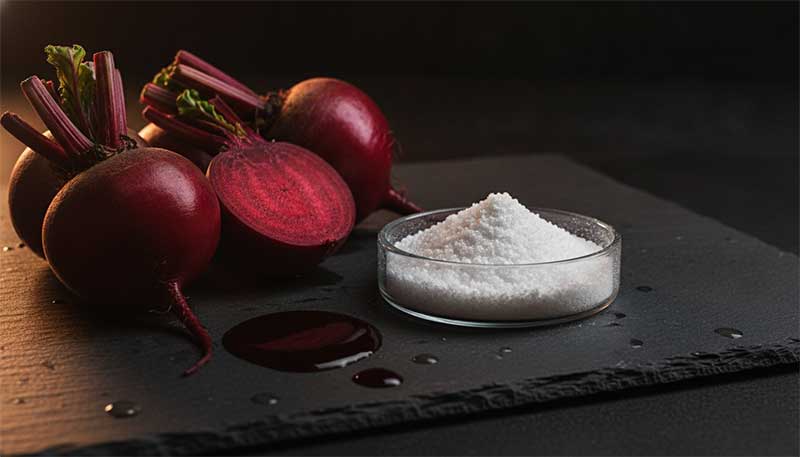
TMG
Methyl donor. Replenishes methyl groups consumed by NMN synthesis. Non-negotiable cofactor.
Full guide →
CoQ10
Runs the mitochondrial electron transport chain. ATP production depends on it - declines sharply after 40.
Full guide →
PQQ
Stimulates mitochondrial biogenesis - the growth of new mitochondria. Unique mechanism not replicated by any other supplement.
Full guide →The NAD+ Pathway - Why It Matters
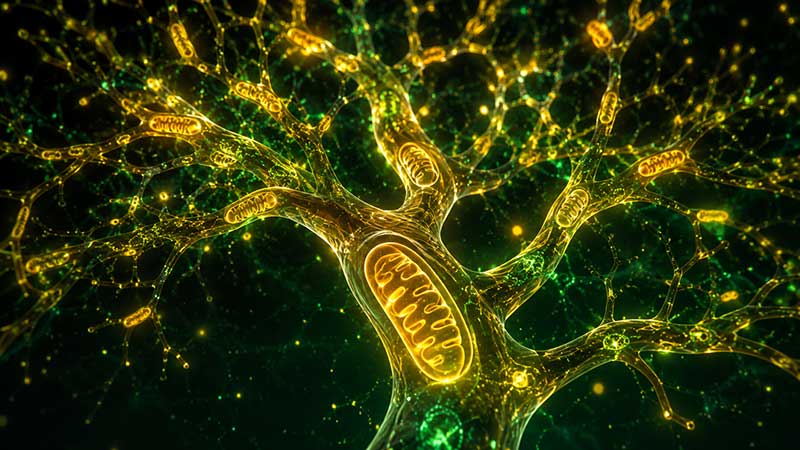
NAD+ (Nicotinamide Adenine Dinucleotide) is a coenzyme that sits at the intersection of energy metabolism, DNA repair and longevity signaling. It is required for sirtuins - a family of proteins that regulate gene expression, repair damaged DNA, control inflammation and respond to caloric restriction. It is also required for PARP enzymes that repair DNA strand breaks. And it is a critical electron carrier in the mitochondrial reactions that produce ATP.
Each compound targets a distinct step. NMN/NR supplies the fuel. Resveratrol activates the machinery that uses it. CoQ10 keeps energy production running. PQQ builds more production capacity. TMG prevents the hidden methylation cost of NMN synthesis.
NMN vs NR - Which Should You Choose
NMN (Nicotinamide Mononucleotide) and NR (Nicotinamide Riboside) are both NAD+ precursors that raise intracellular NAD+ levels. The fundamental question most people ask is: which is better? The honest answer is that the clinical evidence does not clearly favor one over the other - and the price difference is significant.
NR (Nicotinamide Riboside)
Has been in human clinical trials longer. Multiple RCTs confirm it raises NAD+ effectively. Typically 40-60% cheaper than NMN per effective dose. The evidence base is slightly more mature. A strong choice for anyone starting a NAD+ protocol or working within a budget.
NMN (Nicotinamide Mononucleotide)
One step closer to NAD+ in the biosynthesis pathway. Growing body of human RCTs showing NAD+ elevation and functional benefits. Higher cost per gram. May have marginal bioavailability advantage in some tissues. David Sinclair's preferred form - though this should be weighed as one data point, not a conclusion.
If budget is a constraint, start with NR. If you want the most direct NAD+ precursor and are comfortable with the higher cost, choose NMN. Either way, always check that the product specifies active compound content - most NMN supplements on the market fail independent lab testing. Our free NMN checklist covers exactly what to look for.
TMG - The Cofactor Nobody Talks About
Trimethylglycine (TMG), also known as betaine, is one of the most important and most overlooked parts of any NMN or NR protocol. Here is why it matters.
When NMN is synthesized in the body from tryptophan and aspartate via the de novo pathway, methyl groups are consumed in the process. Taking supplemental NMN can therefore gradually deplete your body's methyl group reserves - a pool that is also needed for DNA methylation, neurotransmitter synthesis, homocysteine clearance and liver function.
TMG donates methyl groups directly. One molecule of TMG carries three methyl groups and donates them to homocysteine, converting it to methionine. This simultaneously replenishes the methyl pool and reduces homocysteine - an independent cardiovascular risk marker. Taking TMG alongside NMN or NR is not optional if you plan to supplement long-term. The dose is typically 500mg to 1,500mg daily, taken with your NMN or NR.
Elevated homocysteine is associated with increased cardiovascular risk and cognitive decline. TMG is one of the most effective dietary interventions for lowering homocysteine - a benefit entirely separate from its role as a methyl donor for NMN metabolism. If you supplement NMN without TMG and have not checked your homocysteine levels, consider adding both.
Resveratrol - The Sirtuin Activator
Resveratrol's primary mechanism is SIRT1 activation - it stimulates the sirtuin proteins that regulate DNA repair, inflammation control and metabolic efficiency. Sirtuins require NAD+ to function, which is precisely why resveratrol and NMN/NR are designed to work together: resveratrol turns the key, NMN/NR supplies the fuel.
Resveratrol also activates AMPK, the cellular energy sensor that mimics some effects of caloric restriction, and has direct anti-inflammatory effects via NF-kB inhibition. A 2024 meta-analysis of 42 human trials found consistent reductions in biological age markers with daily resveratrol use at 100-150mg - with lower doses often outperforming higher ones due to bioavailability dynamics.
Bioavailability is resveratrol's main challenge. Standard resveratrol has roughly 20% oral bioavailability. Taking it with a small amount of fat and in the morning significantly improves absorption. Micronized or liposomal forms are more bioavailable than standard powder.
CoQ10 and PQQ - Mitochondrial Support from Two Directions
CoQ10 and PQQ are frequently grouped together as "mitochondrial supplements" - which is accurate but obscures how fundamentally different their mechanisms are.
CoQ10 is a required component of the electron transport chain - the series of protein complexes in the inner mitochondrial membrane that produce ATP. Without adequate CoQ10, the chain runs inefficiently and produces more reactive oxygen species. CoQ10 levels decline by up to 50% between ages 40 and 70. Ubiquinol form (the reduced, active form) is significantly better absorbed than standard ubiquinone, particularly after age 40 when the conversion becomes less efficient.
PQQ (Pyrroloquinoline Quinone) works upstream of CoQ10. Its most distinctive property is stimulating mitochondrial biogenesis - the growth of entirely new mitochondria via PGC-1alpha activation. More mitochondria means more total energy production capacity. PQQ also acts as a potent antioxidant within the mitochondrial membrane itself, protecting the very structures that CoQ10 depends on.
Together they address both the efficiency of existing mitochondria (CoQ10) and the quantity and quality of new ones (PQQ). This is genuine complementarity - not redundancy.
Evidence Caveat
The individual evidence for each compound in this stack is solid. The evidence for the specific combination in human clinical trials is still developing. A 2025 ScienceDirect review confirmed the theoretical synergistic potential of NMN/NR + PQQ + CoQ10 combinations, but noted that most existing formulations rely on mechanistic assumptions rather than large-scale RCT data. This does not mean the stack does not work - it means you should calibrate your expectations to the current state of the evidence rather than marketing claims.
How to Take the Anti-Aging Stack
| Supplement | Daily Dose | Timing | Notes |
|---|---|---|---|
| NMN or NR | 300 - 600mg | Morning, fasted or with light meal | Always with TMG. Check product for active compound certification. |
| TMG | 500 - 1,500mg | Same time as NMN/NR | Non-negotiable cofactor. Also lowers homocysteine independently. |
| Resveratrol | 100 - 250mg | Morning with a small amount of fat | Micronized or liposomal form for better bioavailability. |
| CoQ10 | 100 - 200mg | With largest meal (fat-soluble) | Ubiquinol form preferred after age 40. |
| PQQ | 10 - 20mg | Morning or with CoQ10 | Cycle: 4-8 weeks on, 1-2 weeks off. |
If you cannot run the full stack immediately, prioritize in this order: (1) NR + TMG as the core NAD+ intervention, (2) CoQ10 especially if you are over 40, (3) Resveratrol, (4) PQQ. The first two give you the greatest impact per euro spent. Add the others as budget allows.