TMG is one of the more quietly important supplements on this site, mostly because almost nobody who needs it knows they need it. It does not have a dramatic story. It does not promise dramatic results. What it does is patch a specific biochemical hole that opens up when you take other, more popular longevity supplements - particularly NAD+ precursors like NMN and NR.
If you are taking those and have never heard of TMG, this is the gap in your stack worth understanding, even if you decide not to fill it.
What Is TMG?
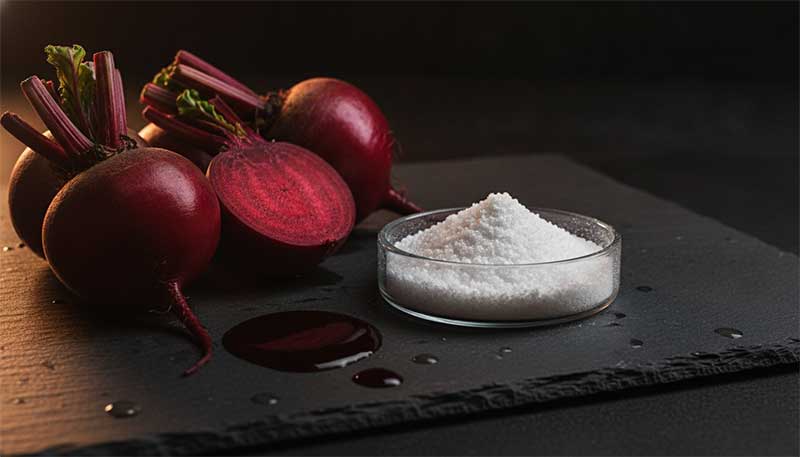
Trimethylglycine - also called betaine or betaine anhydrous - is a naturally occurring compound found in foods like beets, spinach, quinoa, and whole grains, though cooking substantially reduces its content. It is also produced naturally inside the human body. Chemically, it is glycine with three methyl groups attached, which is exactly what makes it useful: those methyl groups are a transferable resource your body needs constantly for dozens of biochemical processes.
Important labeling note: "betaine" and "betaine HCl" are not the same product. Betaine HCl is a digestive aid used to support stomach acid production, sold for an entirely different purpose. TMG, sometimes labeled "betaine anhydrous," is the form relevant to methylation support. Confusing the two means buying the wrong supplement entirely.
The Core Mechanism: Methyl Donation and Homocysteine
TMG's primary, best-documented action is donating a methyl group to homocysteine, converting it back into methionine via the enzyme betaine-homocysteine methyltransferase (BHMT). This matters because elevated homocysteine has been associated with cardiovascular risk, and TMG supplementation reliably and consistently lowers blood homocysteine levels across multiple clinical trials.
TMG's defining function. Donates one of its three methyl groups to homocysteine via the BHMT enzyme, converting it to methionine independent of B12 and folate status - a separate pathway from the more commonly discussed folate-methylation cycle.
Beyond methylation, TMG helps cells maintain proper hydration and resist osmotic stress, particularly in the liver, kidneys, gut, and fat tissue - a distinct, independent mechanism from its methyl-donor role.
The methionine generated feeds into SAMe (S-adenosylmethionine) production, the body's universal methyl donor used for neurotransmitter synthesis, DNA methylation, creatine production, and CoQ10 and melatonin biosynthesis.
Some research indicates TMG supplementation may increase blood nitric oxide levels, which widens blood vessels during exercise and may improve nutrient delivery and waste clearance - relevant to its modest performance application below.

Why This Matters Specifically for NAD+ Precursor Users
This is the most practically important section of this article, and the reason TMG appears at all in serious longevity stack discussions.
When NAD+ is consumed by the body's enzymes, it breaks down into nicotinamide (NAM). To be excreted safely, NAM needs a methyl group attached to form methylnicotinamide before it can leave the body through the kidneys. The more NAD+ precursor you take - NMN, NR, or niacin - the more NAM gets produced, and the more methyl groups get consumed just to clear it out. This creates a real, mechanistically described tradeoff: boosting NAD+ levels can quietly draw down the same methyl pool your body needs for neurotransmitter synthesis, DNA methylation, and other baseline functions.
This connection has been described publicly by both Dr. David Sinclair and Dr. Brad Stanfield, two of the more visible figures in NAD+ supplementation research and commentary - both have specifically noted that NMN and NR can interfere with the body's DNA methylation process by consuming methyl groups, and both have described taking TMG specifically to offset this effect. This is not formal trial data; it is expert mechanistic reasoning that has become widely adopted practice among serious NAD+ supplement users, including the ARI personal stack.
The Cardiovascular Question: Biomarker vs. Outcome
This is where TMG's story gets genuinely more complicated than most supplement guides admit, and it is worth being precise about the distinction.
TMG reliably lowers homocysteine at 4-6 g/day - this part is well-established across multiple trials. What has not been shown is that this translates into improved blood vessel function or better cardiovascular outcomes. A 2013 meta-analysis and a separate 6-week randomized trial measuring flow-mediated dilation (a direct measure of blood vessel function) found no clear improvement despite the homocysteine reduction. This is an important example of the broader "biomarker versus outcome" problem in nutrition science: moving a number in the right direction does not guarantee the thing that number is supposed to predict actually improves.
A 2005 clinical trial found that higher TMG doses (6 g/day) raised LDL cholesterol and triglycerides in healthy adults. This is a genuine complication for anyone taking TMG specifically for cardiovascular reasons - you may be lowering one cardiovascular risk marker (homocysteine) while raising another (LDL/triglycerides) at the same dose. This tension is rarely mentioned in TMG marketing, but it is documented in the clinical literature and should factor into dosing decisions, particularly at the higher end of the range.
Beyond Methylation: Other Studied Applications
Exercise Performance
A 2024 systematic review and meta-analysis on chronic betaine supplementation and exercise performance found modest support for certain outcomes, building on earlier work including a 2012 trial and a 2024 Nutrients time-trial study showing small improvements in sprint and cycling performance at 2.5-3 g/day over 1-2 weeks. A 2017 review characterized the overall performance evidence as inconsistent - real in some studies, absent in others, which is a fair, unglamorous summary of where this application currently stands.
Liver Health
A 2025 review examined betaine's role in regulating the gut-liver axis as a therapeutic approach for chronic liver diseases, building on TMG's longer-studied historical use in alcoholic and non-alcoholic fatty liver disease, where its osmolyte and methylation functions are both thought to play a protective role.
Homocysteine Lowering
Well-replicated across multiple RCTs at 4-6g/day. One of the more consistently confirmed biomarker effects in the supplement category.
Cardiovascular Outcomes
Homocysteine reduction does not reliably translate to improved vascular function in controlled trials. Treat as biomarker support, not a proven heart-protective intervention.
Exercise Performance
Small positive signal in some sprint/cycling studies at 2.5-3g/day short-term. Overall evidence base described as inconsistent by review authors.
NAD+ Precursor Methyl Support
Sound biochemical rationale, widely adopted by NAD+ researchers and practitioners. Not yet validated by a dedicated head-to-head clinical trial measuring methylation status with vs. without TMG co-supplementation.
Dosage and Forms
| Goal | Range | Notes |
|---|---|---|
| Methylation support alongside NAD+ precursors | 1-3 g/day | The most common practical range for this specific use case. Lower lipid-impact risk than the homocysteine-focused dose range. |
| Homocysteine reduction | 4-6 g/day | Trial-validated range for lowering homocysteine specifically. Monitor lipid panel given the documented LDL/triglyceride tradeoff at this range. |
| Exercise performance | 2.5-3 g/day, short-term (1-2 weeks) | Modest, inconsistent evidence. Take with meals; some users split morning/evening or pre-workout dosing. |
Form: always choose "betaine anhydrous" specifically - not "betaine HCl," which serves a different digestive purpose entirely. Timing: take with meals, split between morning and evening doses if using the higher homocysteine-focused range. In the ARI personal stack, TMG is taken in P1 (morning, fasted, with coffee) - directly alongside the NAD+ precursor dose it is meant to offset.
If you have a lipid disorder or are actively managing cholesterol, the documented LDL/triglyceride increase at higher doses (6g/day) is relevant - discuss with your doctor before using TMG in this range, and consider the lower 1-3g methylation-support dose instead. TMG should not be confused with prescription betaine, which is used under medical supervision for the genetic condition homocystinuria at doses and monitoring protocols well outside standard supplementation.