CoQ10 doesn't get the same spotlight as NMN or omega-3, but it plays a foundational role most people never think about. It lives in your mitochondria and sits at the center of the electron transport chain - the process that generates ATP, the universal energy currency every cell runs on. Without enough CoQ10, your cells simply can't turn food into usable energy as efficiently.
The organs that depend on it most - heart, brain, kidneys, muscles - are also the systems most associated with age-related decline, which is part of why CoQ10 shows up so often in cardiovascular and mitochondrial health research. It's also a genuinely good case study in holding two different evidence levels at once: the heart failure data is strong and consistent, while the most commonly cited reason people take it - statin-related muscle pain - rests on considerably shakier ground than most coverage admits.
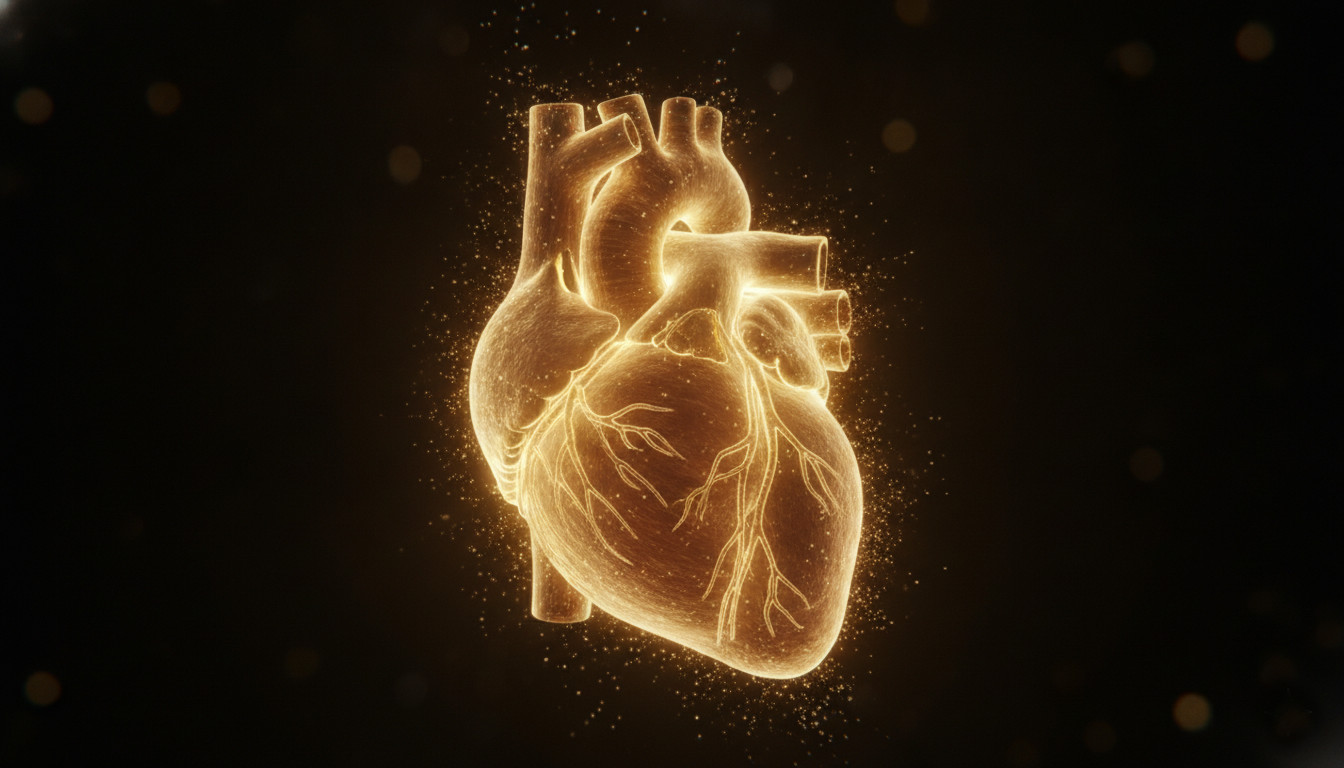
Why It Matters More as You Age
It's also a powerful antioxidant - especially in its active form, ubiquinol - that protects cell membranes from oxidative damage and helps regenerate other antioxidants, including vitamin E. As CoQ10 production declines with age, the high-demand systems that rely on it most heavily are often the first to show signs of wear.
The Heart Failure Evidence - Genuinely Strong
Heart Failure (Q-SYMBIO Trial)
A January 2026 cardiovascular medicine review describes the evidence as "robust," citing the Q-SYMBIO trial's finding that CoQ10 supplementation improved functional capacity, ejection fraction, and reduced major adverse cardiovascular events in patients with reduced ejection fraction heart failure.
Cardiac Function & Quality of Life
A 2025 RCT examining global longitudinal strain and ejection fraction in heart failure patients found measurable improvements in cardiac function alongside quality-of-life gains, though researchers note larger trials are still needed.
Blood Pressure
Earlier systematic review data supports a modest blood-pressure-lowering effect, contributing to CoQ10's broader cardiovascular support case independent of the heart failure-specific findings.
Statin-Associated Muscle Symptoms
This is the headline finding most people associate with CoQ10 - and it's the part of the evidence base that's actually weakest. Full breakdown below.
The Statin Muscle-Pain Question - What the Numbers Actually Show
Statins work by blocking HMG-CoA reductase, the enzyme responsible for producing cholesterol - but that same metabolic pathway (the mevalonate pathway) also produces CoQ10, so blocking it lowers CoQ10 levels too. This part is consistent, well-documented biochemistry, and it's the entire logical basis for thinking CoQ10 supplementation might help statin-related muscle symptoms (SAMS). The actual clinical trial evidence on whether it does is where things get genuinely uneven.
If you're experiencing statin-related muscle aches, CoQ10 is a low-risk, reasonable thing to try - the trials show no notable side effects, and roughly half showed real benefit. But it's honest to set the expectation correctly: this is "might help, worth a trial" territory, not "proven fix" territory. If muscle symptoms are severe or persistent, that's a conversation for your doctor about dose adjustment or switching statins, not something to solve with a supplement alone - and never stop a prescribed statin without medical guidance, since statins meaningfully reduce cardiovascular risk.
Ubiquinone vs. Ubiquinol - Which Form Do You Need?
Ubiquinol
The reduced, active form. Ready to use immediately without conversion, and significantly more bioavailable - especially in older adults, statin users, or anyone dealing with chronic fatigue. More expensive but worth it for this population.
Ubiquinone
The oxidized form. Cheaper and more stable, but needs to be converted to ubiquinol in the body - which younger, healthier individuals can typically do efficiently. A reasonable budget option if you're under 40.
Either way, fat-based delivery beats dry tablets significantly. Look for oil-based softgels in MCT or sunflower oil, and always take with food containing fat for proper absorption - CoQ10 without dietary fat is largely wasted.
Dosing
| Group | Daily Dose | Form |
|---|---|---|
| Adults, general support | 100 - 200mg | Ubiquinol preferred |
| Over 50 or high oxidative stress | 200 - 300mg | Ubiquinol |
| Statin users (as studied) | 100 - 600mg, trial range | Ubiquinol; effect modest and not guaranteed |
| Heart failure (clinical) | Up to 300mg | Medical supervision, matches Q-SYMBIO dosing |
| Teenagers (if needed) | 60 - 100mg | Ubiquinone acceptable |
Take in the morning or at lunch with a fat-containing meal. Avoid taking in the evening - CoQ10 can increase energy levels and disrupt sleep in sensitive individuals. A single daily dose is effective unless taking very high amounts over 300mg, which may be split.
What It Stacks Well With
PQQ
Stimulates mitochondrial biogenesis - growing new mitochondria. CoQ10 + PQQ is one of the more commonly recommended mitochondrial-support stacks.
Magnesium
Both support energy metabolism at the cellular level, with complementary roles in ATP production and mitochondrial function.
Vitamin E
CoQ10 helps regenerate vitamin E after it neutralizes free radicals - complementary antioxidant protection through different mechanisms.
Omega-3
Both integrate into cell membranes; together they support membrane integrity, energy, and anti-inflammatory function.
Selenium
Selenium is involved in regenerating CoQ10 and supports related antioxidant pathways - a mechanistic pairing increasingly noted in recent statin-myopathy research.
NMN + NAD+
Both support mitochondrial energy pathways through different mechanisms - a common pairing in broader longevity stacks targeting cellular energy.