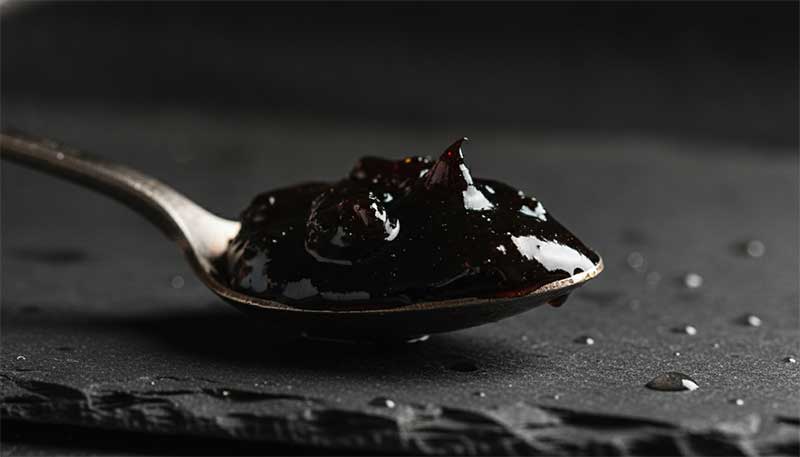
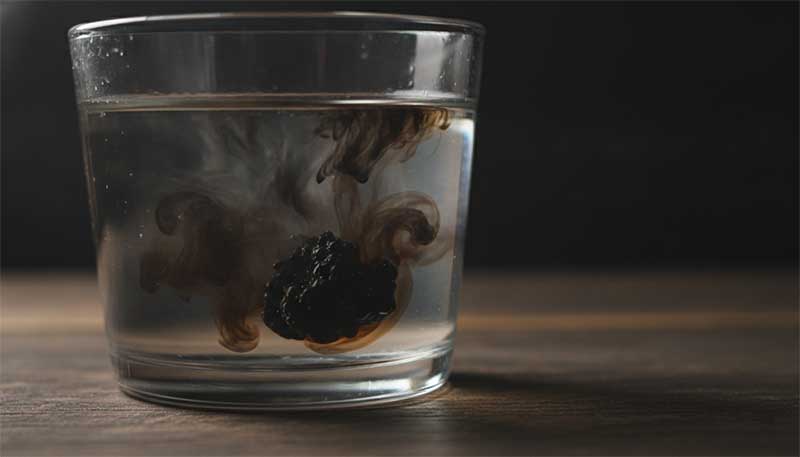
Shilajit looks like nothing else on a supplement shelf. It is a thick, tar-like resin, sometimes sold as sticky paste, sometimes as powder, that oozes out of rock crevices in the Himalayas, the Caucasus, and a handful of other high-altitude mountain ranges during warm months. Classical Ayurvedic texts classify it as a rasayana - a rejuvenating substance used for stamina, recovery, and longevity.
What makes shilajit genuinely unusual in the supplement world is its origin: it is not extracted from a single plant or fungus. It forms over centuries from layers of decomposing plant material and minerals, transformed by heat, pressure, and microbial activity into a dense, mineral-saturated substance. That geological origin is also exactly why quality control here is harder, and more important, than almost anywhere else in this category.
What's Actually In Shilajit
Makes up 50-80% of premium shilajit. An organic chelator and potent antioxidant, small enough at the molecular level to shuttle minerals and nutrients directly across cell membranes. Considered the primary bioactive compound and a bioavailability enhancer in its own right.
Mitochondria-targeted antioxidant compounds. Research attributes much of shilajit's energy and hormone-related effects to DBPs working alongside fulvic acid, particularly through support of ATP production in mitochondria.
A related but distinct organic acid fraction. Contributes to the overall antioxidant and mineral-binding profile, though less studied individually than fulvic acid.
Including zinc, magnesium, and iron - critical cofactors for hormone production and enzymatic function. The same chelating property that makes fulvic acid useful also means shilajit can carry both beneficial minerals and harmful heavy metals, depending on the source and purification.
The Testosterone Evidence: Genuinely Solid
This is shilajit's best-supported claim, and the evidence base here is better than most adaptogens get.
A randomized, double-blind, placebo-controlled clinical trial evaluated purified Shilajit on testosterone levels in healthy male volunteers, using a standardized extract (PrimaVie) verified by HPLC to contain not less than 50% fulvic acids and 0.3% dibenzo-alpha-pyrones. At 250 mg taken twice daily over 90 days, the shilajit group showed measurable increases in both total and free testosterone compared to placebo.
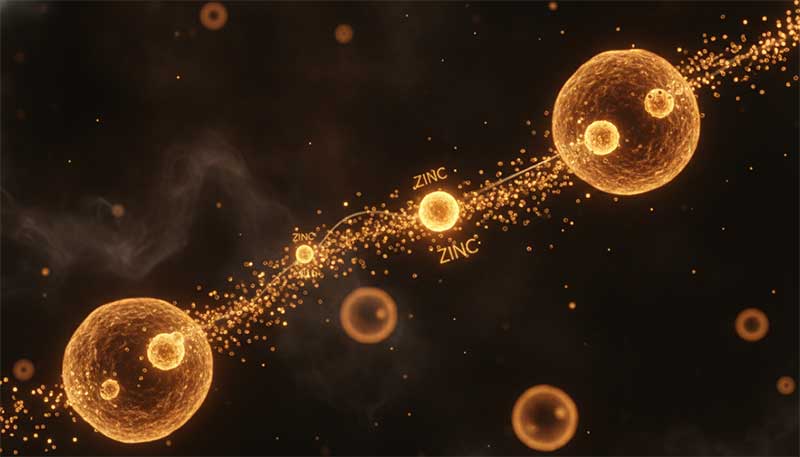
The proposed mechanism is mechanistically coherent, not just correlational. Dibenzo-alpha-pyrones support mitochondrial ATP production, which feeds the activity of the StAR (Steroidogenic Acute Regulatory) protein - the protein responsible for shuttling cholesterol into mitochondria as the first step of testosterone synthesis. Without sufficient cellular energy, this first step stalls. Separately, fulvic acid's chelating ability is thought to deliver zinc - a direct cofactor for testosterone production - into Leydig cells, the testes' primary hormone-producing cells, while also activating the Nrf2 antioxidant pathway that protects those same cells from oxidative damage.
Beyond Testosterone: Other Documented Effects
Sperm Quality and Fertility
A clinical evaluation of processed shilajit in men with oligospermia (low sperm count) found measurable improvements in semen analysis parameters, with safety data showing unaltered liver and kidney function markers at the doses studied. This is an older but methodologically reasonable study that adds to the reproductive health angle of shilajit's evidence base.
Physical Performance and Strength Retention
A study on muscular strength and shilajit supplementation found that 500 mg/day of standardized extract promoted retention of maximal muscular strength and decreased baseline hydroxyproline - a biomarker associated with collagen breakdown - in trained individuals. A more recent 28-day open-label pilot study testing a standardized shilajit resin tracked muscle strength, endurance, grip strength, and fatigue measures alongside blood biomarkers including CRP and testosterone, reflecting growing interest in rigorously testing physical performance claims rather than relying on traditional use alone.
Cognitive and Neuroprotective Signals
Laboratory research on shilajit's fulvic acid found it reduced tau protein aggregation, a key pathological factor in Alzheimer's disease - an interesting preclinical signal, though far from a clinical claim. Separate research into fulvic acid's antioxidant and metal-binding activity suggests potential support for energy metabolism in brain cells, a plausible but still early-stage area of investigation.
Testosterone (Healthy Men)
Peer-reviewed, randomized, placebo-controlled 90-day trial with HPLC-verified standardized extract. One of the better human trials in the adaptogen category.
Sperm Quality / Fertility
Documented improvement in oligospermia patients with confirmed liver/kidney safety, though the underlying study is older and would benefit from modern replication.
Physical Strength & Performance
Multiple studies show real biomarker changes (hydroxyproline, strength retention), with newer pilot trials expanding into broader performance metrics.
Cognitive / Neuroprotective
Promising mechanistic and preclinical signal (tau aggregation, brain cell energy) but lacking large human cognitive outcome trials specifically.
The Quality Problem: This Is Where It Gets Serious
Shilajit has a genuine quality control crisis that does not get enough attention relative to how seriously it should be taken.
An independent testing organization evaluated eight popular commercial shilajit supplements for fulvic acid content and heavy metal contamination in 2024, finding fulvic acid amounts varied by nearly 32,000% across products. That is not a typo, and it is not a minor labeling inconsistency - it means some products sold as "shilajit" may contain almost none of the compound responsible for most of its documented effects.
A comprehensive review examining shilajit's heavy metal profile found that raw shilajit can naturally contain around 65 different heavy metals, alongside its beneficial mineral content, and the review specifically examined the detoxification mechanisms of the humic substances that help mitigate this. Raw, unprocessed resin sourced directly from mountain rock without proper purification is the highest-risk form. This is not a reason to avoid shilajit entirely - it is the reason purification and third-party testing are non-negotiable, not optional upgrades.
Dosage and Forms
| Form | Effective Range | Notes |
|---|---|---|
| Purified, standardized resin/extract | 250-500 mg/day, often split into two doses | The form used in the testosterone and strength trials. Look for verified fulvic acid percentage (50%+) on the label. |
| Encapsulated standardized powder | 300-600 mg/day | More convenient than resin, same quality requirements apply - check for third-party testing. |
| Raw, unpurified mountain resin | Not recommended without independent testing | Highest variability in composition, highest contamination risk. Only buy if the seller provides current third-party lab results. |
What to look for on a label: a stated fulvic acid percentage (the trials used 50% or higher), confirmation of dibenzo-alpha-pyrone (DBP) content, GMP manufacturing, and third-party testing for heavy metals, microbial load, pesticides, and aflatoxins. If a product does not specify fulvic acid percentage at all, treat that as a red flag rather than an oversight.
Shilajit's mitochondrial and zinc-delivery mechanisms make it a reasonable complement to CoQ10 (mitochondrial support from a different angle) or Cordyceps (also ATP/mitochondria focused, but through cordycepin rather than DBPs). There is no documented interaction risk between these, but as with any two mitochondria-targeting compounds, there is also limited evidence that combining them produces additive benefit beyond either alone.