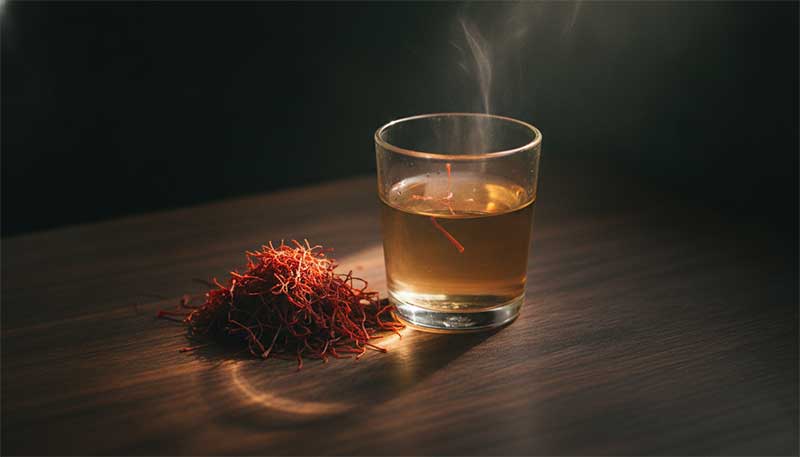
Saffron has two completely separate reputations that rarely get discussed together. As a spice, it's the most expensive in the world by weight - $1,100 to $11,000 per kilogram - and one of the most counterfeited foods on earth, with a fraud history dating back to medieval Europe, where selling fake saffron could get you executed. As a supplement, it has a genuine, decades-deep body of clinical research into depression and mood, with some meta-analyses finding effects comparable to prescription antidepressants.
Both of those things are true simultaneously, and 2025 added a third layer worth understanding: a rigorous new trial found saffron didn't actually move the needle on the primary outcomes it was designed to test in healthy people - while still showing something real, just smaller and different than expected. This is a case where the full picture genuinely requires holding several true things at once.

The December 2025 Trial That Complicated the Story
A randomized, double-blind, placebo-controlled trial published in the American Journal of Clinical Nutrition tested 6 weeks of saffron extract in 51 healthy adults with subclinical neuropsychiatric symptoms - meaning low mood, mild anxiety, or fatigue that didn't meet criteria for a clinical diagnosis. The primary outcome was a composite score combining standardized depression, anxiety, and fatigue measures.
The result: no significant effect on that composite score, and no significant effect on any of the three individual symptom measures either. The trial also found no significant change in inflammatory markers or HPA-axis (stress hormone) reactivity - mechanisms often proposed to explain saffron's effects. This is a genuinely negative result on the primary endpoints, run by a credible research team, published in a respected journal.
Buried past the headline finding: saffron significantly improved self-perceived mental health scores on a standard quality-of-life questionnaire (the SF-12) compared to placebo (p=0.04), even though it didn't move the clinical symptom scales. People taking saffron felt their general mental health had improved more than the placebo group did - a real, statistically significant, but considerably more modest and subjective outcome than "saffron treats depression." This is the kind of nuance that gets lost when a study gets compressed into a single headline in either direction.
Why an Earlier, Larger Trial Found More
Context matters enormously here, and it explains why this isn't really a contradiction. A separate 2025 trial published in the Journal of Nutrition tested a standardized saffron extract (Affron, 28mg/day) over 12 weeks in 202 adults specifically selected for having depressive symptoms - not healthy volunteers, but people who actually had something to improve. That's a meaningfully different population and a longer treatment window than the 6-week, 51-person trial above.
51 People, 6 Weeks, No Diagnosis Required
Subclinical symptoms only. No effect on primary composite symptom score. Real but modest effect on self-rated general mental health only.
202 People, 12 Weeks, Depressive Symptoms Required
Larger sample, longer duration, a population actually experiencing the symptom being measured - a structurally stronger design for detecting a true effect if one exists.
This pattern - smaller effects or null results in healthy populations, larger effects in symptomatic populations - shows up across antidepressant research generally, including for prescription SSRIs, which also struggle to outperform placebo in mild or subclinical cases. It doesn't mean saffron "doesn't work." It means the honest claim is narrower than the marketing version: saffron's evidence is strongest for people with actual depressive symptoms, not as a general mood enhancer for anyone feeling fine.
Depression (Clinically Diagnosed)
A meta-analysis of 23 trials found saffron at 28-30mg/day produced antidepressant effects in adults with major depressive disorder comparable to some SSRIs, with fewer reported adverse events - though individual trial sizes have often been small.
Subclinical / Mild Mood Symptoms
Mixed: some trials in this population show modest mood benefits (self-rated wellbeing, sleep), while the December 2025 trial found no effect on primary clinical symptom scores in a similar population.
PMS & Sexual Dysfunction
A trial in 120 women with PMDD found saffron significantly improved symptom severity versus placebo, performing comparably to fluoxetine. Separate research supports benefit for antidepressant-related sexual dysfunction specifically.
Metabolic Markers (Prediabetes)
Some trials report improved fasting glucose, lipid profile, and waist circumference in overweight/prediabetic individuals, part of a broader pattern of saffron research extending well beyond mood into metabolic health.
The Adulteration Problem - Why Quality Might Matter More Than the Studies Suggest
Here's a confounding variable almost no saffron study fully accounts for: a large share of commercial saffron isn't actually pure saffron. A 2025 systematic review of 23 studies (PubMed, Scopus, ScienceDirect, 2015-2025) found that 20-30% of commercial saffron globally is adulterated - with sharp regional variation.
This matters for interpreting the research itself. If a meaningful share of saffron used in lower-quality commercial products - or even occasionally in less rigorously sourced study material - isn't full-strength, genuine saffron, that's a plausible contributor to inconsistent trial results across the literature, on top of the population and duration differences discussed above.
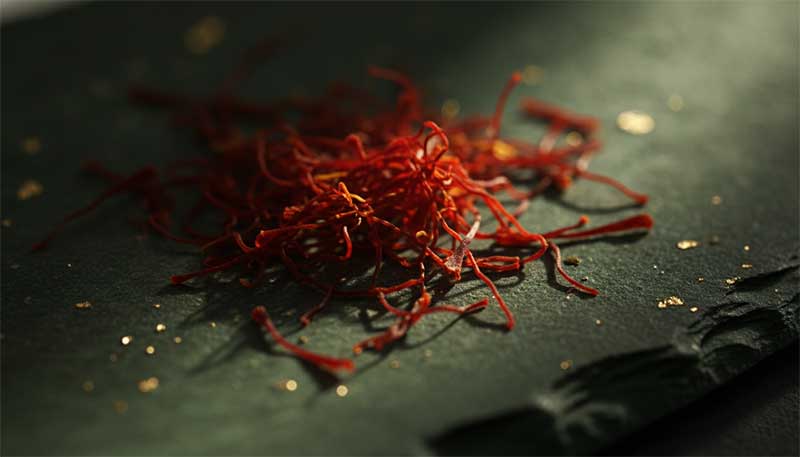
How to Check What You're Actually Buying
Safety - Where the Real Danger Threshold Sits
Saffron has an unusually wide safety margin at studied doses. Clinical trials use 20-100mg/day, typically for up to 12 weeks, with side effects limited mostly to mild nausea, dry mouth, and headache. The real danger zone is dramatically higher: toxic effects begin around 5 grams (5,000mg) per day, and doses of 12-20 grams have been documented as potentially lethal - almost always in the specific context of saffron being deliberately misused at extreme doses as an abortifacient, a traditional but dangerous practice with documented fatalities in the medical literature.
Avoid saffron in pregnancy beyond normal culinary amounts - doses above roughly 5g have documented uterine-stimulant and abortifacient effects, and safety in lactation is not well established. Avoid it if you have bipolar disorder, as saffron's effect on serotonin may trigger excitability or impulsive episodes. Saffron has a mild antiplatelet effect and may enhance the anticoagulant effect of rivaroxaban specifically - caution is warranted with any blood thinner. It can also lower blood pressure, which may compound with antihypertensive medication. People allergic to Lolium, Olea (olive), or Salsola plant species may cross-react with saffron.
What It Stacks Well With
Scutellaria (Baikal Skullcap)
A 2025 RCT tested the combination specifically for mood regulation in adults with mild-to-moderate depressive symptoms, building on each compound's individually documented neurotransmitter-modulating and anti-inflammatory effects.
L-Theanine
Both are studied for mood and stress support through different, non-sedating mechanisms - a common pairing in calm-focus formulations, though direct combination trials are limited.
Ashwagandha
Both are adaptogenic-leaning compounds studied for stress and mood; frequently combined in broader mental-wellness stacks targeting cortisol and neurotransmitter pathways from complementary angles.
SSRIs / Antidepressants (Medical Supervision)
Saffron has been studied as an adjunct to conventional antidepressants for treatment-related sexual dysfunction specifically - a legitimate research area, but combination should be physician-guided, not self-directed.
Blood Thinners (Caution)
Additive bleeding-risk consideration given saffron's antiplatelet activity, particularly noted with rivaroxaban specifically in the available interaction literature.
Sedatives (Caution)
Saffron's mild sleep-promoting effect may add to sedatives like benzodiazepines, potentially causing excessive drowsiness - worth spacing out or discussing with a doctor.
Dosing
| Purpose | Dose | Duration (as studied) |
|---|---|---|
| Depression (clinically significant) | 28 - 30mg/day standardized extract | 6 - 12 weeks in most positive trials |
| General mood / mild symptoms | 20 - 30mg/day | Effects, where present, are modest - not a fast-acting mood lift |
| PMS / PMDD | 15mg twice daily (luteal phase) | 2 menstrual cycles in the cited trial |
| Culinary use | 5 - 15mg (a few threads) | No meaningful safety concern at this level |