Ashwagandha is one of the most popular adaptogens in the world - and one of the most misrepresented. The evidence for its stress and cortisol-reducing effects is genuinely strong. A 2025 meta-analysis of 15 randomized controlled trials confirmed significant reductions in cortisol, anxiety and stress markers. For people whose sleep is disrupted by stress and elevated evening cortisol, it is a meaningful intervention.
But ashwagandha also has a safety profile that deserves more attention than it typically receives. Liver injury cases are documented. Thyroid interference is real. Regulatory bodies in the UK reviewed its safety formally in 2024. This is not a reason to avoid it categorically - but it is a reason to take the warnings seriously, understand who should not use it, and cycle it carefully.
This article presents the complete picture - both the evidence for benefit and the documented risks - so you can make an informed decision.

What Ashwagandha Does - The Mechanism
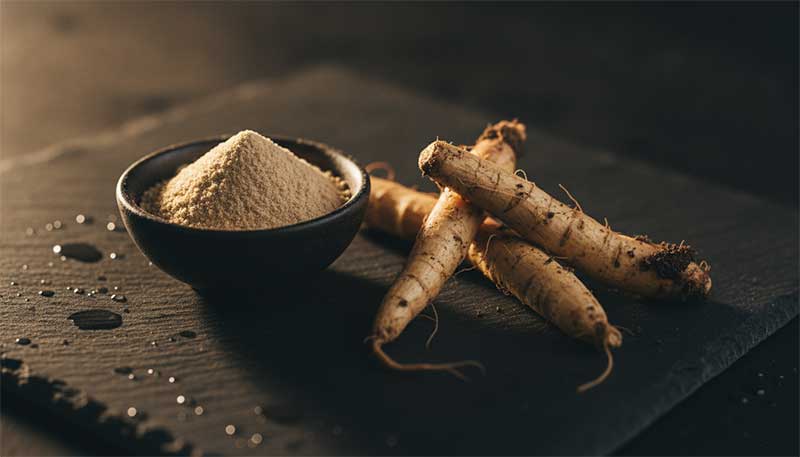
Ashwagandha (Withania somnifera) is classified as an adaptogen - a compound that helps the body normalize its stress response rather than simply suppressing or stimulating it. Its primary mechanism is modulation of the HPA (hypothalamic-pituitary-adrenal) axis, the hormonal cascade that governs the cortisol stress response.
The active compounds - primarily withanolides, sitoindosides and alkaloids - appear to act on GABA receptors, reduce inflammatory signaling via NF-kB inhibition, and modulate the feedback sensitivity of the HPA axis. The result is a gradual normalization of cortisol rhythm rather than an acute cortisol-blocking effect. This is why ashwagandha is not a fast-acting anxiolytic - it takes 6-12 weeks of consistent use to show its full effect.
The Evidence - What the Research Shows
A systematic review and meta-analysis published in BJPsych Open in June 2025 analyzed 15 randomized controlled trials involving 873 adults with stress or anxiety. Ashwagandha supplementation showed statistically significant reductions on the Perceived Stress Scale (PSS), Hamilton Anxiety Scale, and serum cortisol levels compared to placebo. The most consistent results came from standardized root extracts at 300-600mg daily for at least 8 weeks. Interestingly, a separate 2025 analysis noted that cortisol reductions were significant even when perceived stress scores did not always mirror them - suggesting ashwagandha may reduce the biological stress response even when subjective perception lags behind.
Cortisol Reduction
Consistent reduction in serum cortisol across multiple RCTs. The biological stress marker responds reliably to standardized ashwagandha root extract at adequate doses and duration.
Stress and Anxiety
Significant improvements on validated anxiety and stress scales (PSS, HAM-A) in multiple trials. The World Federation of Societies of Biological Psychiatry provisionally recommends it for generalized anxiety disorder.
Sleep Quality
KSM-66 at 300mg twice daily for 8 weeks significantly improved sleep quality, onset latency and morning alertness in an RCT including participants with insomnia. Effect strongest in those with stress-driven sleep disruption.
Physical Performance
Several RCTs show improvements in muscle strength, recovery and VO2max in athletes. The mechanism likely involves reduced cortisol-mediated muscle catabolism rather than direct anabolic effects.

The Safety Warnings - Read This Section
Ashwagandha is marketed almost universally as safe, natural and well-tolerated. The clinical trial data broadly supports this for short-term use at standard doses with KSM-66 extract. But the real-world case report literature and recent regulatory reviews tell a more nuanced story that is important to understand before supplementing.
As of 2024, 23 cases of clinically apparent liver injury attributed to ashwagandha have been documented in the medical literature. The typical pattern is cholestatic hepatitis (bile flow impairment) appearing within 1-12 weeks of starting supplementation. Most cases resolve after stopping - but there have been instances of severe liver failure and at least one fatality reported in the literature.
The UK Food Standards Agency reviewed ashwagandha safety in 2024 and concluded that liver effects are consistent with an idiosyncratic reaction - meaning they are unpredictable and not dose-dependent in the usual sense. You cannot reliably predict who will be affected. The cases involved both standard and higher doses, various brands, and both short and long-term use.
What this means practically: Monitor for signs of liver stress during use - unusual fatigue, yellowing of skin or eyes, dark urine, upper right abdominal pain. Stop immediately if any of these appear and seek medical attention.
Ashwagandha has documented effects on thyroid hormone levels. Multiple case reports describe thyrotoxicosis (excess thyroid hormone activity) triggered by ashwagandha supplementation - including at least one case of painless thyroiditis. The UK COT review specifically flagged thyroid toxicity as a concern. If you have any thyroid condition - hypothyroidism, hyperthyroidism, Hashimoto's, Graves' disease - ashwagandha is contraindicated without medical supervision. It can also interfere with thyroid medication effectiveness.
- Anyone with existing liver disease or elevated liver enzymes
- Anyone with thyroid conditions (hypo- or hyperthyroidism, Hashimoto's, Graves')
- Pregnant or breastfeeding women - may stimulate uterine contractions
- People with autoimmune diseases - ashwagandha stimulates immune activity
- Organ transplant recipients taking immunosuppressants - case report of acute graft rejection
- Men with hormone-sensitive prostate cancer
- People taking diabetes medication - ashwagandha lowers blood glucose and may cause hypoglycemia
- People taking sedatives, benzodiazepines or sleep medication - additive CNS effects
Forms and Quality - Which to Choose
KSM-66
Root-only extract, standardized to 5% withanolides. The most studied form in clinical trials. Full-spectrum root extract without leaf content. Lower risk profile than leaf-containing extracts. Used in the majority of positive RCTs.
Sensoril
Root and leaf extract, standardized to 10% withanolides. Higher withanolide content but includes leaf compounds. Also well-studied. Slightly different phytochemical profile from KSM-66. Used in multiple positive RCTs.
Generic Extracts
Many products on the market specify neither the plant part used nor the withanolide content. These products have unpredictable potency and may include leaf compounds associated with higher risk. Avoid unlabeled or unstandardized products.
Dosing and Cycling
| Purpose | Daily Dose | Timing | Cycle |
|---|---|---|---|
| Stress and cortisol reduction | 300 - 600mg | With food, morning or split dose | 6-8 weeks on, 2-4 weeks off |
| Sleep support (stress-driven) | 300mg twice daily | Morning and evening with food | 8 weeks on, 2-4 weeks off |
| Athletic performance | 600mg | With food | 8-12 weeks on, 4 weeks off |
| Maximum duration without break | - | - | 3 months - NIH notes safety data beyond this is limited |
Transparency matters. One ARI team member - a 48-year-old male nutritionist with an optimized supplement stack - specifically excludes ashwagandha despite its documented benefits for stress and sleep. The reason: the idiosyncratic liver risk is unpredictable regardless of dose or form. For someone already running a complex multi-compound protocol with significant liver processing demands (NAC, ALA, milk thistle, berberine), adding an ingredient with documented hepatotoxic potential - even if rare - is not a risk-reward calculation that makes sense. This is a personal decision, not a universal recommendation. For someone not running a complex stack and without the contraindications listed above, ashwagandha at KSM-66 300-600mg for 6-8 week cycles is a legitimate and well-evidenced intervention for stress and sleep.