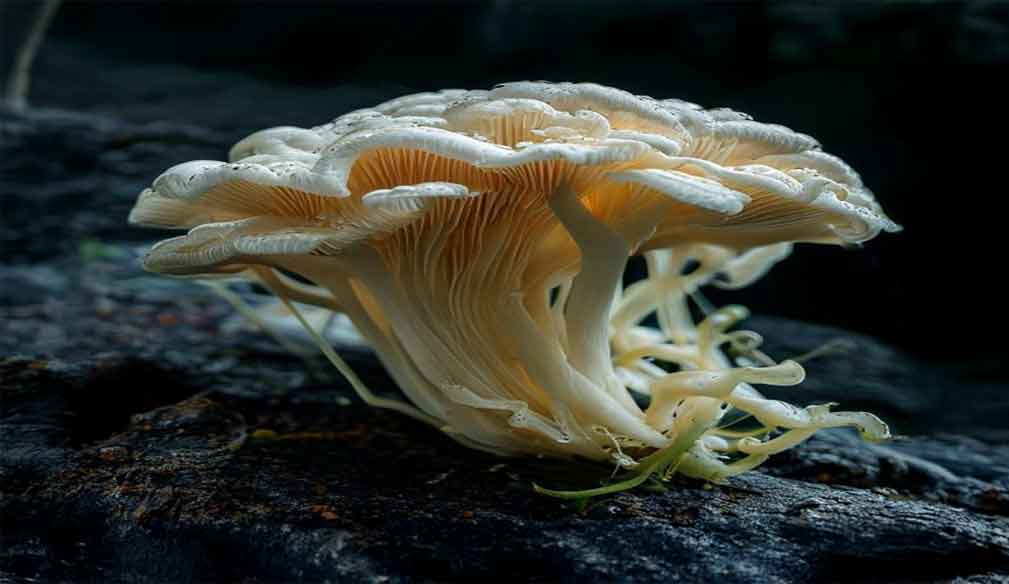
For 2,000 years, Chinese emperors paid fortunes for it. Taoist monks called it the herb of spiritual potency. Ancient texts documented it as an elixir that could extend life. Every culture that encountered Ganoderma lucidum had the same instinct: this mushroom is different.
Here is the uncomfortable truth about traditional medicine: most of it does not survive contact with modern biochemistry. Reishi is one of the rare cases where the mythos actually maps onto plausible mechanisms. Not because of magic - because of ganoderic acids, beta-glucans, and what these molecules demonstrably do inside aging biology.
This is not a supplement for people who want a quick fix. Reishi is slow, systemic, and requires the right form to do anything at all. Which is exactly why most products on the market are a waste of money.
What Is Reishi?
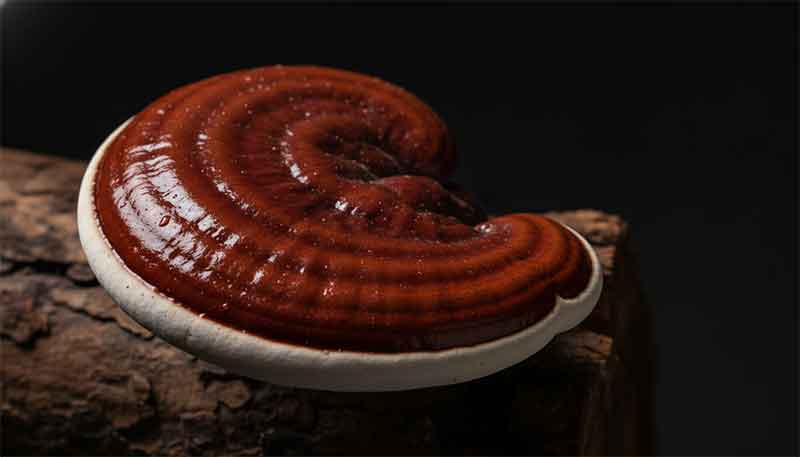
Ganoderma lucidum is a large, hard-shelled fungus native to Asia. "Lucidus" is Latin for shiny - the mushroom lives up to it, with its distinctive glossy, lacquered exterior. In China it is called Lingzhi ("herb of spiritual potency"), in Japan Reishi or Mannentake ("10,000 year mushroom"). It does not taste good - intensely bitter - because it is a medicinal mushroom, not a culinary one. The entire point is the bioactive compound load. Archaeological evidence places its medicinal use as far back as 6,800 years ago.
The Bioactive Compound Profile
Reishi contains over 400 identified bioactive compounds. The longevity-relevant ones cluster into two main classes:
Over 150 different triterpenes, particularly ganoderic acids A, B, C1, D, and T. Fat-soluble. Found primarily in the fruiting body. Responsible for the bitter taste. The longevity and neuroprotective mechanisms run through this compound class.
Water-soluble beta-1,3 and beta-1,6 D-glucans. The primary immune-modulating fraction. Reishi Polysaccharide Fraction 3 (RF3) and polysaccharides I through IV have shown lifespan extension activity in model organisms.
Structurally unique compounds only found in G. lucidum. Some have been shown to induce yeast lifespan extension. Still under active investigation for human translation.
Supporting antioxidant load. Contribute to the overall anti-inflammatory and free radical scavenging activity without being the primary mechanism drivers.
Polysaccharides are water-soluble. Triterpenoids require alcohol or heat extraction. A product that only uses one method delivers half the compound profile. Always look for "dual extract" or "hot-water and ethanol extract" on the label. If it does not say this, assume it is incomplete.
Longevity Mechanisms: What the Research Actually Shows
This is where Reishi separates itself from most adaptogens. The longevity data is not marketing language - it is mechanistic.
Telomere Preservation
A study published in Frontiers in Aging Neuroscience found that long-term administration of Ganoderma triterpenoids mitigated age-associated brain decline in aging mice through mechanisms including telomere length preservation - one of the central hallmarks of biological aging. Ganoderic acid A was identified as the likely active constituent, potentially acting through regulation of sphingolipid metabolism.
Autophagy Enhancement
The same research identified enhanced autophagy as a secondary mechanism. Autophagy is the cell's self-cleaning process - the degradation and recycling of damaged proteins and organelles. It is a core target in longevity pharmacology. Reishi triterpenoids appear to support this pathway, explaining the observed improvements in organ function and reduction of pathological metabolites in aging tissue.
Immunosenescence Delay
Immune decline with age is one of the major contributors to age-related disease and all-cause mortality. A 2024 study in British Journal of Nutrition found that Reishi dry extract supplementation modulated T lymphocyte function in older women. Clinical research has consistently validated Reishi's ability to influence T lymphocyte subsets and natural killer cell activity.
The Evidence Grid
Immune Modulation
Multiple RCTs confirm T lymphocyte and NK cell activity modulation. 2024 BJN study in older women showed significant effects on immune markers.
Stress and Mood
2024 double-blind RCT (78 participants, 30 days, 1g/day) showed significant improvements in anxiety, depression, vitality and positive well-being scores.
Telomere and Autophagy
Mechanistic evidence from animal models is solid. Human translation confirmed for cognitive outcomes but direct telomere data in humans is still limited.
Sleep Support
Animal models consistently show reduced sleep latency and extended duration. Human sleep data exists but sample sizes remain small. Mechanism via GABA and microglial modulation is plausible.
Sleep and Stress: The Shen Tonic Explanation
Traditional Chinese Medicine classifies Reishi as a "shen tonic" - shen meaning spirit or consciousness. The intended effect was calming, sleep-promoting, anxiety-reducing. Modern biochemistry has a better explanation than energetics: Reishi triterpenoids appear to inhibit overactivated microglia - the brain's resident immune cells. When microglia are chronically activated by stress, they generate inflammatory signals that directly impair mood regulation and sleep quality.
Additionally, Reishi influences GABA and serotonin pathways governing sleep architecture. The 2024 RCT (Mitra et al., PMID 39241163) enrolled 78 female college students under psychological stress. After 30 days of 1,000 mg/day, the Reishi group showed significantly improved scores across validated measures of anxiety, depression, vitality and positive well-being. This is the most rigorous human stress and mood data currently available for any medicinal mushroom.
What the Evidence Does Not Support
Blood sugar and lipid lowering effects seen in animal and in vitro models have not translated consistently into human trials. One older study in healthy adults showed a slight trend toward lower lipid levels but was not statistically significant. Do not take Reishi expecting cholesterol changes.
Anticancer claims are premature for human application. Ganoderic acid T caused mitochondrial dysfunction in lung tumor cells in vitro. Interesting biology - not a treatment, not a prevention strategy with confirmed human evidence. Anyone marketing Reishi as an anticancer supplement is selling preclinical observations as clinical conclusions.
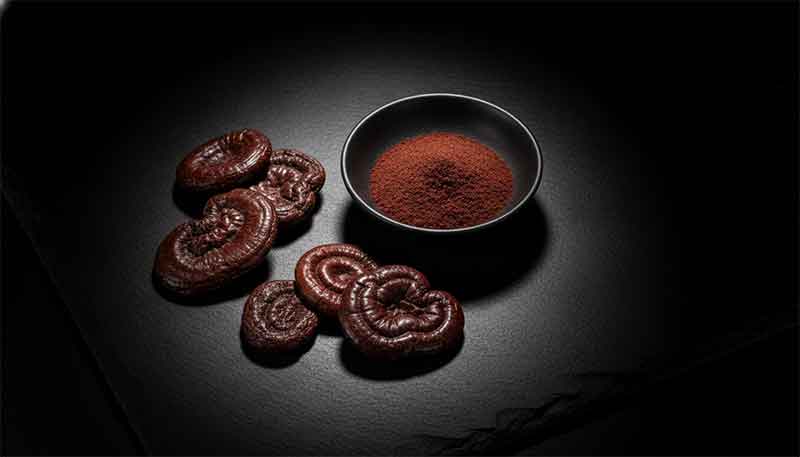
Dosage and Forms
| Form | Effective Range | Notes |
|---|---|---|
| Hot-water extract (fruiting body) | 1,000-3,000 mg/day | Delivers polysaccharides. Dual extract preferred. |
| Dual extract (water + ethanol) | 500-1,500 mg/day | Higher potency per mg. Best option overall. |
| Dried whole mushroom powder | 3-9 g/day | Low bioavailability. Not recommended for supplementation goals. |
| Mycelium-only products | Any dose | Avoid. Typically high starch, low active compound content. |
Check for beta-glucan content on the label - target above 20%. Avoid products that only list "polysaccharides" without specifying beta-glucans: polysaccharides include starch, which is useless. Fruiting body sourcing matters. Third-party testing for heavy metals is not optional for mushroom products - they bioaccumulate.
Timing: For sleep, take Reishi 60-90 minutes before bed. For immune and longevity purposes, morning or evening both work. In the ARI personal stack, Reishi sits in P5 (evening, at home) alongside Glycine, Apigenin and Melatonin - all four working on sleep architecture and nervous system downregulation without meaningful absorption competition.
Rare cases of liver toxicity have been reported with powdered Reishi mushroom preparations, distinct from water-based extracts. If you have existing liver conditions or take hepatotoxic medications, check with your doctor before adding Reishi. The signal is small but real enough to mention - particularly for anyone already running a complex stack with significant liver processing demands.