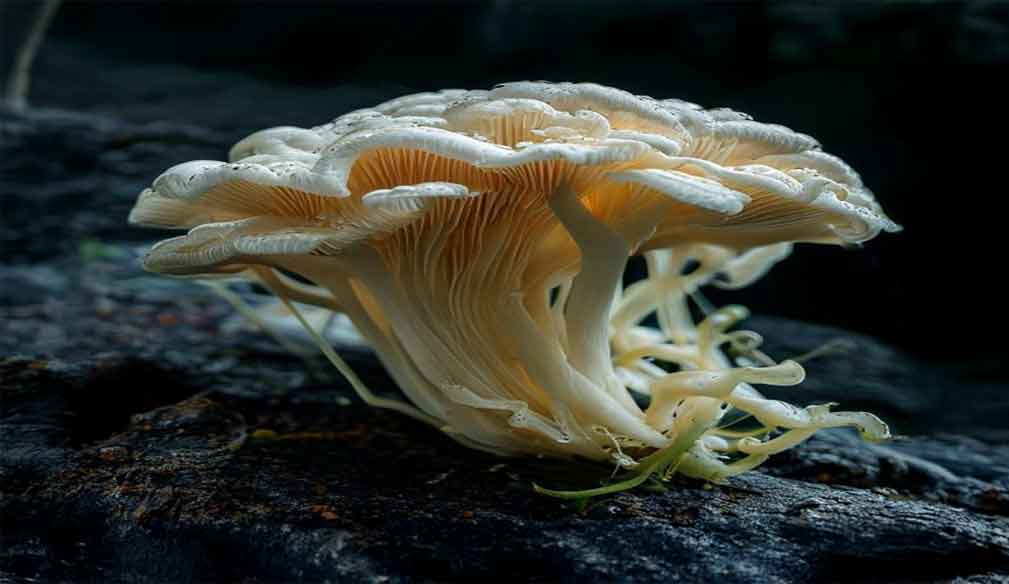
Lion's Mane (Hericium erinaceus) is one of the most visually distinctive organisms in nature - a white, cascading mass of tendrils that looks more like a sea creature than a forest mushroom. But its appearance is not why scientists find it interesting. What sets Lion's Mane apart from virtually every other dietary supplement is its documented ability to stimulate nerve growth factor (NGF) - the protein responsible for the survival, maintenance and growth of neurons.
This is not a marginal effect. Hericenones and erinacines - the two primary bioactive compound classes in Lion's Mane - cross the blood-brain barrier and directly upregulate NGF synthesis in the brain. In a world where most "brain supplements" operate through vague antioxidant effects or modest neurotransmitter support, Lion's Mane addresses neuroplasticity at a mechanistic level that no other widely available dietary compound can match.
The caveat is equally important: the clinical evidence base in humans, while growing, is still limited in scale. The mechanism is compelling. The human data supports the mechanism. But this is not yet a compound with the same clinical weight as omega-3 or CDP-choline.
The Two Bioactive Compounds - and Why Both Matter
Understanding Lion's Mane requires understanding that it contains two distinct classes of NGF-stimulating compounds found in different parts of the mushroom - and most supplements only deliver one of them.
Hericenones
Found in the fruiting body (the visible mushroom). Smaller molecules that cross the blood-brain barrier and stimulate NGF synthesis in the brain. Most traditional culinary and medicinal use has involved the fruiting body. The majority of older human trials used fruiting body extracts standardized for hericenone content.
Erinacines
Found in the mycelium (the root-like structure). Also cross the blood-brain barrier and stimulate NGF - some research suggests erinacines may be even more potent NGF stimulators than hericenones. Mycelium-based extracts are increasingly common in supplements but vary enormously in quality and actual erinacine content.
The practical implication: a supplement made exclusively from fruiting body will not deliver erinacines, and one made exclusively from mycelium may not deliver meaningful hericenone levels. A full-spectrum product specifying both compounds - or separate fruiting body and mycelium extracts - provides the most complete NGF-stimulating profile. This is one of the most important label considerations for Lion's Mane quality.
How NGF Relates to Brain Aging
NGF (Nerve Growth Factor) is a neurotrophin - a protein that regulates the growth, maintenance and survival of neurons. It was discovered in the 1950s and earned Rita Levi-Montalcini and Stanley Cohen the Nobel Prize in 1986. NGF is essential for cholinergic neurons in the basal forebrain - the neurons most devastated in Alzheimer's disease - and for peripheral sensory and sympathetic neurons.
NGF levels decline with age. This decline is associated with neuronal atrophy, reduced synaptic plasticity and diminished cognitive resilience. The core hypothesis for Lion's Mane is that by stimulating NGF synthesis, it supports the maintenance and potential regeneration of neuronal structures that age-related decline would otherwise progressively erode.
The challenge with directly supplementing NGF is that it cannot cross the blood-brain barrier - it is too large a protein. This is where Lion's Mane's small bioactive molecules (hericenones and erinacines) provide a unique advantage: they cross the barrier and stimulate the brain's own NGF production from the inside.

The Clinical Evidence
Mild Cognitive Impairment (MCI)
A landmark Japanese RCT (Mori et al., 2009) showed significant cognitive improvements in older adults with MCI after 16 weeks of Lion's Mane supplementation - with decline after stopping. This remains the most cited human evidence and is consistent across multiple follow-up studies in cognitively impaired populations.
Healthy Younger Adults - Acute Effects
A 2025 double-blind RCT published in Frontiers in Nutrition found acute improvements in cognitive processing speed and mood in healthy younger adults after a single dose of standardized Lion's Mane extract. A 2023 Northumbria University pilot study showed faster Stroop task performance at 60 minutes post-dose.
Mood and Anxiety
Several trials report reductions in anxiety and depressive symptoms alongside cognitive improvements. The mechanism likely involves NGF's role in serotonergic and cholinergic neurotransmission rather than direct mood-regulating effects. Consistent signal across trials but effect sizes are modest.
Chronic Effects in Healthy Adults
The 2023 Northumbria pilot study found only a trend (not significant) toward stress reduction after 28 days in healthy young adults. This is consistent with the general pattern: effects are strongest in populations with existing deficits or impairment. Healthy adults with no cognitive issues see more modest benefits.
A double-blind, randomized, placebo-controlled study published in Frontiers in Nutrition in February 2025 tested a standardized Hericium erinaceus extract in healthy younger adults. Results showed significant acute improvements in cognitive processing speed and mood following a single dose. This is notable because most previous human evidence focused on older adults or those with existing cognitive impairment - this trial extends the evidence to healthy individuals, albeit with acute rather than chronic measurements. The study adds weight to the case for Lion's Mane in cognitive performance protocols, not just cognitive decline prevention.
Form and Quality - What to Look for on the Label
Full-Spectrum Extract
Specifies both hericenone and erinacine content. Combines fruiting body and mycelium. Look for standardization percentages. This is the most complete NGF-stimulating profile available.
Fruiting Body Extract
Delivers hericenones. The form used in most Japanese clinical trials. Look for "fruiting body only" and a specified extraction ratio (e.g. 8:1 or 10:1). Traditional and well-studied.
Generic "Mushroom Powder"
Many products list only "Lion's Mane mushroom powder" with no extraction method, no compound specification and no standardization. These may deliver negligible hericenone or erinacine content. Avoid unspecified products.
Many Lion's Mane supplements labeled as "mycelium extract" are actually mycelium grown on grain substrate - and the final product contains significant quantities of grain rather than pure mycelium. Some independent analyses have found these products contain more starch than actual Lion's Mane compounds. Look for products that specify "mycelium extract" with a concentration ratio, or choose certified fruiting body extracts to avoid this issue.
Dosing and Cycling
| Purpose | Daily Dose | Form | Cycle |
|---|---|---|---|
| Cognitive support / neuroplasticity | 500 - 1,000mg extract | Standardized fruiting body or full-spectrum extract | 6-8 weeks on, 1-2 weeks off |
| MCI / cognitive decline support | 1,000 - 3,000mg | Fruiting body extract standardized for hericenones | As per clinical trial protocols - discuss with healthcare provider |
| Acute cognitive performance | 1,800mg single dose | Standardized extract | As needed - based on 2025 RCT acute protocol |
| Not recommended | - | Unstandardized powder, mycelium-on-grain products | Unpredictable bioactive content |
Lion's Mane is best taken in the morning with or without food. Some users report mild stimulating effects when taken in the evening - likely due to increased NGF and acetylcholine activity. It pairs well with CDP-choline (which also supports acetylcholine synthesis) and with omega-3 DHA (which provides structural support for the neuronal membranes that NGF helps maintain).
Safety Profile
Lion's Mane has a long history of safe culinary and medicinal use in East Asia. Clinical trials consistently report excellent tolerability with no serious adverse events at standard supplemental doses. The safety profile is considerably cleaner than ashwagandha - no documented liver toxicity, no thyroid interference, no hormonal effects.
Do not use if you have a known mushroom or mold allergy. Rare cases of allergic reactions including skin rash and respiratory symptoms have been reported. People with autoimmune conditions should consult a healthcare professional before using Lion's Mane, as it has immunomodulatory properties that could theoretically affect immune-mediated conditions. Pregnant and breastfeeding women should also consult a healthcare provider before supplementing.