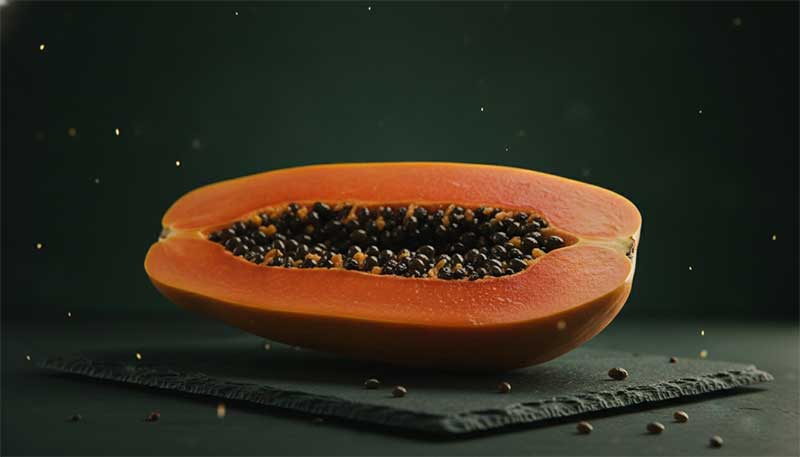
Papain shows up in two very different places: in your grandmother's meat tenderizer, and in a 2008 FDA enforcement action. Both are true, and both matter for understanding what this enzyme actually does and where the real risk sits. It is a proteolytic enzyme - meaning it breaks down protein - extracted from the milky latex of unripe papaya (Carica papaya). Humans have used it for centuries to tenderize meat, and more recently as a digestive supplement and, for several decades, as a topical wound-care agent.
That last use is the most clinically interesting part of papain's story, and it is also the part most supplement marketing conveniently leaves out. We are going to cover both sides here - what oral papain plausibly does for digestion, and the considerably more complicated history of papain as a wound-debriding agent that the FDA eventually pulled from the market.

What Papain Actually Is
Papain is a cysteine protease, a roughly 23.4 kDa enzyme that hydrolyzes peptide bonds in protein molecules, breaking larger proteins into smaller fragments. It is harvested from the latex of unripe papaya fruit and is one of the most widely used plant-derived enzymes in food processing, cosmetics and, at various points, medicine.
In the digestive tract, the theoretical case for papain is straightforward: protein digestion requires proteolytic enzymes, and if your own production is insufficient, taking extra protease from an outside source could, in principle, help. The practical evidence for this in humans, however, is considerably thinner than the theory suggests. Most of what supports oral papain as a digestive aid comes from small studies, papaya-extract research where papain is one of several active compounds, and physiological plausibility rather than large randomized controlled trials.
The Wound Care Story - Where the Real Evidence and the Real Controversy Both Live
From the 1940s through the early 2000s, papain combined with urea (and sometimes chlorophyllin) was a widely used topical agent for enzymatic debridement - the process of removing dead or necrotic tissue from chronic wounds like pressure ulcers, venous ulcers and burns, particularly in patients where surgical debridement was not appropriate. The mechanism is mechanistically sound: papain hydrolyzes the proteins in necrotic tissue, fibrin and slough, loosening dead material so it can be removed and allowing the wound bed to heal.
The hypersensitivity concern is not theoretical. Papain is a known occupational allergen - studies of workers regularly exposed to papain in manufacturing or food-processing settings have confirmed genuine sensitization through skin testing and RAST (radioallergosorbent testing), with symptoms improving after exposure stopped. This is a separate and more concrete safety signal than the usual "consult your doctor" boilerplate attached to most supplements - it is a specific, confirmed allergenic mechanism.
The Clinical Evidence
Topical Wound Debridement
Limited but consistent evidence from systematic reviews shows papain-urea ointment removes necrotic tissue from chronic wounds faster than some comparators. Whether this translates into faster overall wound healing is less clear, and the product category is no longer FDA-marketed in the US.
Oral Digestive Support
Small studies and papaya-extract research suggest papain-containing preparations may reduce bloating and improve subjective digestion in some people. High-quality, large RCTs isolating papain specifically from other papaya compounds are lacking.
Functional Dyspepsia Blends
Multi-enzyme blends including papain or related proteases have shown symptom improvement in functional dyspepsia trials, but these studies test combination products, making papain's individual contribution difficult to isolate.
Preliminary Niche Findings
A single clinical study reported behavioral improvements in children with autism using a papain-pepsin combination, and small studies suggest papaya-enzyme lozenges may ease sore throat symptoms. Both findings need replication before being considered established.
Papain is a confirmed occupational sensitizer. Documented case studies show genuine IgE-mediated sensitization in workers regularly exposed to papain dust or aerosols, confirmed through skin prick testing, with symptom resolution after exposure ended. People with known allergies to papaya, latex, or other plant proteases should avoid papain supplementation entirely. This is the central reason the FDA withdrew topical papain-urea products from the market in 2008 - not a dismissal of efficacy, but a response to a confirmed hypersensitivity signal in a product category that had never undergone formal review.
If you encounter papain-urea debridement products still in circulation (some remain available outside the US or through compounding channels), understand that this is the same category the FDA acted on in 2008. The clinical case for efficacy in selected chronic wounds is not zero, but the regulatory status reflects an unresolved safety question, not an outdated formality. Anyone managing a chronic wound should work with a clinician on evidence-supported debridement options rather than sourcing topical papain independently.
What It Stacks Well With
Bromelain
Another plant-derived proteolytic enzyme, from pineapple. Frequently combined with papain in digestive enzyme blends, targeting protein digestion through a complementary cysteine-protease mechanism.
Amylase
Handles carbohydrate digestion while papain handles protein. Multi-enzyme blends pair the two to cover a broader range of macronutrients in a single meal-time supplement.
Lipase
Targets fat digestion. Combined with papain's protease activity in broad-spectrum digestive enzyme formulas aimed at functional dyspepsia and general post-meal discomfort.
Probiotics
Digestive enzyme blends are commonly paired with probiotic strains on the theory that easier macronutrient breakdown and a balanced gut microbiome address digestion from two different angles.
Peppermint Extract
Often included alongside papain in digestive support formulas for its carminative effect on gut motility, addressing bloating through a separate, non-enzymatic mechanism.
Betaine HCl
Supports stomach acid levels upstream of where papain acts. Some formulations combine the two on the premise that low stomach acid and insufficient protease both contribute to incomplete protein digestion.
Dosing
| Purpose | Dose | Timing | Notes |
|---|---|---|---|
| General digestive support | 40 - 250mg per capsule | Immediately before or at the start of a protein-rich meal | No NIH-recommended intake or FDA-approved therapeutic oral dose exists |
| Typical daily range | 40 - 500mg/day | Split across meals containing protein | Varies widely by product; check label for actual papain content, not just "papaya enzyme blend" |
| Topical / wound debridement | Formulation-specific (% w/w) | Per clinical protocol only | This product category was withdrawn from the US market by the FDA in 2008. Not a self-directed use case |
Avoid papain entirely if you have a known allergy to papaya, latex, kiwi, or other plant proteases - cross-reactivity between these is documented. People taking anticoagulant medication should consult their doctor before supplementing, as papain's proteolytic activity has a theoretical interaction with clotting-related proteins, though this is not robustly quantified in humans at oral supplement doses. Pregnant women should be especially cautious: unripe papaya and concentrated papain have a long history of traditional use as an abortifacient in some cultures, and safety in pregnancy has not been established. Anyone with a history of occupational exposure to papain (food processing, pharmaceutical manufacturing) who develops new respiratory or skin symptoms should consider papain sensitization as a possible cause.