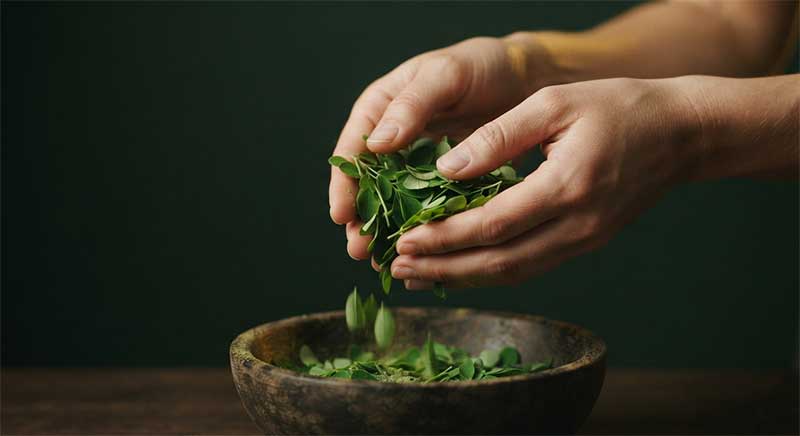
Moringa oleifera has earned its "miracle tree" nickname honestly, in one specific sense: its leaves genuinely are an unusually nutrient-dense whole food, with a nutritional profile that holds up well against much more heavily marketed superfoods. Where the story gets complicated is the gap between that real nutritional density and the much broader set of therapeutic claims - blood sugar control chief among them - that have been layered on top of it. This article tries to keep those two things properly separated.
The Nutrient Density Claims: Mostly True, With an Important Asterisk
The comparisons you've probably seen - moringa provides roughly 7 times more vitamin C than oranges, 10 times more vitamin A than carrots, 17 times more calcium than milk, 9 times more protein than yoghurt, 15 times more potassium than bananas, and 25 times more iron than spinach - are drawn from published nutritional analyses and are, weight for weight, largely accurate. Dried moringa leaf powder really does run 19-29% protein by weight and contains all nine essential amino acids, which is genuinely uncommon among plant foods and makes it a legitimate complete protein source.
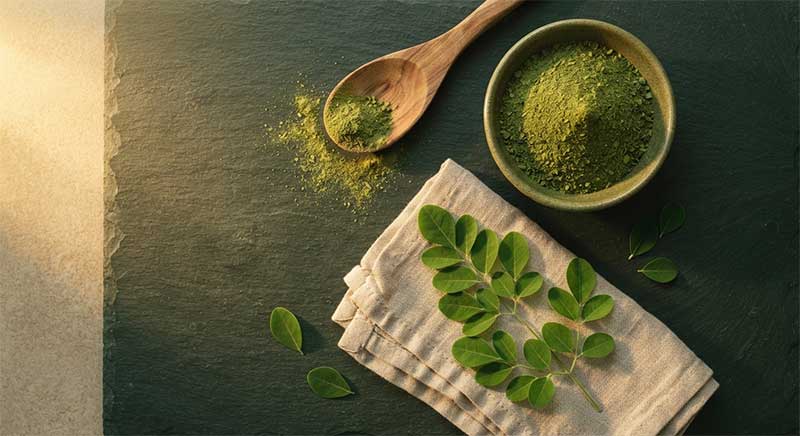
Every one of those multiplier comparisons is calculated per 100 grams of dried moringa powder - a quantity nobody consumes in a typical serving. A realistic daily dose is 1-2 teaspoons, roughly 5-10 grams, meaning the actual nutrient contribution scales down to a fraction of the headline number. Moringa is still a genuinely nutrient-dense addition to a smoothie or meal at that realistic dose - it just isn't the "replaces your multivitamin" argument the 100g comparisons imply. It's also worth knowing that vitamin C degrades substantially during drying, so powder delivers meaningfully less vitamin C than the fresh-leaf figures often used in marketing. And like every plant food, moringa contains no vitamin B12 and no vitamin D - the two nutrients most commonly lacking on plant-based diets - so it doesn't close those specific gaps regardless of dose.
One more nutrient interaction worth knowing, given how heavily both minerals feature in moringa's marketing: its high calcium content can reduce its own iron absorption by up to 84% when the two are consumed together in the same meal. If iron intake specifically is your goal, this is a genuine reason to consider spacing moringa away from other calcium-rich foods, or pairing it with a vitamin C source instead, which enhances iron absorption.
Blood Sugar: The Claim Outruns the Best Available Evidence
This is where moringa's marketing and its actual clinical evidence diverge most sharply, and it's worth walking through carefully, because the gap is easy to miss if you only skim citation lists.
9 RCTs649 Participants
StudiesRodent Models, Not Humans
Blood Pressure: The One Metabolic Claim With Real Legs
Set against the disappointing blood sugar picture, moringa's blood pressure evidence is a genuine bright spot worth highlighting on its own terms - and a useful reminder that a supplement's marketing overreach in one area doesn't mean every claim about it is empty.

Systolic Blood Pressure: -7.50 mmHg
A meta-analysis and meta-regression focused specifically on hyperglycemia and hypertension found moringa lowered systolic blood pressure by a mean difference of 7.50 mmHg (95% CI: -10.96 to -4.03, p<0.0001) - a clinically meaningful reduction by most standards.
A Genuinely Newer, Larger Finding
This blood pressure result comes from a larger, more recent pooled analysis than the RCT-only cardiometabolic review discussed above, which only found a modest, non-robust diastolic effect. The two aren't necessarily contradictory - they measured different outcomes with different study sets - but it does mean the blood pressure claim currently sits on firmer ground than the blood sugar claim.
Leaf vs. Root, Bark, and Flowers: A Safety Distinction That Actually Matters
Nearly every supplement covered on this site has one detail that changes the entire safety picture if you miss it. For moringa, it's this: "moringa" isn't a single uniform ingredient from a safety standpoint - which part of the plant you're taking matters enormously.
Moringa leaf - the part used in most leaf powder, capsule, and tea products - is generally well tolerated in typical food-level doses. The root, bark, and flowers are a different matter entirely: they contain documented uterus-stimulating (uterotonic) compounds, and traditional medicine in several regions has specifically used root and bark preparations to induce miscarriage. The root bark additionally contains an alkaloid called moringine, structurally similar to ephedrine, with documented paralyzing effects on the nervous system at high exposure. Pregnant people should avoid root, bark, and flower preparations entirely, and should discuss even leaf-based products with a physician before use, since supplement-strength leaf doses (distinct from culinary food amounts) haven't been well studied for pregnancy safety specifically.
A Practical Approach
Using Moringa Sensibly
Dosing
| Purpose | Typical Studied / Realistic Dose | Notes |
|---|---|---|
| General nutrient supplementation | 1 - 2 tsp (5 - 10g) dried leaf powder/day | A realistic serving size, far below the 100g used in most "X times more" marketing comparisons |
| Blood pressure (as studied) | Varies by trial; typically leaf extract | Effects were more consistent in trials lasting 12 weeks or longer |
| Blood sugar | Not established for humans | Best current human-RCT-only evidence does not support a reliable effect |
Avoid moringa root, bark, and flower preparations entirely during pregnancy - these parts contain documented uterus-stimulating compounds. Discuss leaf-based products with a physician before use during pregnancy or breastfeeding, since supplement-strength dosing hasn't been well studied in this population specifically. Moringa may interfere with levothyroxine absorption - space doses apart and monitor thyroid labs if using both. It may amplify the effects of diabetes medication (raising hypoglycemia risk) and blood pressure medication (raising hypotension risk) - monitor closely if combining. Very high doses, or use of root/bark specifically, have been associated with liver and kidney strain in case reports; rare allergic and cutaneous reactions, including case reports of Stevens-Johnson syndrome, have also been documented. Choose products sourced from leaf only, given documented contamination incidents (including a multistate Salmonella outbreak tied to moringa leaf powder) affecting the broader supplement category.
What It Stacks Well With
A Varied Whole-Food Diet
Best positioned as one nutrient-dense addition among many, not a standalone replacement for dietary variety.
Vitamin C-Rich Foods
Pairing improves iron absorption and offsets moringa's own calcium-iron interaction.
Blood Pressure Monitoring
Tracking your own response is a practical way to confirm whether the pooled trial finding applies to you.
Levothyroxine (Space Doses)
Documented absorption interference - separate timing and monitor thyroid labs.
Pregnancy - Root/Bark/Flower (Avoid)
A hard, specific contraindication tied to these plant parts, not the leaf generally.
Diabetes/BP Medication (Monitor)
Documented additive effects - discuss with a physician before combining.