Healthy aging protocols tend to get written as supplement lists - a stack of pills organized by claimed benefit, with exercise mentioned briefly, if at all, as a footnote. The actual evidence base doesn't support that ordering. Across nearly every outcome that matters most for older adults - muscle mass, fall risk, bone density, functional independence - movement-based interventions are doing the majority of the measurable work, with nutrition and supplementation playing a real but genuinely secondary, additive role. This protocol is organized to reflect that honestly: lifestyle and movement come first, not as a disclaimer before the supplement list, but because the research consistently puts them there.
It's also organized by risk area rather than as one undifferentiated list, because the evidence quality varies meaningfully between them. Some of what follows - resistance training's effect on muscle mass, vitamin D's role in bone health - rests on a genuinely large, consistent body of research. Other pieces are more preliminary or more individually variable. Several of the supplements mentioned here have their own dedicated, considerably deeper articles elsewhere on this site, and this protocol will point to those rather than duplicating the full evidence breakdown for each one.
The Foundation: Movement, Protein, and Sleep
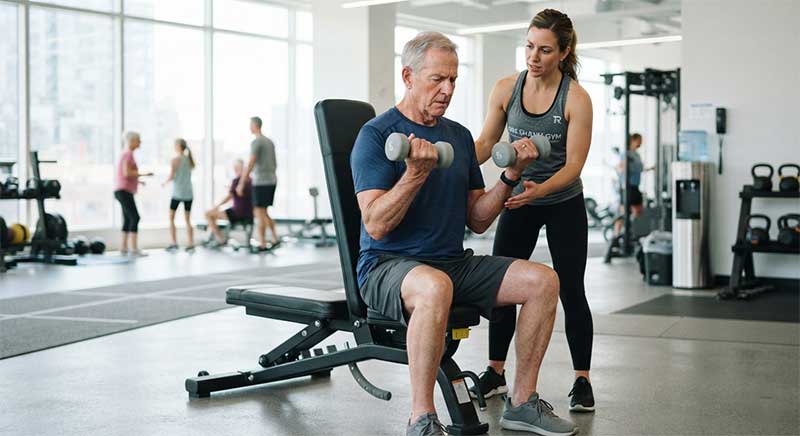
Before any supplement discussion, it's worth being direct about what the research consistently identifies as the single most powerful lever available for healthy aging: resistance training. This isn't a generic wellness platitude - it's the specific, repeatedly confirmed finding sitting underneath nearly every section that follows in this article.
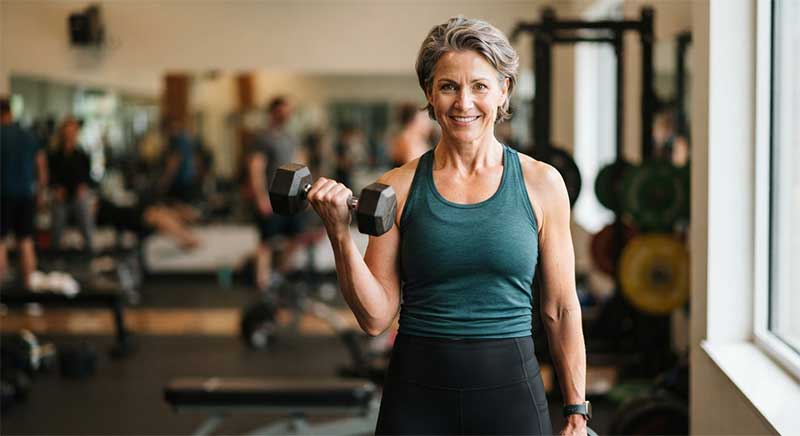
A comprehensive umbrella review found strong evidence supporting the positive impact of resistance training on muscle mass in older adults, and exercise training exerts direct anti-inflammatory and antioxidant effects through specific cellular signaling pathways that help mitigate age-related muscle loss. A 2025 network meta-analysis comparing exercise and nutritional strategies for sarcopenia found that resistance training combined with protein and vitamin D was the most effective approach for improving appendicular muscle mass - notably, the combination outperformed nutrition-only approaches, and vitamin D supplementation alone was consistently found unlikely to substantially improve muscle strength or function on its own. The practical implication is direct: if you're choosing where to put your limited time and attention first, structured resistance exercise, ideally two to three sessions per week targeting major muscle groups, is the intervention with the strongest, most consistent evidence behind it - more consistent than any single supplement discussed in this article.
Protein intake works alongside exercise rather than substituting for it. Aging is associated with a phenomenon researchers call "anabolic resistance" - older muscle tissue requires proportionally more protein per meal to trigger the same muscle-building response that a smaller amount would trigger in a younger adult. This is part of why most current nutritional guidelines for older adults recommend higher protein intake than general population guidelines suggest, typically in the range of 1.0-1.2 grams per kilogram of body weight daily, or higher still for those actively engaged in resistance training or recovering from illness or surgery. Distributing that protein across meals, rather than concentrating most of it at dinner (a common pattern in many older adults' eating habits), also appears to matter for how effectively it's used.
Sleep and social engagement deserve a place in this foundational section too, even though they're harder to quantify with the same precision as a resistance training protocol. Poor sleep is independently associated with increased fall risk, cognitive decline, and impaired glucose regulation - all outcomes this protocol is otherwise trying to address through nutrition and exercise. Social engagement and a sense of purpose have their own independent, well-documented associations with longevity and cognitive resilience in observational research, even though this kind of intervention resists the clean randomized-trial structure available for a specific nutrient or exercise protocol. None of this diminishes the value of the more specific, supplement-focused sections that follow - it's simply the honest starting point the evidence points to.
Muscle Mass and Fall Risk
Sarcopenia - the progressive loss of muscle mass, strength, and function with age - affects an estimated 10-40% of older adults depending on which diagnostic criteria are used, and it's directly linked to increased falls, functional decline, and higher rates of hospitalization. This is arguably the single risk area where combining nutrition with exercise has the clearest, most replicated supporting evidence.
713Meta-Analysis
nutrientCombined Formulas
AloneConsistently Insufficient

The Vitamin D and Falls Question, Answered Honestly
Vitamin D's relationship to fall prevention is one of the more genuinely nuanced findings in this entire protocol, and it's worth working through carefully, because the honest answer depends heavily on a detail that's easy to miss in a quick summary.
Both the large US VITAL trial and the Swiss DO-HEALTH trial found no effect of vitamin D supplementation on reducing falls in their study populations. Taken at face value, this could easily be read as evidence against vitamin D's role in fall prevention entirely. But the researchers involved specifically noted that most participants in both trials were not vitamin D deficient to begin with - meaning these null results reflect what happens when you give vitamin D to people who already have adequate levels, not what happens when you correct an actual deficiency. As the DO-HEALTH investigators put it directly, these findings likely apply primarily to selected older adults with overall good health status and an active lifestyle, and they explicitly state this does not contradict vitamin D's potential benefits for fall prevention in more vulnerable, vitamin D-deficient populations. A separate updated meta-analysis specifically confirms that vitamin D supplementation does reduce fall risk in vitamin D-deficient elderly populations - the benefit is real, it's just concentrated in the specific group that actually needs correcting, not universal.
The practical takeaway is straightforward: vitamin D testing, not blanket supplementation, is the more useful first step for an older adult concerned about fall risk specifically. If you're already vitamin D replete, additional supplementation is unlikely to meaningfully reduce your fall risk on its own - your time and attention are better spent on the resistance training and protein intake covered in the previous section. If a blood test shows genuine deficiency, correcting it has real, evidence-supported value for both bone health and fall risk specifically.
Bone Health
Bone density loss accelerates with age in both men and women, though the mechanism and timeline differ by sex - postmenopausal women experience a more rapid initial decline tied to estrogen loss, as covered in more depth in our dedicated perimenopause protocol. Vitamin D and calcium remain the foundational, well-established pair here, with vitamin D specifically carrying high-certainty evidence for reducing fracture risk when correcting an actual deficiency, consistent with the falls discussion above. Weight-bearing and resistance exercise, once again, provides an independent and complementary mechanical stimulus for bone maintenance that no supplement replicates on its own.
Cognitive Health
Cognitive decline risk in older adults involves several overlapping, only partially separable factors - vascular health, inflammation, specific nutrient deficiencies, and mechanisms that remain only partially understood even in current research. This is an area where the evidence for individual supplements is genuinely more mixed and more preliminary than the muscle and bone sections above, and it's worth engaging with that honestly rather than overselling any single intervention.
Vitamin B12
B12 deficiency becomes more common with age due to reduced stomach acid production affecting absorption, and can cause genuine cognitive and neurological symptoms when present. Our dedicated B12 guide covers what it actually corrects (real deficiency) and what it doesn't (cognitive enhancement in non-deficient adults) in detail.
Omega-3 Fatty Acids
Omega-3's cardiovascular benefits have their own independent evidence base, and cardiovascular health and cognitive health are meaningfully linked in aging populations, making omega-3 a reasonable component of a broader healthy-aging approach even where direct cognitive claims remain less definitively established.
Lithium Orotate
A 2025 mouse study found genuine neuroprotective signals from lithium orotate specifically. Our dedicated guide covers why this remains an early-stage, mouse-level finding rather than a confirmed human recommendation, and the one population (those on prescribed lithium for bipolar disorder) who should never substitute it.
Acetyl-L-Carnitine
Our ALCAR guide covers genuinely solid evidence for depression and peripheral neuropathy specifically, alongside an honestly unresolved dementia-specific question where a Cochrane review doesn't support routine use - a useful distinction for anyone considering it specifically for cognitive decline.
Cardiovascular Health
Cardiovascular disease risk rises substantially with age, and this protocol's cardiovascular section leans heavily on the same resistance and aerobic exercise foundation covered earlier, alongside established dietary patterns (Mediterranean-style eating, adequate omega-3 intake) with independent, substantial supporting evidence of their own. One specific supplement deserves a direct, careful mention here given a serious contraindication relevant to exactly the population this protocol addresses.
L-arginine has genuinely consistent evidence for lowering blood pressure across independent meta-analyses, covered in detail in our dedicated L-arginine guide. But a landmark trial (VINTAGE MI) found L-arginine given to patients recovering from a recent heart attack was associated with higher mortality than placebo - a serious, specific finding that directly shapes current medical guidance against its use in that population. Given how common cardiovascular events become with age, this is a contraindication genuinely worth knowing about by name, not just as a vague caution, before considering L-arginine as part of any senior health approach.
Medication Safety: The Most Overlooked Risk Area in This Entire Protocol
Nearly every section above has focused on what to add - exercise, protein, specific nutrients. This final section focuses on something arguably more important for many older adults: understanding the risk that comes from what's already being taken, and how new supplements interact with it.
CriteriaA Standard Screening Tool