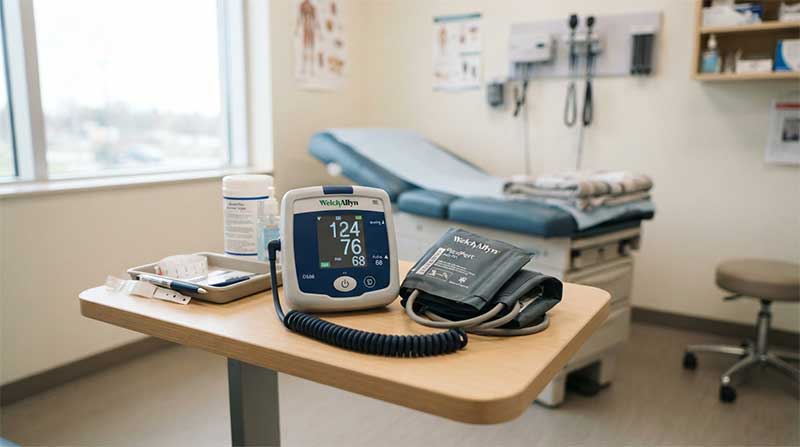
L-arginine occupies a genuinely interesting position among the supplements covered on this site, because it manages to combine two things that don't usually appear together: reasonably consistent, cross-replicated evidence for one specific, common use, and a serious, well-documented safety signal in one specific, identifiable population. Most of the contested evidence stories on this site involve either "the studies disagree with each other" or "the evidence just hasn't been generated yet." L-arginine's story is different - the blood pressure evidence is unusually consistent for a supplement, and the safety concern isn't vague or theoretical, it's tied to an actual, named clinical trial with a specific, serious finding.
L-arginine is a naturally occurring amino acid that your body produces on its own and also obtains from protein-rich foods - fish, red meat, poultry, soy, whole grains, beans, and dairy all contain meaningful amounts, which is part of why true dietary deficiency is genuinely rare. Its relevance to cardiovascular health comes from its role as the direct physiological precursor to nitric oxide, a molecule that signals blood vessels to relax and widen. This single mechanism is the thread connecting nearly everything in this article, both the genuine benefits and the genuine risks.

The Blood Pressure Evidence: Genuinely Consistent Across Independent Reviews
Unlike some of the joint-health and adaptogen supplements covered elsewhere on this site, where competing meta-analyses have reached opposite conclusions from overlapping data, L-arginine's blood pressure research shows a more reassuring pattern: separate research teams, working years apart, have arrived at broadly similar conclusions.
11 RCTsAmerican Heart Journal
22 StudiesAdvances in Nutrition
DependentOn Baseline BP
Beyond blood pressure specifically, Mayo Clinic's clinical summary identifies a few other areas with genuine, if more preliminary, supporting research: L-arginine may decrease symptoms and improve quality of life in people with angina, and it may improve walking distance in people with intermittent claudication - the leg pain and weakness caused by reduced blood flow during walking. Both of these plausible extensions of the same nitric-oxide mechanism, though with a smaller evidence base than the blood pressure research described above.
It's worth noting a specific area where L-arginine's plausible mechanism didn't produce the expected result: a triple-blind, randomized, placebo-controlled crossover trial specifically testing whether L-arginine improved cardiovascular and autonomic recovery following exercise found no effect, despite citing the same nitric-oxide-mediated vasodilation mechanism that underlies the blood pressure findings. This is a useful, honest reminder that a real, replicated effect in one physiological context (resting blood pressure) doesn't automatically generalize to every context a plausible mechanism might suggest (post-exercise recovery) - each specific claim deserves its own evidence check rather than borrowing confidence from a related, but distinct, finding.
The Serious Exception: A Specific, Well-Documented Contraindication
This is the part of L-arginine's story that deserves the clearest, most direct treatment in this entire article, because it isn't a vague caution or a theoretical risk extrapolated from animal data - it's a specific, named clinical trial with a serious, real-world finding that continues to shape medical guidance today.
A 2006 randomized controlled trial known as VINTAGE MI examined L-arginine supplementation in patients recovering from a recent myocardial infarction (heart attack), given alongside standard post-heart-attack medical treatment. The trial found that L-arginine was associated with higher mortality compared to placebo in this specific population - not simply "no benefit," but a signal pointing toward genuine harm. This finding has not been replicated in other populations, and the likely explanation involves arginine's effects specifically in acutely damaged cardiac tissue rather than a general property of the compound itself. But the finding was serious enough that Mayo Clinic's current clinical guidance states directly: L-arginine isn't recommended for people who have had a recent heart attack, due to concerns that the supplement might increase the risk of death.
This is worth being unambiguous about: if you have had a recent heart attack, L-arginine supplementation is not a reasonable choice to make on your own, regardless of how genuinely encouraging the blood pressure evidence described above might otherwise seem. The population and context matter enormously here - this isn't a reason to be broadly afraid of L-arginine's blood pressure benefits in a healthy or stable cardiovascular population, but it is a hard, specific line that shouldn't be crossed without direct medical guidance in the specific post-heart-attack context.
Two Further Safety Considerations Worth Knowing
Herpes Simplex Virus
L-arginine can stimulate herpes simplex virus replication. Anyone with a history of cold sores or genital herpes should be cautious with high-dose supplementation, since it may increase outbreak frequency. Some practitioners address this by co-supplementing with L-lysine, an amino acid that competes with arginine for cellular transport, though this specific mitigation strategy has less formal trial support than the underlying caution itself.
Kidney Function and Electrolytes
L-arginine may disturb the body's electrolyte balance in people with kidney disease, and its use has caused deadly irregular heart rhythms in some people with kidney function problems or kidney failure. This is a distinct population-specific concern from the post-heart-attack contraindication above, and equally worth taking seriously.
Two more practical notes worth flagging: L-arginine can worsen allergies or asthma in some people, and if you have any surgery scheduled, disclose L-arginine use to your care team, since standard guidance is to stop the supplement at least two weeks before a procedure given its effects on blood clotting and vessel tone.
A Practical Approach
Using L-Arginine Sensibly
Dosing
| Purpose | Typical Studied Dose | Notes |
|---|---|---|
| Blood pressure (general population) | 4 - 6g/day | Reflects doses commonly used across the pooled blood pressure trials |
| Blood pressure (hypertensive population, as studied) | Up to 10g/day, 10 weeks | Reflects the higher-dose trial specifically in hypertensive patients showing larger reductions |
Never take L-arginine without medical guidance if you have had a recent heart attack, given the documented association with increased mortality in this specific population. Avoid or use with caution if you have kidney disease, given the risk of electrolyte disturbances and dangerous heart rhythm irregularities. Use with caution if you have a history of cold sores or genital herpes, given the documented potential for viral reactivation. L-arginine can worsen allergies and asthma in some people. Discuss use with a physician if you take blood-thinning medication, given arginine's effects on platelet aggregation and vessel tone. Disclose use to your surgical team and discontinue at least two weeks before any planned procedure.
What It Stacks Well With
Blood Pressure Monitoring
Tracking your own response over time is a practical, low-cost way to confirm whether the general trial finding applies meaningfully to you specifically.
Standard Cardiovascular Care
Best positioned as a discussed complement to, not a replacement for, established blood pressure management.
L-Lysine (If Herpes History)
Some practitioners pair these two competing amino acids specifically to offset arginine's herpes-reactivation potential, though formal trial support for this specific combination is limited.
Recent Heart Attack (Contraindicated)
A specific, serious, well-documented contraindication - do not use without direct medical guidance in this context.
Kidney Disease (Caution)
Documented risk of electrolyte disturbance and dangerous arrhythmias in this population - discuss with a physician first.
Blood Thinners / Upcoming Surgery (Caution)
Disclose use to your care team and stop at least two weeks before any planned procedure.