Most longevity supplements work by supporting a process your body already does - more antioxidant capacity, better mitochondrial function, improved nutrient delivery. Fisetin works differently. It belongs to a small, genuinely novel category called senolytics: compounds designed to selectively kill off senescent cells, the "zombie cells" that stop dividing with age but refuse to die, instead sitting in tissue and releasing inflammatory signals that damage everything around them.
This distinction matters because it changes what kind of evidence is relevant. You are not asking whether fisetin reduces oxidative stress in a test tube - dozens of polyphenols do that. You are asking whether it can selectively clear a specific, biologically defined cell population in a living human being, and whether that translates into something you can actually feel or measure. The honest answer in 2026 is: more than almost any other senolytic, but with real unresolved questions.
What Is Fisetin?
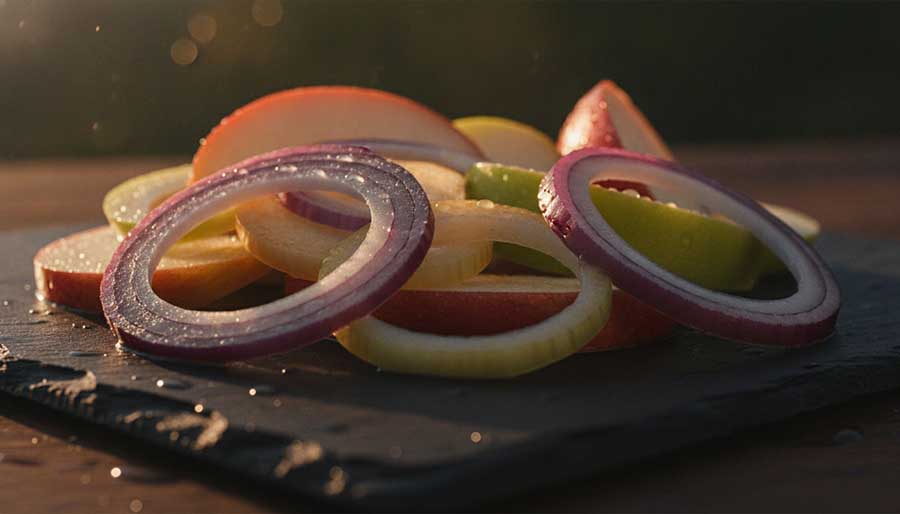
Fisetin is a flavonoid - a naturally occurring plant pigment - found in a variety of fruits and vegetables, most notably strawberries, but also in apples, persimmons, onions, and cucumbers. It has been studied for decades as a general antioxidant and anti-inflammatory compound. What changed its profile entirely was a landmark 2018 discovery that fisetin acts as a senolytic: it preferentially induces apoptosis (programmed cell death) in senescent cells while sparing healthy, non-senescent cells nearby.
That selectivity is the entire point. A compound that simply kills cells indiscriminately would be a poison. A compound that can distinguish a senescent cell from a healthy one and clear only the former is doing something genuinely difficult and genuinely useful for aging biology - assuming the effect holds up in humans the way it does in mice.
The Senescence Mechanism, Briefly
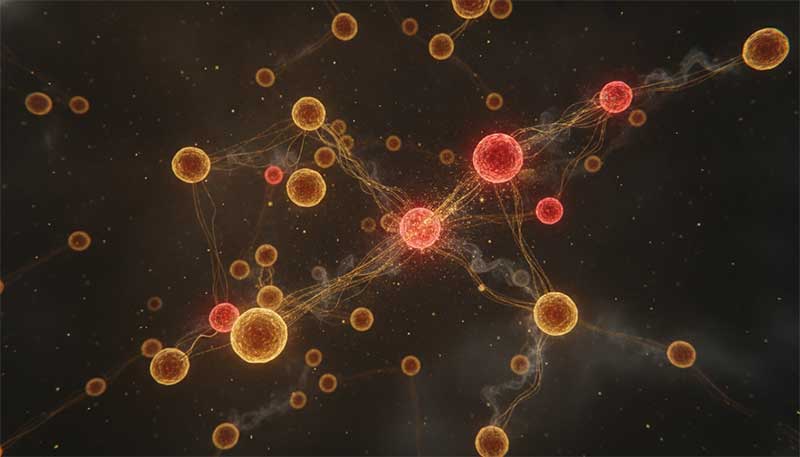
Senescent cells accumulate with age. They stop dividing, but instead of dying off through normal apoptosis, they persist and secrete a cocktail of inflammatory proteins known as the senescence-associated secretory phenotype, or SASP. This SASP output is one of the central drivers of the chronic, low-grade inflammation associated with aging - sometimes called "inflammaging" - and is mechanistically linked to frailty, reduced physical function, and a wide range of age-related diseases.
Fisetin triggers programmed cell death specifically in senescent cells, sparing healthy tissue. This selectivity, demonstrated across multiple senescent cell types in vitro, is the core senolytic mechanism distinguishing fisetin from generic antioxidants.
By clearing senescent cells, fisetin indirectly reduces the inflammatory SASP signaling those cells produce - the proposed link between fisetin treatment and reduced systemic inflammation in animal models.
A 2025 review specifically attributes many of fisetin's chemoprotective effects to hormesis - a biphasic dose-response where low doses trigger adaptive, protective cellular responses, distinct from a simple linear dose-effect relationship.
Research has found fisetin induces apoptosis in many, but not all, types of senescent cells - an important nuance, since it means fisetin's effect is not uniform across every tissue or every form of cellular senescence.
The Mayo Clinic Long-COVID Data
This is the largest human dataset currently available for fisetin, and it deserves a clear-eyed look at exactly what it does and does not show.
A 2024 study involving 536 long-COVID patients tracked outcomes for participants, of whom 44 received a fisetin intervention. Among those 44 patients, 64% reported significant alleviation in symptoms including fatigue, muscle pain, and orthostatic hypotension - a notable result, given that long-COVID symptom clusters overlap substantially with patterns associated with cellular senescence and chronic inflammation.
The "536 patients" figure describes the overall study population, not the number who received fisetin - only 44 patients actually got the intervention being evaluated. A 64% response rate in 44 people is a meaningful, hypothesis-generating signal, not proof of efficacy at the scale the headline number might suggest. This is exactly the kind of detail that gets flattened in supplement marketing, and exactly the kind of detail worth checking yourself before trusting any single statistic.
What's Actually Running Right Now
Fisetin has an unusually active human clinical trial pipeline for a flavonoid supplement, which is itself a signal worth noting - most supplements never reach this stage of investigation.
Phase 2 Sepsis Trial (STOP-Sepsis)
A multi-center, randomized, double-blinded, adaptive allocation phase 2 clinical trial is actively testing fisetin's efficacy in preventing clinical deterioration in elderly sepsis patients. The trial plans to enroll 220 patients over age 65, randomized to receive fisetin as a single 20 mg/kg oral dose, two 20 mg/kg doses spaced one day apart, or placebo. The underlying hypothesis is that senescent immune cells contribute to maladaptive responses during sepsis, and that clearing them with fisetin could mitigate that response - a genuinely novel application outside the typical "anti-aging" framing.
Pharmacokinetic Pilot Trial
A separate pilot trial is specifically measuring how fisetin is absorbed and metabolized in both healthy volunteers and older patients with multiple chronic conditions, using a 20 mg/kg/day dose over two consecutive days, followed by monitoring for up to three months. This is foundational pharmacokinetic work - the kind of basic data that determines whether dosing recommendations on supplement bottles have any real grounding.
What the Animal Data Shows
A 2025 study found that intermittent fisetin supplementation improved physical function and decreased cellular senescence in aging skeletal muscle, with effects comparable to both genetic clearance of senescent cells and synthetic senolytic drug treatment - a meaningful benchmark, since it places fisetin's effect size in the same range as more targeted, lab-engineered interventions. The same research found fisetin treatment reduced age-associated frailty index scores, using a frailty measure reflective of clinical frailty indices used in human medicine.
Separately, intermittent fisetin treatment in old mice improved arterial function by decreasing cellular senescence in vascular tissue - extending the senolytic story beyond muscle into cardiovascular aging specifically.
The Bioavailability Problem
This is the part of the fisetin story that supplement marketing tends to skip entirely. A 2024 scientific review directly states that fisetin's low bioavailability and rapid metabolism may hinder its clinical translation - meaning even where the underlying biological effect is real, getting enough active fisetin into the bloodstream and keeping it there long enough to matter is a genuine pharmacological challenge.
This is part of why the clinical trial doses look so different from typical supplement bottle doses. The trials above use 20 mg/kg - for a 70 kg (154 lb) adult, that works out to roughly 1,400 mg, taken intermittently rather than daily. Many commercial fisetin supplements are dosed at 100-500 mg, far below the trial-validated range, and almost certainly insufficient to replicate the senescent cell clearance effect seen in the research.
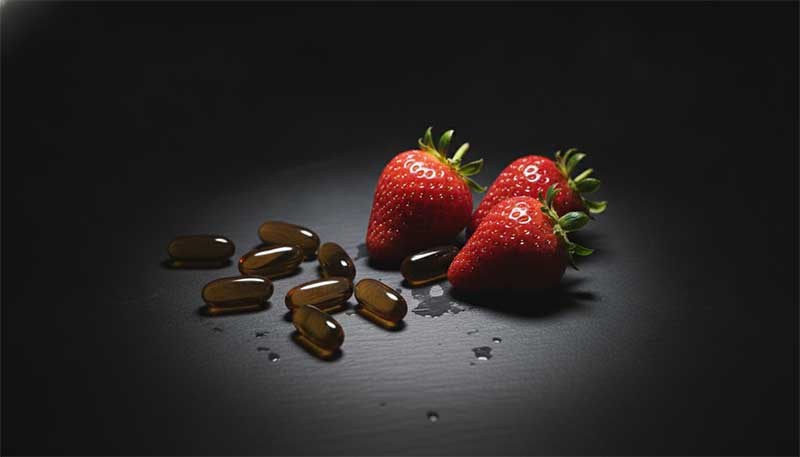
Fisetin is naturally present in strawberries, but at concentrations measured in single-digit micrograms per gram of fruit. Reaching even a moderate supplemental dose through diet alone would require eating an impractical quantity of strawberries daily, and natural dietary fisetin still carries the same bioavailability limitation as supplemental fisetin. This is a case where "get it from food" genuinely is not a realistic alternative to supplementation, if the senolytic dose-range effect is what you are after.
Other Documented Effects
Research on fisetin's blood-brain barrier penetration has found it can directly neutralize free radicals and reduce pro-inflammatory cytokines in brain tissue, with one 2024 study reporting fisetin increased dopamine levels by 1.8 to 2.2 times in a Parkinson's disease animal model - an early but mechanistically interesting signal for neurological applications. Separate research has examined fisetin's potential role in bone health, including osteoporosis and osteoarthritis, through reduction of pro-inflammatory cytokines like TNF-alpha.
Long-COVID Symptom Relief
64% response rate in a 44-patient Mayo Clinic cohort. Meaningful signal, but small sample and not yet a placebo-controlled outcome trial.
Sepsis (Phase 2 RCT)
A genuinely rigorous, randomized, adaptive-allocation trial enrolling 220 elderly patients is underway - results not yet available as of this writing.
Physical Function & Frailty
2025 mouse data shows effects comparable to genetic senescent cell clearance - one of the most direct mechanistic validations available for any senolytic supplement.
Neurological & Bone Health
Interesting dopaminergic and anti-inflammatory signals in animal models. Human translation for these specific applications remains largely unstudied.
Dosage and Forms
| Approach | Range | Notes |
|---|---|---|
| Senolytic protocol (research-aligned) | ~20 mg/kg, taken intermittently (2 consecutive days, then weeks off) | Matches the dose used in active human trials. High dose; intermittent use is intentional, mirroring how senolytics are designed to work. |
| Standard supplement dose | 100-500 mg/day | Common commercial dosing. Likely insufficient to replicate trial-level senescent cell clearance based on bioavailability data. |
| Dietary intake (strawberries, apples) | Negligible relative to supplemental doses | Contributes to overall polyphenol intake but not a realistic path to senolytic-range dosing. |
On the ARI personal stack, fisetin is used as part of a monthly senolytic pulse alongside high-dose quercetin and apigenin, taken on 3 consecutive days per month rather than continuously - consistent with the "hit it, then clear out" logic behind intermittent senolytic dosing rather than daily low-dose use.
The 20 mg/kg research dose is substantially higher than what most commercial supplements provide, and intermittent high-dose senolytic protocols are still an active area of human investigation, not an established consumer practice. If you have any chronic illness, are on medication, or are considering anything beyond standard label-dose supplementation, this is a conversation for your doctor, not a self-directed experiment based on a clinical trial protocol designed for a specific, monitored patient population.