Curcumin has a branding problem. It is simultaneously one of the most rigorously studied natural compounds in modern pharmacology and one of the most overhyped ingredients in the supplement aisle. Both things are true at once, and untangling them requires looking past the curry-spice mythology and into what the actual pharmacokinetics data says.
The short version: the anti-inflammatory mechanism is real and well-documented. The delivery problem is also real and frequently solved badly. Most of what determines whether a curcumin supplement does anything at all comes down to a question nobody asks when they buy it - does this particular formulation actually get into your bloodstream?
What Is Curcumin?
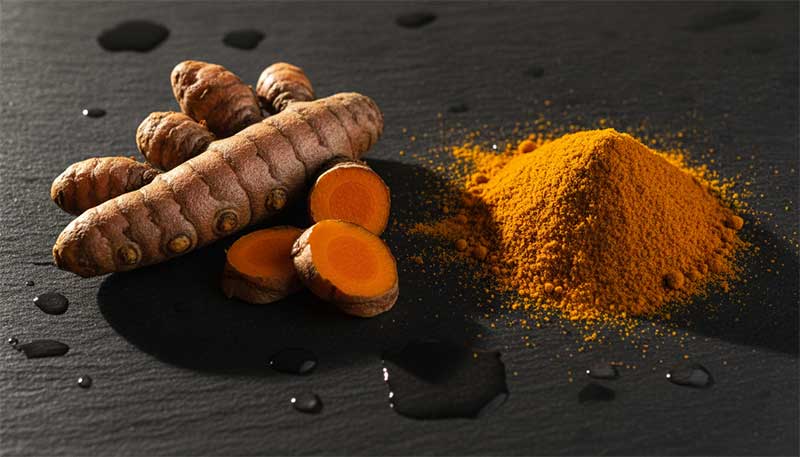
Curcumin is the primary curcuminoid found in turmeric (Curcuma longa), the rhizome responsible for the bright yellow-orange color of curry powder. It has been used in Ayurvedic and traditional Chinese medicine for centuries, but the molecule itself has a specific, well-characterized pharmacological profile that modern research has spent decades mapping.
The problem starts immediately: intact curcumin in the human body may be too low - under 1 micromolar - to meaningfully affect cell signaling and gene expression, compared to the 10-20 micromolar concentrations used in laboratory cell studies. This gap between what works in a petri dish and what reaches your tissue is the single biggest issue in curcumin research, and it explains almost everything confusing about this supplement category.
Why Curcumin Is So Hard to Absorb
Three separate problems compound each other. Curcumin has poor water solubility, meaning it does not dissolve well in the digestive tract. It undergoes rapid metabolism, getting broken down and conjugated by the liver and intestines almost as fast as it is absorbed. And it has limited systemic distribution, meaning even what does get through tends not to circulate widely in the bloodstream.
Plain turmeric powder or unformulated curcumin extract is almost certainly underdosed in practice, regardless of what the label says about milligrams. The number on the bottle tells you how much curcumin is in the capsule - not how much actually reaches your tissue. This is the single most important thing to understand before buying any curcumin product.
The Piperine Question: More Complicated Than the Marketing Suggests
For years, the standard advice has been simple: take curcumin with black pepper, because piperine (the compound responsible for pepper's bite) dramatically boosts absorption. This is not wrong, exactly - but it is more complicated than the marketing implies.
It is confirmed that curcumin bioavailability can be significantly enhanced by up to 2000% within 45 minutes in humans when administered with piperine. That is a genuinely large effect, and it is the basis for most "curcumin with BioPerine" products on the market. Piperine itself has documented antioxidant, anti-obesity, cardioprotective, hepatoprotective, and anti-inflammatory properties independent of its absorption-boosting effect.
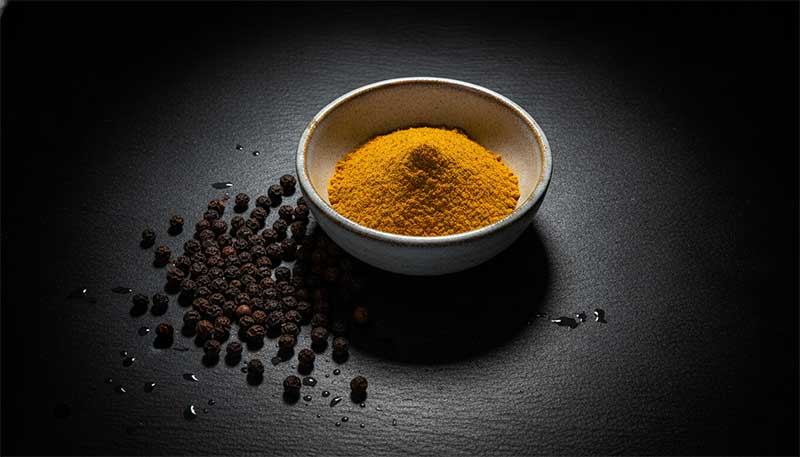
Here is where it gets genuinely complicated. A 2025 pharmacokinetic study and critical reappraisal of curcumin formulations found that piperine addition provided no benefit, with an important caveat: the researchers emphasized that bioavailability claims should be based on unconjugated curcumin - the actual free, bioactive form - not on its poorly membrane-permeable conjugated metabolites. Older studies measuring total curcumin-related compounds in blood (including inactive conjugates) may have overstated piperine's real-world benefit.
This is a genuine, ongoing scientific disagreement, not settled science. Older pharmacokinetic studies measuring total curcumin metabolites show large absorption increases with piperine. Newer, more methodologically careful studies measuring only the active unconjugated form found no benefit. Until this is resolved, the safest conclusion is that piperine clearly works for some outcomes (the muscle soreness and inflammatory marker data below used curcumin-piperine combinations successfully) but the magnitude of the bioavailability boost specifically may be smaller than the famous "2000%" number suggests.
Beyond Piperine: Other Bioavailability Strategies
The classic combination, marketed as "curcumin C3 complex." Stimulates the gastrointestinal system, inhibits hepatic and intestinal glucuronidation (the process that deactivates curcumin), and prevents curcumin efflux from cells.
Modern delivery technologies that can increase curcumin exposure by orders of magnitude by physically protecting the molecule and improving solubility. More expensive, but mechanistically more reliable than piperine alone.
Curcumin bound to phosphatidylcholine, improving membrane permeability. Used in formulations like Meriva, with its own separate body of clinical trial data.
Formulations like BCM-95 add back the natural turmeric essential oil (containing ar-turmerone) removed during standard curcumin extraction, which appears to aid absorption through a different mechanism than piperine.
The Osteoarthritis Evidence: The Strongest Case Curcumin Has
This is where curcumin's clinical case is most solid. A 2025 systematic review and meta-analysis pooled 21 randomized controlled trials covering 1,705 patients with knee osteoarthritis across seven countries. The result: curcumin significantly lowered CRP and TNF-alpha levels compared to placebo - these are objective inflammatory blood markers, not just self-reported pain scores, which makes this a meaningfully stronger form of evidence than subjective symptom surveys alone.
An earlier pilot RCT found that 1,500 mg/day of curcuminoids in three divided doses over six weeks produced measurable improvements on the WOMAC osteoarthritis index compared to placebo. Separately, a 12-week trial of 201 patients comparing a curcuminoid-turmeric-oil formulation, the same formulation combined with boswellic acid, and placebo found real improvements in joint pain, morning stiffness, and physical function scores. A broader meta-analysis of eight RCTs with over 800 participants found that turmeric extract at roughly 1,000 mg/day curcumin supports the case for efficacy in OA, while noting curcumin is less effective at relieving pain than ibuprofen directly - a useful, honest comparison point rather than a "natural cure" narrative.

Beyond Joints: What Else the Recent Research Shows
Cardiometabolic and Liver Markers
A 2025 GRADE-assessed systematic review and meta-analysis specifically examining curcuminoid-piperine co-supplementation found beneficial effects on liver enzymes and inflammatory markers in adults with chronic disease risk, though the review noted that findings across individual studies have been inconsistent - an honest acknowledgment that not every trial agrees, even within a generally positive overall pattern. A separate 2025 trial found curcumin supplementation improved clinical outcomes in patients with diabetes and atherosclerotic cardiovascular risk.
Inflammatory Bowel Disease and Autoimmune Conditions
A randomized, double-blind, placebo-controlled clinical trial examined curcumin plus piperine specifically for redox imbalance, fecal calprotectin, and cytokine levels in inflammatory bowel disease patients - a genuinely difficult-to-treat population where any adjuvant anti-inflammatory tool is clinically relevant. Separately, a randomized clinical trial found that vitamin D combined with curcumin-piperine attenuated disease activity and pro-inflammatory cytokine levels in systemic lupus erythematosus patients.
Rheumatoid Arthritis: A More Mixed Picture
A 2025 double-blind trial evaluating a nanomicelle curcumin formulation in rheumatoid arthritis reported clinical symptom improvement but no statistically significant change in ESR (a standard inflammation marker) over the trial period - a useful reminder that enhanced-bioavailability formulations do not uniformly translate into every measured outcome, even when the underlying mechanism is sound.
Knee Osteoarthritis
Large meta-analyses (21 trials, 1,705+ patients) confirm reduced CRP and TNF-alpha. The best-supported clinical application of curcumin currently available.
Cardiometabolic Markers
Multiple 2025 trials show improved liver enzymes and inflammatory markers, but systematic reviews note inconsistency across individual studies.
Inflammatory Bowel Disease
RCT evidence exists for curcumin-piperine reducing fecal calprotectin and cytokines, but as an adjuvant approach, not a standalone IBD treatment.
Bioavailability Enhancement
Real and significant with most enhancement strategies, but the specific piperine mechanism is under active scientific reappraisal as of 2025.
What the Evidence Does Not Support
Curcumin has been studied for anti-cancer, anti-obesity, and neuroprotective applications, and the preclinical signal across these areas is genuinely interesting. But this is laboratory and animal-model territory for the most part. Curcumin is not a validated cancer treatment, and a critical analysis of clinical trials on curcumin in malignant disease specifically flagged ongoing bioavailability limitations as a core reason clinical translation has lagged behind the preclinical enthusiasm.
If you see curcumin marketed as a cancer cure or a guaranteed depression treatment, that claim is running well ahead of what controlled human trials currently support.
Dosage and Forms
| Form | Effective Range | Notes |
|---|---|---|
| Standardized curcuminoid extract + piperine | 500-1,500 mg/day curcuminoids | The most common clinically-tested combination. Take with a fat-containing meal. |
| Phytosome/phospholipid complex (e.g. Meriva) | 500-1,000 mg/day | Higher cost, separate clinical trial base, mechanistically distinct from piperine. |
| Turmeric oil co-formulation (e.g. BCM-95) | 500-1,000 mg/day | Retains natural ar-turmerone. Used in the osteoarthritis combination trial above. |
| Plain turmeric powder (culinary) | Any culinary amount | Contributes to overall diet quality but delivers a fraction of the dose used in clinical trials. |
Take curcumin with a meal containing some fat - curcumin is fat-soluble, and this improves absorption regardless of which bioavailability strategy the product uses. Give it 6-12 weeks before judging whether it is doing anything; this is not an acute-effect supplement, and the trial data consistently uses this timeframe.
Curcumin has mild blood-thinning properties and should be used cautiously alongside anticoagulant or antiplatelet medications. High doses can cause gastrointestinal upset in some people. If you have gallbladder disease, curcumin stimulates bile production and should be discussed with a doctor first. Piperine specifically can affect the metabolism of certain medications by inhibiting liver enzymes - check for interactions if you take prescription drugs regularly.