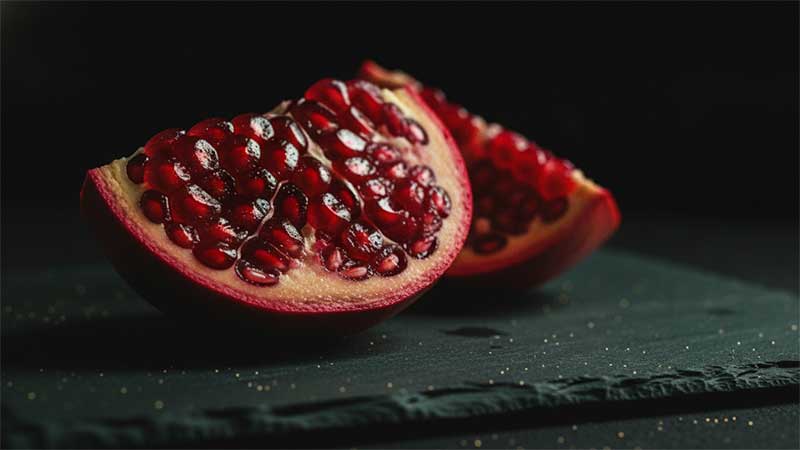
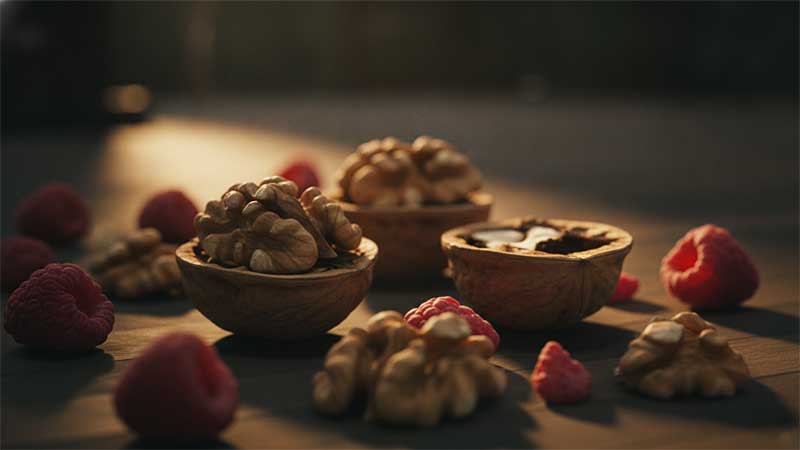
Urolithin A has a genuinely unusual origin story among "longevity compounds" - it isn't actually in any food you eat. Pomegranates, walnuts, strawberries, and raspberries contain ellagitannins, a class of polyphenols that your gut bacteria - not your digestive enzymes - convert into urolithins. Urolithin A is the most biologically active of these conversion products, and whether your body makes any meaningful amount of it depends almost entirely on which bacterial strains happen to live in your gut.
That detail matters more than it sounds like it should, and it's the reason direct urolithin A supplementation exists as a category at all rather than just "eat more pomegranates."
The Conversion Problem - Why Diet Alone Often Doesn't Work
A study examining this directly recruited 100 participants and found that only 12% had detectable urolithin A in their system at baseline. After drinking pomegranate juice, roughly 40% of participants showed significant conversion to urolithin A - meaning the majority still didn't, even with a direct dietary source. The same study then gave participants a single 500mg dose of purified urolithin A (the Mitopure formulation), which produced plasma urolithin A levels six times higher than the pomegranate juice phase achieved. That gap is the entire commercial and scientific rationale for urolithin A as a standalone supplement: it sidesteps a bacterial conversion step that a large share of people simply can't perform efficiently, regardless of how much pomegranate they eat.
What It Does in the Body
Urolithin A's primary mechanism of interest is its role as a mitophagy inducer - it triggers the cellular process that identifies and clears out damaged mitochondria, the energy-producing structures inside cells. Since mitochondrial dysfunction accumulates with age and is linked to muscle decline (sarcopenia), inflammation, and several degenerative conditions, a compound that meaningfully supports this cellular cleanup process has a plausible, mechanistically grounded case for broad relevance to aging.
The Human Evidence - Real, But Not Overwhelming
Muscle Strength & Performance
A 2025 systematic review of placebo-controlled human trials (174 total participants across 3 eligible studies) found 4 of 12 measured outcomes reached statistical significance. Walk distance improved by 23m but narrowly missed significance (p=0.12). Real signal, genuinely mixed results.
Immune Aging
A 2025 randomized, double-blind, placebo-controlled trial in 50 healthy middle-aged adults (1,000mg/day, 4 weeks) found measurable changes in T cell subsets and immune metabolic markers related to age-related immune decline.
Heart Failure Biomarkers
A randomized, double-blind, crossover, placebo-controlled trial in heart failure patients with reduced ejection fraction found improvements in select cardiovascular biomarkers, alongside preclinical cardioprotection data.
Athletic Performance (Soccer Players)
A pilot RCT in academy soccer players during preseason training examined aerobic endurance, sprint speed, and antioxidant capacity - an early-stage, small-sample study in a specific athletic population, not yet broadly generalizable.
The overwhelming majority of human clinical research on urolithin A - including most of the trials cited above - is funded by, affiliated with, or uses the proprietary formulation from Amazentis, the company that holds key patents and markets urolithin A as Mitopure (sold directly and through the Timeline brand). This is stated plainly on the company's own research page, which frames itself as standing "against pseudoscience" by publishing in peer-reviewed journals - a reasonable practice, but it does not substitute for independent replication. None of this means the published data is fabricated or wrong. It does mean that, as of 2026, broad independent confirmation outside the patent holder's own research program is still genuinely thin, and that's worth knowing before treating any single trial result as definitive.
What It Stacks Well With
Resveratrol
Both are polyphenol-derived compounds with proposed roles in mitochondrial and cellular aging pathways, frequently combined in broader longevity-stack formulations.
Creatine
Targets muscle energy and performance through a completely different, well-established mechanism - a logical pairing for anyone interested in the muscle-aging angle specifically.
Akkermansia / Gut-Supportive Fiber
Since natural urolithin A production depends on gut bacterial composition, supporting overall gut microbiome diversity is mechanistically relevant even when also taking a direct supplement.
Omega-3
Both have proposed roles in mitochondrial membrane health and inflammation, making them a common pairing in cellular-health-focused stacks, though direct synergy trials are limited.
Vitamin C
General antioxidant support pairing common in broader formulations; no specific mechanistic interaction with urolithin A's mitophagy pathway has been established.
Independent Verification (Always)
Given how much of the evidence base traces back to one company, cross-checking any specific claim against the NCI-sponsored or other independently funded trials as they publish is a reasonable habit for this particular compound.
Dosing
| Purpose | Dose | Notes |
|---|---|---|
| General use (as studied) | 500mg/day | Single-dose pharmacokinetic studies show six-fold higher plasma levels than pomegranate juice at this dose |
| Muscle/immune trials | 1,000mg/day | Used in several of the 4-week RCTs discussed above; longer trials (12 months) have also used doses in this range without major safety signals |
| Dietary alternative | Pomegranate, walnuts, berries | Conversion to actual urolithin A is highly individual-dependent; not a reliable substitute for direct supplementation if consistent levels matter to you |
If your goal is specifically urolithin A exposure, dietary sources are a genuine gamble given that roughly 60% of people in the cited study showed minimal conversion even after direct ellagitannin intake. Eating pomegranates and walnuts is still a reasonable general health habit for other reasons, but it is not an evidence-based substitute for a direct urolithin A supplement if that specific compound is your actual target.
Safety studies including trials running up to 12 months report no major safety concerns, no adverse liver or kidney effects, and good tolerability. Mild gastrointestinal symptoms have been reported in a minority of users, particularly at higher doses. As with most newer compounds, safety data in pregnancy, breastfeeding, and children is not established - avoid use without medical guidance in these groups. Given the limited independent research base discussed above, anyone on complex medication regimens should discuss urolithin A with their doctor before adding it, simply because drug-interaction research specifically is still thin.