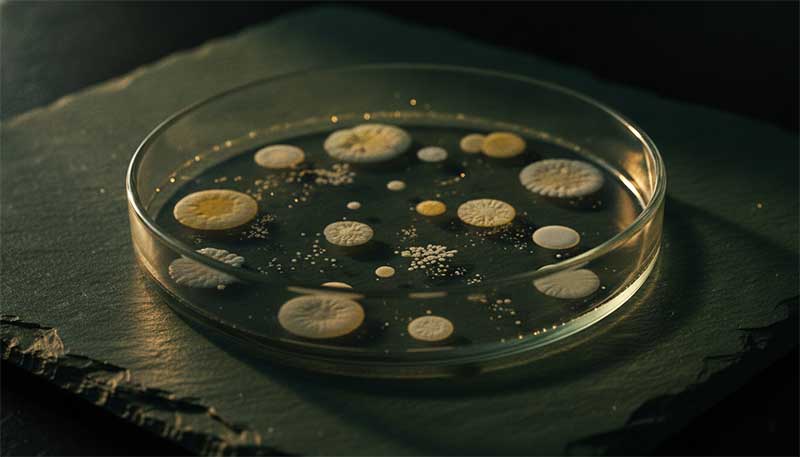
Akkermansia muciniphila was not discovered as a wellness trend - it was identified in 2004 by microbiologist Muriel Derrien as a previously uncatalogued species living in the human gut, distinguished by an unusual specialty: it eats mucin, the protective glycoprotein your intestinal cells secrete to form the gut's mucus barrier. For about a decade it stayed in academic microbiology circles. Then animal studies started showing something interesting, and by 2019 the first human trial landed in a major journal. Since then, Akkermansia has gone from a niche genus name to one of the most actively commercialized strains in gut health, with major research institutions from Duke to Shanghai Jiao Tong University publishing on it and a market already valued in the hundreds of millions of dollars.
What makes this bacterium genuinely interesting - and genuinely complicated - is the same trait that made it useful in the first place. A microbe that survives by consuming your protective mucus layer is not an unambiguously "good" addition by default. The honest picture requires holding both the real human evidence and the real mechanistic caution at the same time, which most coverage of this supplement does not do.

What It Actually Does - The Mucin Paradox
Your gut lining is covered by two mucus layers: an inner layer that stays essentially sterile and acts as the last line of physical defense, and an outer layer that hosts a dense community of bacteria, including Akkermansia. Akkermansia's defining trait is breaking down mucin from that outer layer for energy - a process that, at normal population levels, appears to be part of a healthy, self-renewing system rather than a problem. The constant low-level degradation actually stimulates goblet cells to produce more mucin, keeping the barrier in a state of healthy turnover.
The Human Evidence
Insulin Sensitivity (2019 Landmark Trial)
A proof-of-concept RCT (Depommier et al., Nature Medicine) found pasteurized Akkermansia supplementation over 3 months improved insulin sensitivity, reduced insulinemia by 28%, and decreased total cholesterol in overweight/obese adults - the trial that launched the current wave of commercial interest.
Type 2 Diabetes - Baseline-Dependent Response
A 2025 12-week RCT in 58 overweight/obese adults with type 2 diabetes (Zhang et al., Cell Metabolism) found metabolic improvements concentrated specifically in participants who started with low baseline Akkermansia levels - a meaningful nuance most coverage omits entirely.
Liver Function & Lipid Markers
An 8-week trial of a specific pasteurized strain (PROBIO) found significant reductions in total and direct bilirubin and ALT levels in overweight patients, suggesting a hepatic benefit alongside the metabolic effects.
Causality Still Unproven in Humans
A November 2025 review explicitly concluded that while associations are consistent in both rodent and human studies, causality for Akkermansia's benefits has thus far only been demonstrated in animal models - human RCTs show correlation and improvement, not yet confirmed mechanism-level causation.

When More Akkermansia Is Not Better
This is the part of the story that gets left out of most marketing, and it's not a minor footnote. Multiple 2025 studies specifically investigated what happens when Akkermansia over-colonizes the gut rather than existing at typical levels. In a mouse model where gut microbiota was disrupted with antibiotics before introducing live Akkermansia, researchers found the bacteria decreased intestinal mucin content, reduced tight junction protein expression, and measurably thinned the protective mucus layer - the opposite of the barrier-supportive effect seen at normal colonization levels.
A separate 2025 critical review titled, pointedly, "Akkermansia muciniphila in Metabolic Disease: Far from Perfect," and another examining "benefits and harms" both reached the same core conclusion: in specific gut environments - active inflammatory bowel disease, Salmonella infection, or gut recovery immediately following antibiotic use - excess Akkermansia enrichment has been linked to worsened barrier damage and increased inflammatory cytokine secretion (IL-1β, IL-6, TNF-α) rather than benefit.
The honest framing here is not "Akkermansia is dangerous" - for most metabolically healthy adults without active gut inflammation, the human trial evidence leans clearly positive. The framing is that this bacterium's relationship with your gut barrier is genuinely conditional on context, not uniformly beneficial regardless of circumstance. People with inflammatory bowel disease (Crohn's, ulcerative colitis), anyone recovering from a recent course of antibiotics, or anyone with an active gastrointestinal infection should treat Akkermansia supplementation as an open question requiring medical guidance, not a safe default.
What It Stacks Well With
Polyphenols
Dietary polyphenols (from berries, green tea, pomegranate) have been shown in several studies to naturally increase endogenous Akkermansia abundance, offering a food-based route to the same target the supplement aims at directly.
Inulin / Prebiotic Fiber
Chicory root inulin and similar fermentable fibers are among the most studied prebiotics for supporting a broader healthy gut microbiome, including conditions that favor mucin-associated bacteria like Akkermansia.
Metformin
Interestingly, metformin has been shown in animal models to enrich Akkermansia naturally as part of its anti-inflammatory, mucus-barrier-protective effect in colitis - an unexpected mechanistic overlap, not a recommendation to combine them deliberately.
Multi-Strain Probiotics
Often combined in synbiotic formulations targeting broader metabolic and gut health outcomes, on the theory that a more diverse microbial input supports overall barrier and metabolic function rather than relying on a single species.
Recent Antibiotics (Caution)
Not a beneficial combination. Animal research specifically found that introducing Akkermansia immediately after antibiotic-induced microbiome disruption worsened mucin depletion and gut barrier damage rather than aiding recovery.
GLP-1 Agonists
Semaglutide and similar drugs have been observed to increase Akkermansia abundance while decreasing overall microbial diversity - an emerging research area with more questions than answers so far, not yet a basis for combining them intentionally.
Dosing
| Form | Typical Studied Dose | Notes |
|---|---|---|
| Pasteurized Akkermansia (as studied) | Approximately 10^10 cells/day | Matches the dose range used in the 2019 landmark trial and several 2025 follow-up RCTs |
| Live Akkermansia preparations | Varies by commercial product | No standardized dose-response data exists across live commercial formulations the way it does for pasteurized strains |
| Duration used in positive trials | 8 - 12 weeks minimum | Metabolic outcome trials consistently ran 8 weeks or longer; shorter-term effects are not well characterized |
Look specifically for the strain designation and whether the product is pasteurized or live. A label that just says "Akkermansia muciniphila" without a named strain or preparation method cannot be mapped onto any specific clinical trial - you are buying based on the species name alone, which is exactly the gap most of this market currently operates in.
People with active inflammatory bowel disease (Crohn's disease, ulcerative colitis) should not self-supplement with Akkermansia without medical guidance, given documented links between excess colonization and worsened barrier damage in these specific conditions. The same caution applies immediately following a course of antibiotics, when the gut microbiome is in a disrupted, more vulnerable state. People with an active gastrointestinal infection should also avoid supplementing until recovered. Outside of these specific contexts, reported side effects in healthy adults across clinical trials have been minimal, with both live and pasteurized forms generally well tolerated.