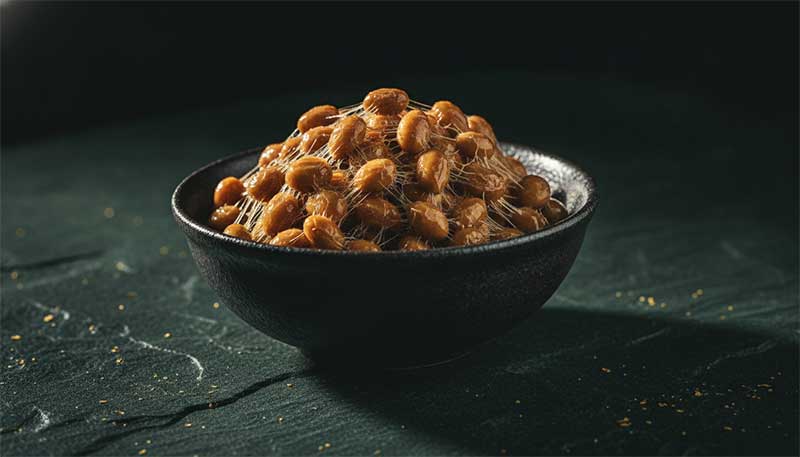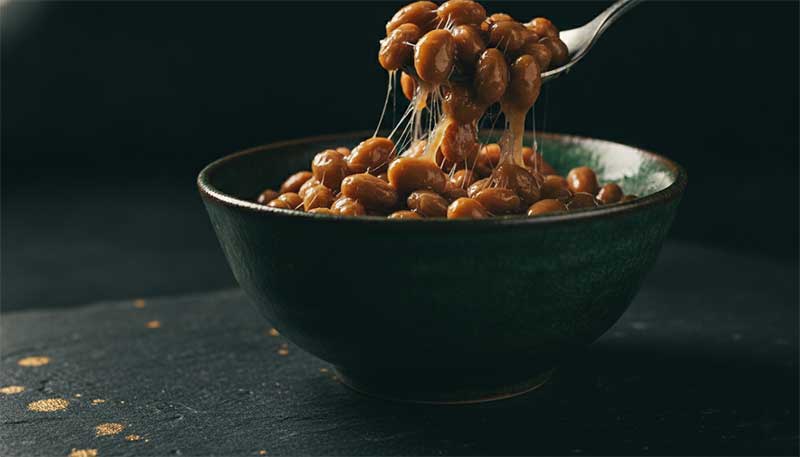
Natto - fermented soybeans with a famously divisive, sticky, ammonia-edged smell - has been a Japanese breakfast staple for centuries, credited in part for the country's historically low cardiovascular disease rates. In the 1980s, researchers isolated the specific enzyme responsible for much of natto's reputed blood-flow benefits: nattokinase, a serine protease produced by the bacterium Bacillus subtilis during fermentation. It has stronger fibrinolytic activity than plasmin, the body's own clot-dissolving enzyme, and can directly break down fibrin in laboratory conditions.
That mechanistic pedigree, plus decades of animal research, made nattokinase a natural candidate for human cardiovascular trials. The actual human data, now reasonably mature, tells a more textured story than the supplement aisle suggests - genuinely solid on one outcome, genuinely unresolved on another, and worth pairing with some specific, named safety cases that don't get enough attention.

What's Solid: Blood Pressure
A 2024 systematic review and meta-analysis (Li et al., Reviews in Cardiovascular Medicine, PROSPERO-registered) pooled three randomized, double-blind, placebo-controlled trials covering 223 participants and found nattokinase supplementation produced a statistically significant reduction in both systolic blood pressure (mean difference -3.45 mmHg) and diastolic blood pressure (mean difference -2.32 mmHg) compared to placebo, both at p<0.00001. An earlier, separate 8-week RCT in 73 people with pre-hypertension or stage 1 hypertension found a similar pattern: -5.55 mmHg systolic and -2.84 mmHg diastolic versus control, alongside a measurable drop in renin activity, an enzyme central to blood pressure regulation.
Blood Pressure
Consistent, statistically significant reductions across multiple independent RCTs, with a plausible mechanism (ACE inhibition, reduced angiotensin II and renin activity) supported by both human and animal data.
Clotting & Fibrinolytic Markers
A single-dose pharmacokinetic study found oral nattokinase measurably enhanced fibrinolysis and anticoagulation markers in humans within hours. Longer trials show mixed marker changes, and quantitative meta-analysis of clinical clotting endpoints is still lacking.
Cholesterol & Lipids
The 2024 meta-analysis explicitly concludes that low-dose, short-term nattokinase showed no lipid-lowering benefit and in some markers a worsening effect - this is detailed fully below, since it's the most counterintuitive part of the evidence.
Actual Atherosclerosis Progression
The only long-term (3-year) trial, measuring real carotid artery intima-media thickness rather than a blood marker, found no significant difference between nattokinase and placebo (p=0.31).
The Cholesterol Paradox - What the Data Actually Shows
This is where nattokinase's evidence gets genuinely interesting, and where most consumer-facing content oversimplifies. The 2024 meta-analysis split available trials into a "relatively low total dosage" subgroup (8-week trials) and a "relatively high total dosage" subgroup (6-month and 3-year trials) specifically because the results were too inconsistent to pool as one number.
Cholesterol Markers Got Worse, Not Better
- HDL ("good") cholesterol: significantly decreased vs. placebo (p<0.00001)
- LDL ("bad") cholesterol: significantly increased vs. placebo (p=0.02)
- Total cholesterol: significantly increased vs. placebo (p<0.00001)
Mixed, Mostly Non-Significant
- HDL: favorable but not statistically significant increase (p=0.19)
- LDL: no significant difference (p=0.93)
- Total cholesterol: still significantly higher than control (p<0.00001)
In other words: there is no clean "more nattokinase, better cholesterol" story in the pooled randomized data. The meta-analysis authors themselves call this finding unexpected and note it conflicts with several animal studies - their proposed explanation is that animal studies often used crude natto extract (which contains other cardiovascular-relevant compounds like soy isoflavones), while human RCTs used purified nattokinase alone. A separate, larger Chinese clinical study of 1,062 hyperlipidemia patients using a high dose (10,800 FU/day) for a full year did report improvements across total cholesterol, triglycerides, LDL, and HDL - but this single large study sits in tension with the pooled RCT data above, and the field's own conclusion is that whether nattokinase's lipid effects are genuinely dose-dependent remains an open question requiring further trials.

The Safety Cases Worth Knowing By Name
Most nattokinase safety content repeats the same generic line - "may increase bleeding risk, talk to your doctor." That's true but vague enough to be easy to dismiss. The actual documented cases are more specific and more serious than that framing suggests.
The mechanical heart valve case is worth sitting with: this wasn't someone casually adding a supplement to their routine - it was a patient who replaced a medically essential, monitored anticoagulant with an unmonitored supplement, based on the apparently reasonable assumption that "natural blood thinner" meant equivalent protection. It did not. Nattokinase's anticoagulant effect, while measurable, is considerably milder and far less predictable than therapeutic warfarin dosing, which is precisely calibrated and monitored via regular INR blood tests. Substituting one for the other is not a like-for-like swap.
What It Stacks Well With
Bromelain
Another fibrinolytic/proteolytic enzyme with its own documented anticoagulant effect - combining the two compounds the bleeding-risk consideration rather than adding unrelated benefit.
CoQ10
Often paired in cardiovascular-support formulations targeting blood pressure and circulatory health from a different, mitochondrial-energy angle rather than a clotting-pathway angle.
Garlic Extract
Both have documented mild antiplatelet/blood-pressure effects; a common cardiovascular-support pairing, though combining two compounds that affect clotting compounds the same caution rather than diversifying it.
Warfarin / DOACs (Avoid)
Not a combination to attempt, and never a substitute for prescribed anticoagulation - see the case report above. Nattokinase's effect is milder and unmonitored compared to therapeutic anticoagulants.
Aspirin / Antiplatelets (Caution)
Additive bleeding risk through a different but overlapping mechanism. Discuss with a doctor before combining, particularly at higher nattokinase doses.
Vitamin K2 (Distinct From Natto Itself)
Worth distinguishing: whole natto food is very high in vitamin K2, which can counteract warfarin. Purified nattokinase supplements are sold for the enzyme and typically contain little to no vitamin K2 - a frequently confused but important difference.
Dosing
| Purpose | Dose | Notes |
|---|---|---|
| Blood pressure support (as studied) | 2,000 FU/day | Dose used in the trials showing the most consistent blood-pressure benefit, typically over 8 weeks |
| General/long-term use (as studied) | Up to 10,800 FU/day | Higher end used in the longest trials; total daily dose across included RCTs ranged from 1,200 to 8,000 FU, with one larger study using 10,800 FU |
| Common commercial capsules | 100mg (~2,000 FU) | FU (fibrinolytic units) measures enzymatic activity, not weight - check the FU rating specifically, not just milligrams |
Nattokinase's blood-pressure-lowering effect can stack with antihypertensive medication, potentially causing blood pressure to drop further than intended. If you're being actively treated for hypertension, loop your doctor in before adding nattokinase rather than treating it as a harmless add-on alongside your prescription.
Avoid nattokinase if you take warfarin, apixaban, rivaroxaban, dabigatran, heparin, clopidogrel, or daily aspirin, given the documented additive bleeding risk. Avoid it if you have a bleeding disorder such as hemophilia, or a history of intracranial bleeding. Stop at least two weeks before any scheduled surgery or dental procedure. Avoid it if you have a known soy or natto allergy - severe allergic reactions including anaphylaxis are documented. Safety data in pregnancy and breastfeeding is insufficient; avoid in these groups. People with naturally low blood pressure should be cautious given the established hypotensive effect.