Most people who take a calcium supplement, or even just eat a calcium-rich diet, assume the job is done once the mineral gets absorbed. It isn't. Calcium absorbed into the bloodstream needs to be directed somewhere - ideally into bone, where it builds structure, and not into the walls of your arteries, where it contributes to the stiffening and plaque buildup behind cardiovascular disease. Vitamin D handles absorption. Vitamin K2 handles direction. It's the second half of a process most supplement routines only address half of.
This is not a fringe biochemistry detail. A 2026 randomized controlled trial published in JAMA Cardiology, following the same population for two years, found that vitamin K2 supplementation measurably slowed the progression of coronary artery calcification compared to placebo - a finding strong enough that it's worth understanding exactly how K2 does this, and exactly where the real caution lies.

The Traffic Controller Mechanism
Vitamin K2 activates two specific proteins through a process called carboxylation: osteocalcin, which binds calcium into bone tissue, and matrix Gla protein (MGP), which inhibits calcium from depositing in soft tissue like arterial walls. Without adequate K2, both proteins remain in their inactive, "uncarboxylated" form - they exist in your body but can't do their job. This is measurable directly: dephosphorylated-uncarboxylated MGP (dp-ucMGP) is a specific blood biomarker researchers use to track vitamin K-dependent vascular calcification risk, and it responds directly to K2 supplementation.
absorbs calcium into blood
activates osteocalcin + MGP
The Clinical Evidence
Coronary Artery Calcification
A 2026 two-year randomized, double-blind, placebo-controlled trial (VitaK-CAC, published in JAMA Cardiology) found MK-7 supplementation slowed progression of coronary artery calcification by nearly one-third compared to placebo.
Vascular Calcification Biomarkers (CKD)
Multiple RCTs in hemodialysis patients found 360mcg/day of MK-7 produced a 30-50% reduction in dp-ucMGP, the key biomarker of vitamin K-dependent vascular calcification risk, within 12 to 24 weeks.
Bone Density (Postmenopausal Women)
2025 trial data and earlier RCTs support 100-200mcg/day of MK-7 improving bone density markers more effectively than calcium alone in women over 50, without the side-effect profile of bisphosphonate medications.
Arterial Stiffness & Glucose Markers
A three-year RCT in healthy postmenopausal women found improved arterial elasticity with MK-7. Separately, a trial in insulin-dependent diabetics taking 360mcg/day for 12 weeks found improved fasting glucose, insulin, HOMA-IR, and HbA1c.

MK-4 vs. MK-7: Why the Form Matters
Vitamin K2 isn't a single molecule - it's a family of compounds called menaquinones, distinguished by the length of their side chain. MK-4 is found in animal products and has a short half-life of only a few hours, meaning it needs to be taken multiple times a day to maintain stable blood levels. MK-7, found in fermented foods like natto and most modern supplements, has a half-life measured in days, providing much steadier activation of osteocalcin and MGP from a single daily dose. This is why nearly all consumer K2 supplements today use the MK-7 form specifically.
That same long half-life is a double-edged property. It's what makes MK-7 effective with simple once-daily dosing - and it's also exactly why MK-7 interferes with blood-thinning medication more persistently than MK-4 or K1 ever did, which brings us to the single most important caution in this entire article.
Warfarin works by blocking the vitamin K cycle that activates clotting factors. Adding vitamin K2 back into your system directly opposes that mechanism. A landmark dose-response study found that MK-7, even at doses as low as 10 to 20mcg daily, significantly reduced INR (the standard measure of blood clotting time) in patients on stable anticoagulant therapy within just two weeks - and the effect was stronger and longer-lasting than equivalent doses of vitamin K1. This is a far lower threshold than typical supplement-drug interaction warnings, which usually involve hundreds of milligrams, not micrograms. If you are on warfarin or acenocoumarol, do not start a K2 supplement, and be aware that natto (extremely concentrated in MK-7) can meaningfully affect your INR even as a dietary choice, not just a supplement.
Direct oral anticoagulants like apixaban (Eliquis), rivaroxaban (Xarelto), and dabigatran (Pradaxa) work by directly blocking specific clotting factors rather than depleting vitamin K. Because they don't rely on the vitamin K cycle, vitamin K2 supplementation is generally not expected to interfere with these medications the way it does with warfarin. If you're on one of these newer drugs and interested in K2, this is still worth confirming with your prescribing doctor - but the mechanism-based conflict that makes warfarin a hard stop simply doesn't apply the same way here. This is a useful real-world example of the absorption-vs-mechanism distinction explained in our supplement interactions guide.
What It Stacks Well With
Vitamin D3
The classic pairing. D3 increases calcium absorption into the bloodstream; K2 ensures that calcium gets activated into bone rather than soft tissue. Taking D3 without K2 is widely considered an incomplete strategy by researchers in this space.
Magnesium
Magnesium is a cofactor for converting vitamin D into its active form, indirectly supporting the same calcium-regulation pathway that K2 operates on at the activation step.
Calcium
Calcium provides the raw material K2-activated proteins direct into bone. Taking calcium supplements without adequate K2 status is the specific scenario researchers point to when discussing misdirected calcium deposition risk.
Omega-3
Both are fat-soluble and benefit from being taken with dietary fat. Omega-3's cardiovascular anti-inflammatory profile and K2's anti-calcification mechanism address heart health from two distinct angles.
Vitamin K1
K1 (phylloquinone) is the form found in leafy greens and primarily supports clotting function; K2 specifically targets bone and arterial calcium direction. Some formulations include both for broader vitamin K coverage.
Warfarin (Avoid)
Not a beneficial pairing under any circumstance without direct physician supervision. K2 directly counteracts warfarin's mechanism, even at very low doses, risking dangerous INR instability.
Dosing
| Purpose | Dose (MK-7) | Timing | Notes |
|---|---|---|---|
| General bone & cardiovascular support | 90 - 200mcg/day | With a meal containing fat | Most consumer-facing studies and product labels fall in this range |
| Postmenopausal bone density | 100 - 200mcg/day | Daily, with food, long-term | Reflects dosing used in the 2025 bone density trial data |
| Vascular calcification (as studied) | 360mcg/day | Daily, with food | Higher dose used specifically in CKD and dialysis biomarker trials - not a general recommendation |
| Highest observed safe intake (healthy adults) | 375mcg/day | - | CRN-established ceiling for adults NOT on vitamin K antagonist medication |
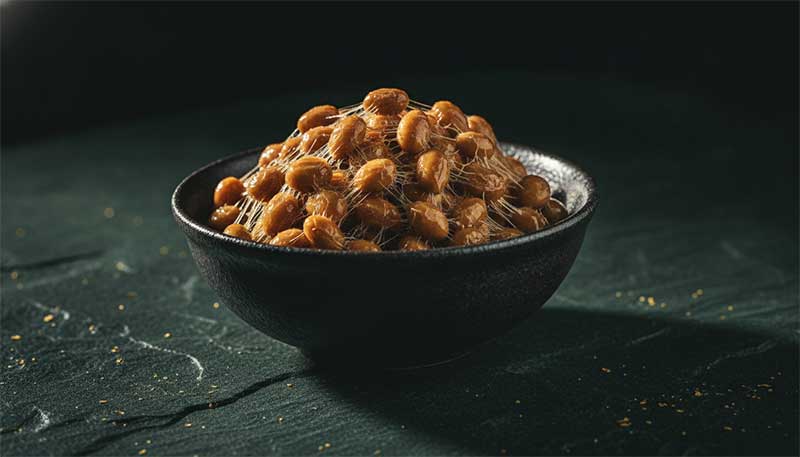
Natto (fermented soybeans) is by far the richest dietary source of MK-7, concentrated enough that even a normal serving can noticeably affect warfarin therapy. Hard, aged cheeses like Gouda and Jarlsberg contain modest amounts through fermentation. Egg yolks, particularly from pasture-raised hens, and goose liver also contain K2, though in smaller, less concentrated amounts than natto.
Anyone on warfarin, acenocoumarol, or another vitamin K antagonist should not supplement K2 without direct physician guidance - this is the one interaction in this entire article that deserves a hard stop rather than a "discuss with your doctor" softening. CoQ10 is structurally similar to vitamin K2 and may also reduce warfarin's effect, though evidence here is more mixed. People with a history of hormone-sensitive cancers should discuss K2 with their oncologist, as some preliminary research has explored vitamin K's role in cell proliferation pathways, though this is not a settled safety concern for typical supplemental doses. MK-7 has shown a strong safety profile in toxicology studies at doses far exceeding typical supplemental amounts, with no adverse effects observed even at gram-level doses in animal models.