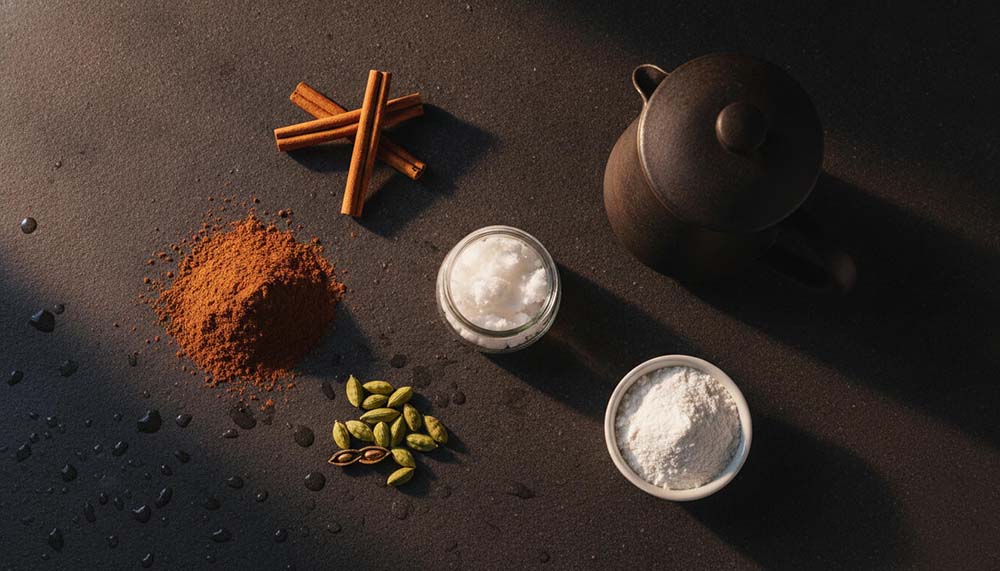
Bulletproof Coffee launched the idea that your morning cup could be a performance tool. The concept - adding fat to coffee to extend energy and reduce the glucose crash - was directionally correct but biochemically incomplete. MCT oil is effective, but there are five other ingredients with equally strong evidence that most biohackers are not using.
This is not about making coffee taste like a health supplement. Every ingredient discussed here either tastes good in coffee, is neutral, or can be made undetectable. The goal is a morning ritual that delivers sustained energy, stable blood sugar, cognitive support and a meaningful nutritional contribution - all before you sit down to work.
The starting point is the coffee itself - because the base matters more than most people realize.
The Base: Coffee Brewing Method and Origin
Not all coffee is biochemically equivalent. The brewing method affects the concentration of beneficial compounds, the presence of harmful ones, and how well the coffee integrates with added ingredients.
Filter / Pour-Over
Paper filter removes cafestol - a diterpene that raises LDL cholesterol. Higher chlorogenic acid content (antioxidant). Cleaner flavor base for added ingredients. Ideal for fat additions as the lighter body integrates better.
Espresso / Moka Pot
Higher cafestol unless filtered. More concentrated - use less for the same caffeine. Stronger flavor may compete with added ingredients. Good base for smaller volumes with more intense taste.
French Press / Aeropress (no filter)
Highest cafestol content. Rich body and flavor. Regular daily use without a paper filter has been linked to modest LDL increases in habitual consumers. Add a paper filter to keep the benefits of immersion brewing.
On origin: single-origin coffees from specific regions - Guatemala, Ethiopia, Colombia, Kenya - have measurably different polyphenol profiles from commodity blends. A Guatemalan highland coffee (Huehuetenango, Antigua region) typically has high acidity, complex fruit notes and strong chlorogenic acid content. These antioxidant acids are part of what makes coffee independently beneficial for metabolic health. A local specialty roaster working with traceable single-origin beans is the highest standard - and often not significantly more expensive than premium supermarket brands.
The ARI Coffee Protocol
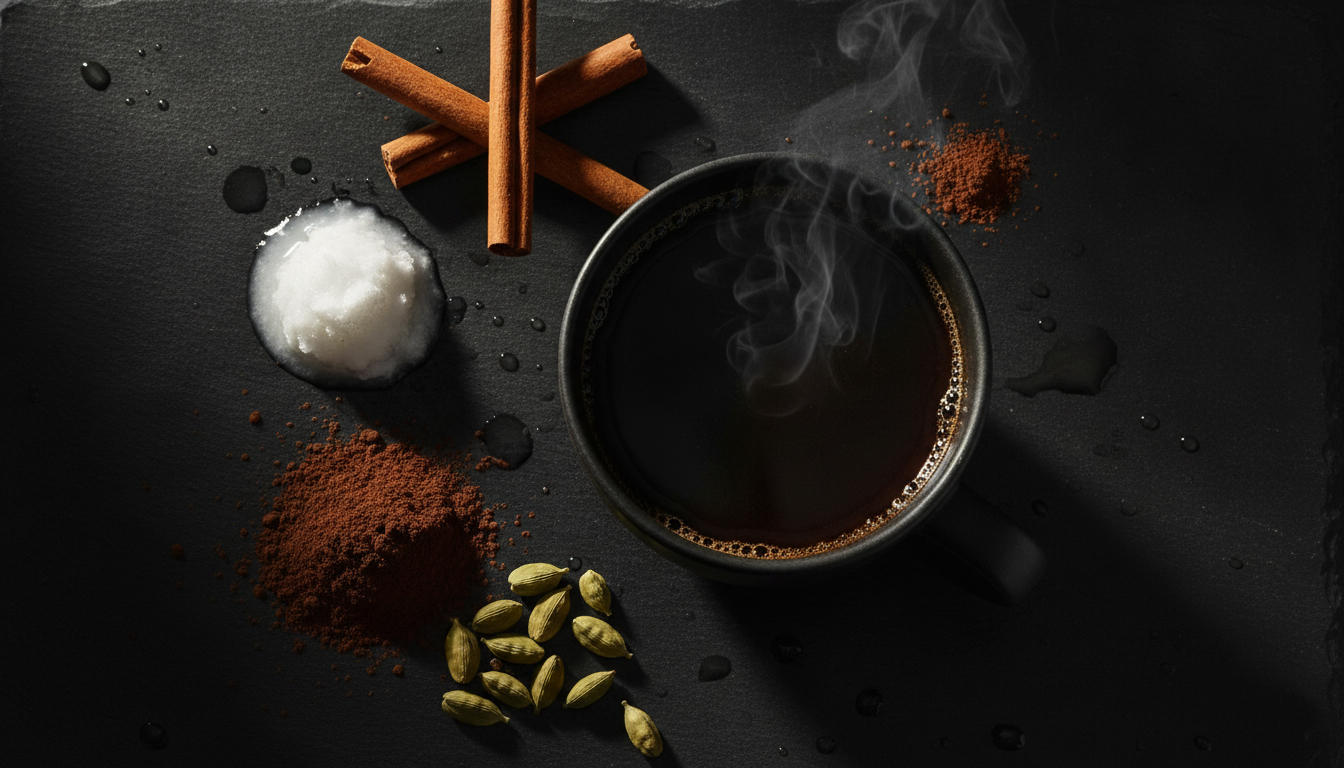
This is the recipe we have developed and tested based on the evidence. It is designed for a 400-500ml thermos, consumed fasted or taken through to breakfast.
The Optimized Morning Coffee
400-500ml serving · Fasted or with breakfast · Prep time 3 minutes
Filter Coffee
400-500ml, single origin preferred. Brew first, let cool to 65-70°C before adding anything.
Coconut Oil
1 tsp (start) to 1 tbsp (build up). Virgin coconut oil preferred. Blend or stir vigorously.
Ceylon Cinnamon
¼ to ½ tsp. Ceylon only - not Cassia. Add directly to grounds or stir into coffee.
Raw Cacao Powder
1-2 tsp. Raw/unprocessed to preserve flavanols. Dutch-processed loses most polyphenols.
Collagen Peptides
5-10g hydrolyzed. Dissolves easily. Add vitamin C source with breakfast to activate synthesis.
Cardamom
1-2 pods ground or ¼ tsp powder. Digestive support and unique flavor enhancement.
- Brew your coffee normally. Allow to cool to comfortably drinkable temperature - roughly 65-70°C. Do not add anything to boiling coffee.
- Add coconut oil, cinnamon, cacao and cardamom. Use a small milk frother, hand blender or shake vigorously in a thermos to emulsify the fat.
- Add collagen powder last and stir until dissolved. Collagen dissolves easily in hot liquid.
- Transfer to thermos if taking to work. Shake once more before drinking after transport.
- Take vitamin C (from food or supplement) at breakfast to support collagen synthesis.
The Science Behind Each Ingredient
Coconut Oil - MCTs and Ketone Production
Brain fuel via an alternative pathway
Coconut oil contains approximately 50-65% medium-chain triglycerides (MCTs), primarily lauric acid (C12), caprylic acid (C8) and capric acid (C10). Unlike long-chain fatty acids, MCTs bypass the lymphatic system and go directly to the liver, where they are rapidly converted to ketones - an alternative energy substrate that crosses the blood-brain barrier and fuels neurons independently of glucose.
As of November 2025, at least 20 published studies report cognitive benefits from coconut oil or MCT oil in older adults and people with mild cognitive impairment. In a 2022 six-month randomized controlled trial, 80% of participants with mild cognitive issues showed stabilized or improved cognitive function after daily MCT supplementation.
Important nuance: Pure MCT oil (C8/C10 fractions) produces 4x more ketones than whole coconut oil, because coconut oil's dominant fatty acid (lauric acid, C12) behaves more like a long-chain fat. Whole coconut oil still delivers meaningful MCTs and has additional benefits from its polyphenol content - but if cognitive performance is your primary goal, pure C8 MCT oil is biochemically superior. Start with 1 teaspoon and build up slowly to avoid digestive discomfort.
Ceylon Cinnamon - Blood Sugar Buffer
Blunting the caffeine-glucose crash
Caffeine stimulates cortisol release and can cause a secondary blood sugar fluctuation in sensitive individuals - particularly when consumed fasted. Cinnamon counteracts this through several mechanisms: its active compound cinnamaldehyde enhances insulin sensitivity, polyphenols slow carbohydrate-digesting enzyme activity, and it reduces the rate of glucose absorption from the intestine.
A 2024 randomized controlled trial published in the American Journal of Clinical Nutrition found that daily cinnamon supplementation reduced 24-hour blood sugar levels and blood sugar peaks by 18.5% in adults with prediabetes. Adding it to fasted coffee provides a meaningful blood sugar-stabilizing effect at the most vulnerable metabolic window of the day.
Critical: always use Ceylon cinnamon, not Cassia. Cassia (the cheap supermarket variety) contains high levels of coumarin, which can cause liver toxicity at regular doses. Ceylon cinnamon (true cinnamon, lighter in color, more delicate in flavor) has negligible coumarin. They look and smell similar but are biochemically different - check the label.
Raw Cacao - The Smooth Energy Amplifier
Theobromine, flavanols and mood
Raw cacao is biochemically more complex than most people realize. Two tablespoons contain approximately 40mg caffeine and 200mg theobromine - together equivalent to roughly half a cup of coffee in stimulant effect. But theobromine is structurally similar to caffeine with one key difference: it is roughly 10x weaker as a stimulant, with a slower onset and longer duration. The result is that cacao added to coffee smooths the energy curve - lifting the peak slightly and extending the duration, while reducing the sharp spike-and-crash pattern of caffeine alone.
Beyond stimulants, cacao is one of the richest dietary sources of flavanols - specifically epicatechin and catechin - which increase cerebral blood flow and improve cognitive resource efficiency. An fMRI study published in Nutrients showed that high-polyphenol cacao intake contributed to more efficient brain activity during sustained cognitive tasks, reducing mental effort in the prefrontal cortex during the second hour of cognitive work.
Use raw or minimally processed cacao powder, not Dutch-processed cocoa. The alkalization process used in Dutch processing destroys up to 90% of the flavanols. The label should say "raw cacao" or "natural cocoa" - not "Dutch process" or "alkalized."
Collagen Peptides - Structure and Skin
The cofactor most people forget
Hydrolyzed collagen peptides dissolve easily in hot liquid and are essentially tasteless - making coffee an ideal delivery vehicle. The peptides survive the heat at drinkable temperatures and reach circulation where they act as signaling molecules, stimulating fibroblasts to produce more collagen.
The critical point that most collagen coffee recipes miss: vitamin C is an essential cofactor for collagen synthesis. Without it, proline and lysine cannot be hydroxylated into stable triple-helix structures, and the collagen you produce is structurally weak. A 2025 meta-analysis confirmed that combining vitamin C with collagen meaningfully boosts synthesis markers compared to collagen alone. This means your collagen coffee is only working at full capacity if you take vitamin C at the same meal - a glass of orange juice, kiwi, bell pepper or a vitamin C supplement at breakfast completes the protocol.
Cardamom - Digestion and Blood Pressure
The underrated finishing touch
Cardamom has been used in coffee preparation for centuries across Middle Eastern and Scandinavian traditions - not just for flavor but for a functionally sound reason. It contains compounds that counteract some of caffeine's digestive irritation, reduce nausea in sensitive stomachs and modestly lower blood pressure through vasodilatory effects.
More interestingly for the fasted morning window: cardamom contains cineole and other volatile compounds that activate digestive enzyme secretion, preparing the gut for the food that follows. It also has meaningful antioxidant activity and some evidence for anti-inflammatory effects via NF-kB inhibition. The flavor contribution - aromatic, slightly floral, warming - genuinely improves the coffee rather than being a neutral addition.
Temperature - The Detail Most People Get Wrong
Do not add ingredients to boiling coffee
Freshly brewed coffee at 90-95°C destroys heat-sensitive compounds in your additions - it denatures collagen structure, kills beneficial enzymes in raw cacao and potentially degrades some cinnamon polyphenols. Let the coffee cool to comfortably drinkable temperature (roughly 65-70°C) before adding ingredients. A simple test: if you can take a small sip without discomfort, the temperature is right. This also makes your thermos coffee cooler at the start, meaning it stays at a pleasant drinking temperature longer throughout the morning.
Optional Upgrades - What Else the Evidence Supports
Grass-Fed Butter
Higher in CLA and omega-3 than conventional butter. Adds creaminess and extends the fat-for-fuel effect. Classic Bulletproof addition - works well with the cacao and coconut oil combination.
Ashwagandha
Adaptogen that blunts cortisol response to caffeine. Mild earthy flavor mostly masked by cacao. Start with ¼ tsp. Pairs well with the cinnamon flavor profile.
Lion's Mane Powder
Stimulates nerve growth factor. Neutral flavor. Well-studied for cognitive function. Popular addition to functional coffee blends. Use ¼-½ tsp of extract powder.
Turmeric + Black Pepper
NF-kB inhibitor and anti-inflammatory. The pinch of black pepper dramatically increases curcumin absorption. Adds golden color and subtle spice.
Maca Root
Adaptogen with evidence for energy and mood in women. Mild malty flavor that complements cacao. Start with ½ tsp. Use gelatinized form for better absorption.
Himalayan Salt (pinch)
Reduces bitterness through sodium-bitter interaction. Adds trace minerals. A single small pinch is undetectable in flavor but noticeably smooths the coffee's edge.
Fasted coffee with added fats is not ideal for everyone. People with digestive sensitivity, IBS or gallbladder issues may find the fat content difficult to tolerate on an empty stomach - start with very small amounts of coconut oil and build up. Those with caffeine sensitivity should be aware that the cacao adds additional methylxanthines. Anyone on blood sugar medication should monitor their response to cinnamon, which has real glucose-lowering effects. Pregnant women should avoid high cinnamon supplementation.
The Thermos Advantage
Taking your coffee in a thermos rather than drinking it immediately has an underappreciated biochemical benefit. The additional cooling time means the coffee reaches truly optimal drinking temperature - around 55-60°C rather than 80-90°C fresh from the press. At this temperature, you are getting full flavor extraction, minimal risk of thermal damage to added ingredients, and a cup that remains pleasant to drink for 2-3 hours rather than going cold in 20 minutes.
It also extends the morning fast more naturally - a slow 400-500ml coffee over 90-120 minutes while commuting or starting work provides a gradual release of caffeine and fat-derived ketones, rather than a single large bolus that peaks and crashes before mid-morning.