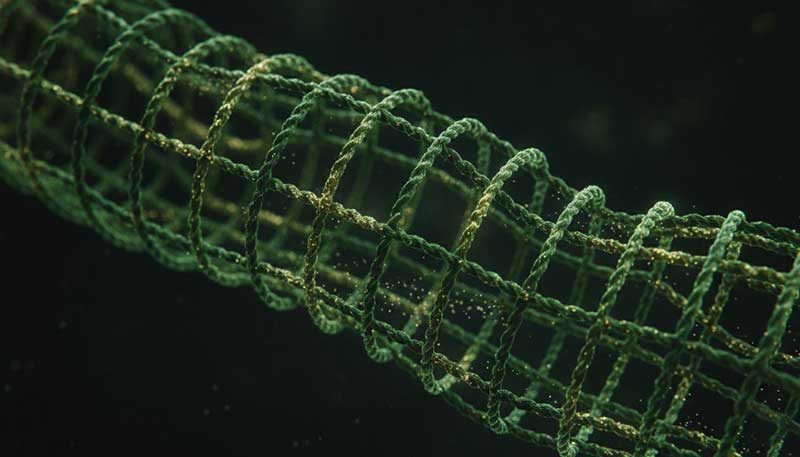
Collagen is the most abundant protein in the human body by mass - accounting for roughly 30% of total protein content. It is the structural scaffold that holds everything together: skin, bones, joints, tendons, ligaments, blood vessels, corneas, gut lining. Without collagen, the body loses its structural integrity from the inside out.
The problem is time. Collagen production begins declining around age 25 at approximately 1% per year. By the time most people are thinking seriously about longevity, they may have already lost 20-30% of their peak collagen density. The consequences are visible - wrinkles, sagging skin - but also functional: stiffer joints, slower tendon repair, reduced bone density, and weaker connective tissue throughout the body.
Supplementation cannot reverse this entirely - but the evidence now shows it can meaningfully slow the decline and stimulate the body's own collagen synthesis. The key is knowing which type to take, how much, and what to take it with.

How Collagen Supplementation Actually Works
The long-standing skepticism about oral collagen was reasonable: proteins are broken down into amino acids during digestion, so how does consuming collagen translate into more collagen in your skin or joints? The answer is more nuanced than a simple yes or no.
Hydrolyzed collagen peptides - the form used in supplements - are pre-digested into short amino acid chains (typically 2-10 amino acids) that survive the digestive tract partly intact. Research using isotopic labeling has shown that specific dipeptides from hydrolyzed collagen (particularly hydroxyproline-proline and hydroxyproline-glycine) reach circulation and accumulate in skin tissue within hours of consumption.
Once in the bloodstream, these peptides appear to act as signaling molecules - stimulating fibroblasts (the cells that produce collagen) to increase their own collagen synthesis. This is the key mechanism: collagen peptides do not become collagen directly. They signal the body to make more of its own.
A 2024 randomized, double-blind, placebo-controlled trial published in the Journal of Clinical Medicine enrolled 112 women and tested 10g of hydrolyzed collagen peptides daily against placebo for 8 weeks. Results showed statistically significant improvements in skin elasticity (p=0.009), skin hydration across multiple measurement points (p ranging from 0.003 to less than 0.001), and skin roughness (p ranging from 0.002 to less than 0.001). Facial soft tissue sagging also showed improvement. Safety was excellent with no significant adverse events. This is one of the cleanest recent collagen trials - double-blind, placebo-controlled, with objective skin measurements rather than just self-reporting.
The Three Types - Which Do You Actually Need
Type I Collagen
The most abundant type in the body. Found in skin, tendons, bone, cornea and blood vessels. Forms the primary structural framework. Declines most visibly with age in terms of skin appearance. Found in bovine hide, marine (fish skin) and eggshell collagen. 5-15g hydrolyzed peptides daily.
Type II Collagen
The dominant collagen in cartilage. For joint support, undenatured Type II (UC-II) at just 40mg daily has the strongest clinical evidence - it works through immune tolerance (oral tolerization) rather than supplying amino acids. A 2016 trial in 191 adults with OA showed measurable pain reduction after 6 months. Chicken cartilage is the primary source.
Type III Collagen
Often called "baby collagen" - most abundant in young, elastic skin and developing tissues. Declines faster than Type I with age. Responsible for skin suppleness and elasticity. Usually found alongside Type I in bovine collagen supplements. Type III diminishes more rapidly than Type I, making it a key target for skin anti-aging protocols.
The practical takeaway: for skin, hair, nails and general connective tissue, use hydrolyzed Type I + III collagen peptides (bovine or marine) at 10g daily. For joints specifically, add UC-II undenatured Type II at 40mg daily - this is a fundamentally different mechanism (immune modulation rather than amino acid supply) and works at dramatically lower doses. Many people use both simultaneously without issue.
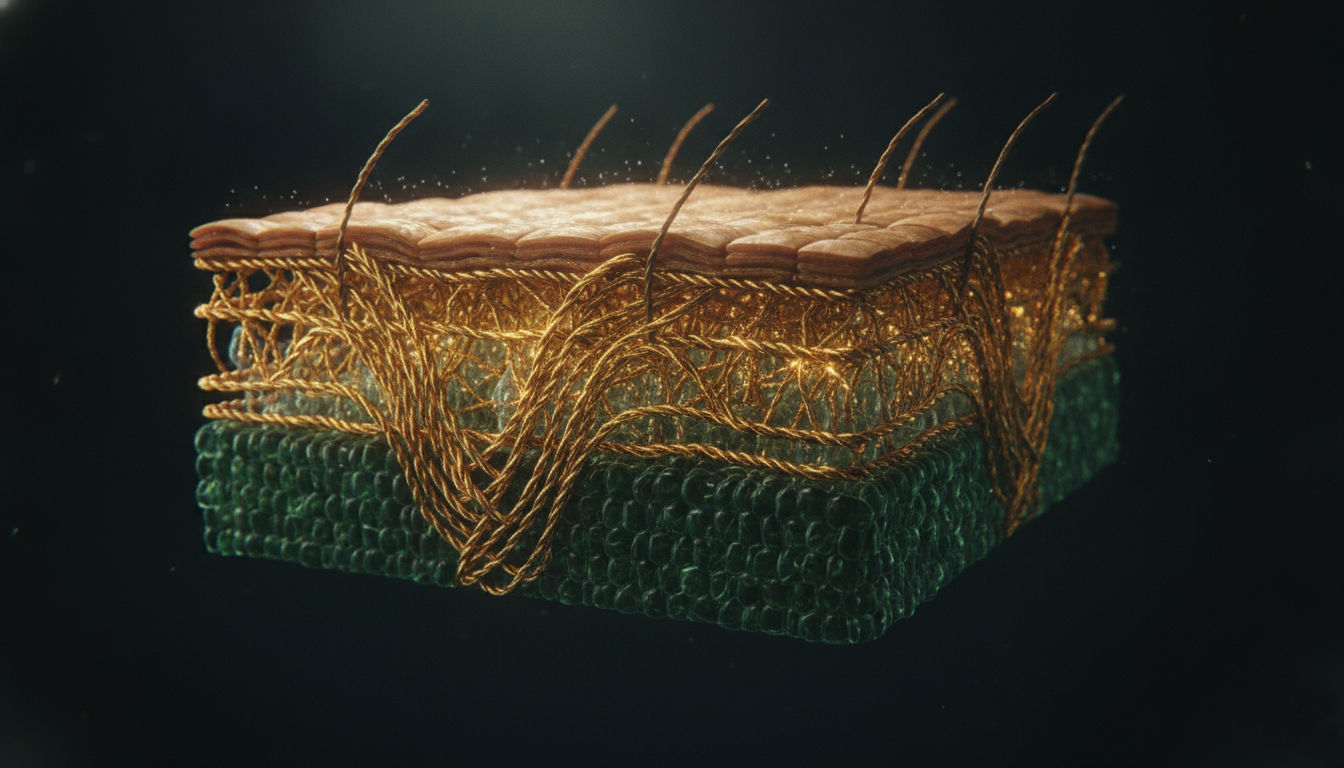
Vitamin C - The Non-Negotiable Cofactor
This is the most important practical point about collagen supplementation: without adequate vitamin C, collagen synthesis cannot proceed efficiently. Vitamin C is required for the hydroxylation of proline and lysine - the chemical modifications that allow individual collagen chains to cross-link into stable triple-helix structures. Without this step, collagen fibers cannot form properly regardless of how many peptides you consume.
A 2025 meta-analysis published in the American Journal of Medicine confirmed that participants combining vitamin C with collagen supplements showed meaningfully higher blood markers of collagen synthesis than those taking collagen alone. The effect is not subtle - vitamin C effectively acts as a force multiplier for collagen supplementation.
The practical protocol: take 75-150mg vitamin C with your collagen peptides. This does not need to be a megadose - the collagen-specific benefit plateaus at relatively modest vitamin C levels. Vitamin C from food (a kiwi, some bell pepper) taken alongside your collagen is sufficient if your diet is varied.
Marine vs Bovine vs Vegan - Which Source
Marine collagen (from fish skin and scales) is primarily Type I and has a smaller peptide size, which may improve absorption compared to bovine. It is the preferred option for people avoiding red meat or concerned about BSE, and is better suited to those with shellfish sensitivities than one might assume - fish collagen is not derived from shellfish.
Bovine collagen (from cattle hide) provides both Type I and Type III in a single product, making it more practical for skin and connective tissue goals. It is typically cheaper per gram than marine and is the most widely studied form in clinical trials.
Vegan collagen does not exist yet in supplementable form - all true collagen comes from animal tissue. What are sold as "vegan collagen boosters" are combinations of vitamin C, zinc, copper, lysine and proline - the cofactors and amino acids that support the body's own collagen synthesis. These have a smaller and less direct effect than hydrolyzed collagen peptides, but for strict vegans they represent a reasonable support strategy.
Glycine is collagen's primary amino acid (~33% of collagen by composition). Glycine supplements and collagen peptides both provide glycine, so there is some overlap. However, hydrolyzed collagen peptides provide more than just glycine - they deliver specific dipeptides (hydroxyproline-glycine, hydroxyproline-proline) that act as direct signaling molecules for fibroblast activation. These peptides are unique to collagen hydrolysate and are not replicated by taking free glycine alone. If you already take glycine for sleep, consider adding collagen peptides separately for structural support rather than doubling your glycine dose - they serve overlapping but distinct functions.
Dosing
| Goal | Type | Daily Dose | Notes |
|---|---|---|---|
| Skin, hair, nails | Type I + III hydrolyzed peptides | 10g | Always with vitamin C; bovine or marine; morning or post-workout |
| Joint pain / cartilage | UC-II (undenatured Type II) | 40mg | Take on empty stomach; works via immune mechanism, not amino acids |
| Joints + general connective tissue | Type I/III + UC-II combined | 10g + 40mg | No negative interaction; complementary mechanisms |
| Injury recovery / high physical stress | Type I + III hydrolyzed | 15g | Take 30-60 min before exercise for enhanced tendon/ligament delivery |
| Vitamin C cofactor | Any form of vitamin C | 75-150mg alongside collagen | Food sources adequate; megadosing does not add proportional benefit |
Timing matters modestly for joint-specific protocols: some research suggests taking collagen peptides 30-60 minutes before exercise may improve delivery to tendons and ligaments, which have relatively poor blood supply. For skin benefits, timing is less critical - consistency over months matters far more than the exact time of day. Mix powder into coffee, smoothies or water - heat does not significantly degrade the peptides.
What It Stacks Well With
Vitamin C
Non-negotiable cofactor for collagen synthesis. A 2025 meta-analysis confirmed combining vitamin C with collagen significantly boosts synthesis markers vs collagen alone. Take 75-150mg alongside your collagen dose.
Zinc
Zinc is essential for collagen cross-linking enzymes. Deficiency directly impairs the final structural assembly of collagen fibers. Most people are mildly deficient - ensure adequate zinc alongside any collagen protocol.
Silica / Horsetail Extract
Silica supports connective tissue integrity and may enhance collagen fiber formation. Often included in beauty-focused collagen formulas alongside biotin. Complementary rather than essential.
Glycine
Glycine is collagen's primary amino acid. Adding standalone glycine ensures the body is never rate-limited in the raw material for collagen synthesis. Particularly relevant for people not eating glycine-rich foods like bone broth.
MSM + Glucosamine
For joint-specific protocols, MSM provides sulfur for cartilage matrix and glucosamine supports proteoglycan synthesis. Together with collagen they cover different aspects of joint tissue maintenance.
Biotin
Biotin supports keratin synthesis in skin, hair and nails - the structural protein that works alongside collagen. Often bundled in beauty collagen formulas. Most people get sufficient biotin from food, but it is a logical addition for hair and nail protocols.