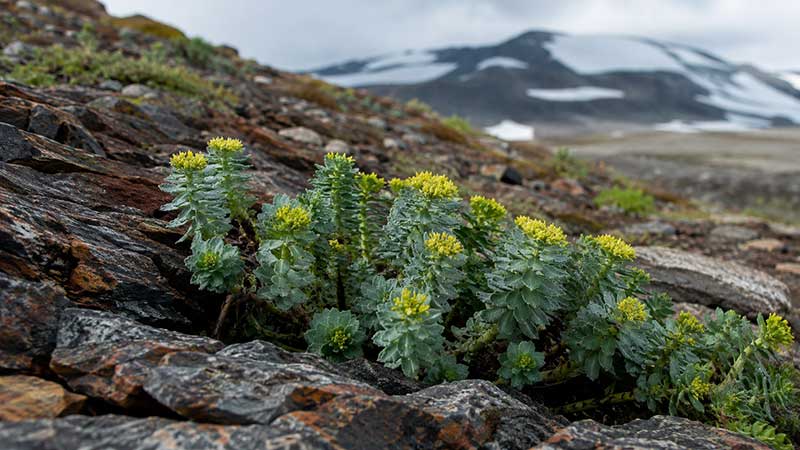
Rhodiola rosea, sometimes called golden root or arctic root, grows in cold, high-altitude regions across the Arctic and mountainous parts of Europe and Asia, where it's been used traditionally to combat fatigue and cold-related exhaustion for centuries. What makes it stand out among the adaptogen category covered elsewhere on this site is that its clinical evidence base is genuinely more mature than most - built on multiple independent randomized trials using objective performance measures, not just questionnaires. That's the good news, and it's real. The complication is that almost all of that positive evidence comes from one specific, carefully standardized extract, and independent testing has found that a large share of what's actually sold under the name "rhodiola rosea" doesn't match it.

The Evidence: Genuinely Solid, and Genuinely Fast
Rhodiola's best-documented use case is fatigue under sustained stress, and the trial design behind this evidence is worth walking through, because it's more rigorous than what usually backs an adaptogen claim.
Rhodiola's stress-buffering effect appears to work by moderating the size of cortisol spikes during acute stress, rather than suppressing baseline cortisol production the way some adaptogens are marketed to do. This is a biologically more coherent story than blanket cortisol suppression - your body still needs a functional stress response; the proposed benefit is in dampening excessive spikes, not eliminating the hormone entirely.
The Quality Problem: A Genuinely Large, Repeatedly Confirmed Gap
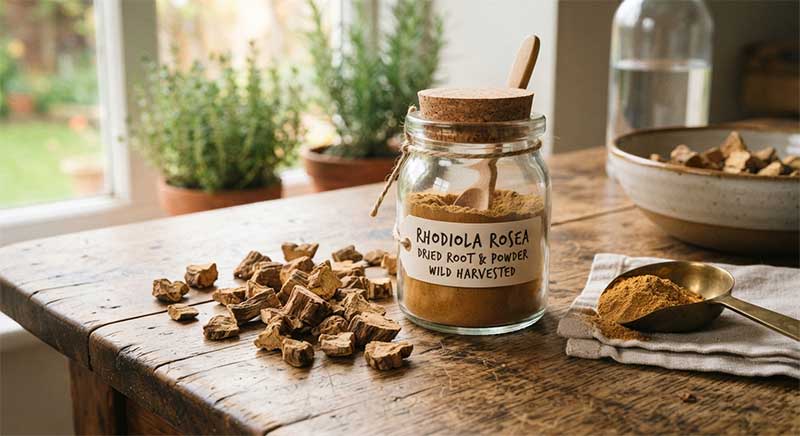
Here's where rhodiola's story becomes an important lesson in why "the research is good" and "the product on the shelf works" aren't automatically the same claim. Multiple independent laboratory investigations, spanning over a decade and using different analytical methods, have consistently found that a large share of commercial rhodiola products don't contain what their labels claim.
2015 UK Market Analysis
Analysis of roughly 40 commercial products found that about one-fifth contained no detectable rosavin at all - the key marker compound distinguishing true R. rosea from related species - and approximately 80% of the remainder had lower rosavin content than registered reference products, consistent with adulteration using other Rhodiola species.
2026 US Market Analysis
Testing of commercial capsule products found rosavin content ranging from 0.01% to 3.08% against label claims, with one product showing rosavin levels roughly five times lower than its stated 1% claim, and another showing a 15-fold mismatch between rosavin and salidroside levels consistent with species substitution or undisclosed synthetic salidroside addition.
Rhodiola crenulata Substitution
Rhodiola crenulata is cheaper and easier to harvest than true R. rosea, and lacks the rosavin compounds used to verify authenticity - multiple independent phytochemical studies have confirmed its presence, intentional or not, in commercial "rhodiola rosea" products across different markets and years.
Heavy Metals
The same 2026 US analysis found trace amounts of arsenic, cobalt, and lead in every one of the seven capsular products tested, alongside no detectable pesticide residues - a reminder that sourcing and processing quality extend beyond just the active compound content.
It's important to keep two separate facts straight here: the clinical trials behind rhodiola's fatigue and cognitive benefits are genuinely solid, and a large share of the commercial market doesn't reliably deliver the ingredient those trials tested. Those are both true at once, and the practical conclusion is straightforward - the compound has real, replicated evidence behind it, but getting the benefit depends more than usual on choosing a product that's actually verified to contain what it claims.
A Practical Approach
Getting the Real Thing
Dosing
| Purpose | Studied Dose | Notes |
|---|---|---|
| Fatigue / stress, chronic use | 170mg/day, standardized SHR-5 extract | Reflects the dose used in the night-duty physician trial with a 14-day protocol |
| Acute mental fatigue (single dose) | 370 - 555mg, single dose | Reflects the cadet trial; no added benefit was found from the higher of these two doses |
| Exercise performance (as studied) | 200 - 300mg, acute, pre-exercise | Based on cycling and resistance-training performance trials; standardization details (3% rosavins, 1% salidroside) matter for replicating results |
Rhodiola has shown a favorable safety profile across its clinical trial history, with no significant adverse effects or drug interactions reported in the core studies. The main safety consideration is the theoretical, mechanistically plausible interaction with SSRIs and MAOIs - no confirmed serotonin syndrome case reports exist as of 2026, but caution and physician awareness are reasonable if combining with antidepressant medication. Avoid use during pregnancy and breastfeeding given insufficient safety data in these populations. Given the documented adulteration and heavy metal findings, sourcing from a brand with published third-party testing is a genuinely meaningful safety consideration for this specific supplement, not just a quality preference.
What It Stacks Well With
Third-Party HPLC Testing
The single most valuable addition to any rhodiola purchase, given the well-documented substitution problem in this specific category.
Consistent Sleep Schedule
Rhodiola's fatigue-related benefits are best demonstrated in populations with disrupted sleep (night-shift workers) - it complements, rather than replaces, addressing sleep quality directly.
Ashwagandha (Sequential Use)
Some practitioners use rhodiola for its faster-acting stress response and ashwagandha for its more gradual, sustained cortisol effects - a reasonable, complementary pairing worth discussing with a knowledgeable provider.
SSRIs / MAOIs (Caution)
Discuss with a physician before combining given the theoretical, mechanistically plausible serotonin syndrome risk.
Unverified Low-Cost Products (Caution)
The documented substitution rate makes an unverified product a meaningfully higher-risk purchase in terms of simply not getting an effective dose.
Pregnancy / Breastfeeding (Avoid)
Insufficient safety data exists in these populations - avoid until better evidence is available.