Muscle recovery is a strange corner of supplement research, because the underlying problem - delayed-onset muscle soreness, or DOMS, along with the broader phenomenon of exercise-induced muscle damage - is measured almost entirely through soft, self-reported, and highly variable outcomes: a soreness rating on a 1-10 scale, a strength test days later, a blood marker that fluctuates for reasons having nothing to do with any supplement. That measurement problem sits underneath everything in this article, and it's worth naming upfront: when a field's primary outcome is "how sore do you feel," inconsistent doses and underpowered trials are almost guaranteed, and that's exactly the pattern that shows up again and again below.
The Timing Myth That Started It All: Protein and the "Anabolic Window"
No discussion of post-workout recovery can skip this, because it's the single most repeated piece of advice in gym culture, and it's also one of the more thoroughly debunked ones in sports nutrition research - a genuinely instructive case of how a confound can masquerade as an effect for years.
RCTs525 Subjects, 2013
vs 1.33g/kg/day - The Hidden Confound
P=0.49Once Total Intake Was Controlled
Creatine for Recovery: Real, But Not the Way Most People Take It
Creatine's reputation for strength and power is well-earned and long-established, but its role in a "recovery stack" specifically deserves its own separate look, because the protocol that actually shows a recovery benefit is meaningfully different from how creatine tends to be marketed alongside other post-workout products.
Faster Strength and Soreness Recovery
A double-blind, randomized, placebo-controlled trial had participants supplement creatine monohydrate for 33 days (28 days before, 5 days after a muscle-damaging eccentric exercise session). The creatine group showed significantly better recovery of maximal voluntary contraction, reduced muscle stiffness, and lower subjective soreness at 48 and 96 hours post-exercise than placebo.
Loading Phase, Not a Post-Workout Dose
Every trial showing a creatine recovery benefit used a loading period of roughly a month before the muscle-damaging exercise bout - not a single dose taken after training. A "recovery stack" that includes creatine but frames it as something you take post-workout for that day's soreness is describing a protocol that doesn't match the evidence supporting it.
Creatine remains one of the best-evidenced, safest supplements in all of sports nutrition - but its recovery-specific benefit is a function of consistent daily use building up intramuscular creatine stores over weeks, not a same-day recovery aid. If you're already taking creatine daily for its well-established strength and power benefits, the muscle damage recovery effect described above is a genuine bonus you're likely already accumulating. If you're only taking it occasionally around hard training sessions, you're very likely not getting this specific benefit at all.
Tart Cherry: Real Effects, Wildly Inconsistent Doses
Montmorency tart cherry (Prunus cerasus) has one of the more frequently cited natural anti-inflammatory recovery aids in sports nutrition, and unlike some ingredients on this site, there's a genuinely substantial body of randomized trials behind it. The problem isn't a lack of studies - it's how little those studies agree on basic dosing.
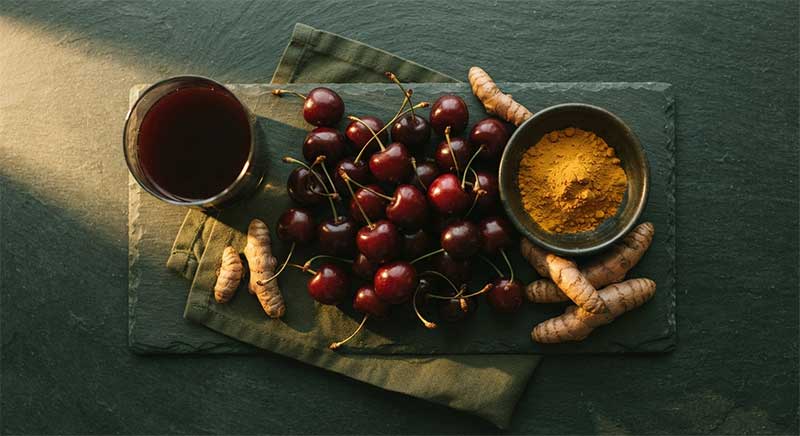
TrialsHealthy Adults
mg/dayA 180-Fold Dose Range
StudiesFound Significant DOMS Reduction
Curcumin: Good Evidence, Unresolved Bioavailability Question
Curcumin, the primary active compound in turmeric, has accumulated a genuinely more internally consistent evidence base than tart cherry for exercise recovery specifically - but it comes with its own distinct, underappreciated wrinkle that's worth understanding before buying a specific product.
Meta-Analysis: Reduced Soreness and CK
A meta-analysis of 14 articles found curcumin supplementation significantly reduced both muscle soreness ratings and blood creatine kinase (CK), a standard marker of muscle damage, following intense exercise - among the more consistent recovery-supplement findings covered in this article.
Better Absorption, Unconfirmed Outcome Benefit
Curcumin has notoriously poor absorption on its own, and piperine (black pepper extract) reliably increases its bioavailability by a large margin. But a dedicated review of curcumin and DOMS specifically found it remains unclear whether piperine co-supplementation actually improves the soreness-reduction outcome - some trials found benefits from curcumin without piperine at all.
This is a subtler version of the dosing problem running through this whole article: it's tempting to assume "more bioavailable" automatically means "more effective for the outcome you care about," but that's an assumption, not a confirmed finding, specifically for curcumin and muscle soreness. A typical effective protocol in published trials uses 500mg to 1g of curcumin, often with piperine, taken twice daily starting one to two days before a known hard training session and continuing two to three days afterward - timed to cover the period when muscle damage and inflammation peak. If you use a piperine-free, high-bioavailability formulation (such as nanoparticle-encapsulated curcumin) instead, you're using a different, less-studied delivery method for this specific application, even though the underlying compound is the same.
The Recovery Paradox: When Feeling Less Sore Means Adapting Less
This is the section of the article that most directly earns the skepticism this site tries to bring to every claim, because it applies to two of the most popular recovery habits in gyms everywhere - and the honest answer is genuinely uncomfortable for anyone who's built a recovery routine around them.

Cold water immersion genuinely does reduce perceived soreness and speed up short-term recovery of strength and jump performance after a single session - that part of its reputation is real. But a systematic review and meta-analysis of 9 studies found consistent evidence that regular post-training cold water immersion blunts long-term muscle hypertrophy from resistance training, likely by suppressing the same anabolic signaling, satellite cell activity, and muscle protein synthesis pathways that drive growth in the first place. Notably, this attenuation appears specific to muscle size - some of the same research found strength gains were less consistently affected than hypertrophy, suggesting the mechanism doesn't uniformly block every type of adaptation. The practical implication most researchers now suggest: reserve ice baths for competition periods or weeks of intensified training where next-day performance matters more than long-term growth, and avoid them after sessions specifically aimed at building muscle.
NSAIDs like ibuprofen work by inhibiting COX enzymes - the same enzymes muscles rely on during the inflammatory signaling that helps drive adaptation to training. Controlled trials found that 1,200mg/day of ibuprofen (the maximum standard over-the-counter dose) measurably reduced strength and hypertrophy gains over 8 weeks of resistance training compared to a low dose of aspirin, and separately, chronic daily ibuprofen use has been shown to inhibit satellite cell proliferation for up to 8 days after intense eccentric exercise. Critically, this appears to be a dose- and frequency-dependent effect: lower doses, and use limited specifically to training days rather than continuous daily use, have not shown the same measurable impact on long-term muscle adaptation in the studies that examined this distinction. Occasional use for genuine pain is a different situation than a daily maximum-dose habit built around managing routine training soreness.
A Practical Approach
Building a Recovery Stack That Matches the Evidence
Dosing
| Supplement | Typical Studied Protocol | Notes |
|---|---|---|
| Protein (daily total) | ~1.6g/kg body weight/day, 3-5 meals | Total daily intake matters far more than post-workout timing specifically |
| Creatine (recovery-specific benefit) | 3-5g/day, ongoing (28+ day loading before benefit appears) | Same dose as standard strength/power protocols; requires consistent daily use |
| Tart cherry (Montmorency) | ~500-800mg/day standardized anthocyanins, started several days pre-exercise | Studied doses range 15.4-2,760mg/day across trials; no confirmed optimal dose |
| Curcumin | 500mg-1g, twice daily, starting 1-2 days before exercise | Often combined with piperine for absorption; outcome benefit of piperine specifically unconfirmed |
Creatine has an extensive long-term safety record; those with pre-existing kidney disease should discuss use with a physician first. Tart cherry is generally very well tolerated; mild GI upset is possible at high doses. Curcumin can cause mild GI upset at high doses and may increase bleeding risk in combination with blood-thinning medication; piperine can affect the metabolism of certain drugs by inhibiting liver enzymes, so check for interactions if taking prescription medication. Chronic daily maximum-dose NSAID use (ibuprofen) carries known cardiovascular and gastrointestinal risks independent of its effects on muscle adaptation discussed above - occasional use for genuine pain is a different risk profile than a routine daily habit.
What It Stacks Well With
Consistent Daily Protein
The single highest-leverage factor in this entire article - matters more than any specific timing or supplement.
A Month of Prior Creatine Loading
The actual protocol behind creatine's recovery-specific evidence, not a same-day dose.
Tart Cherry, Started Early
Trials showing benefit generally started supplementation several days before the hard session, not just after.
Curcumin, Timed Around Known Hard Sessions
Most effective protocols bracket the exercise bout rather than starting the day of.
Ice Baths (Save for Competition Weeks)
Genuinely useful for short-term performance recovery, at a real cost to long-term hypertrophy if used routinely.
Daily Max-Dose Ibuprofen (Avoid as Routine)
A documented, dose-dependent trade-off against the adaptation you're training for.