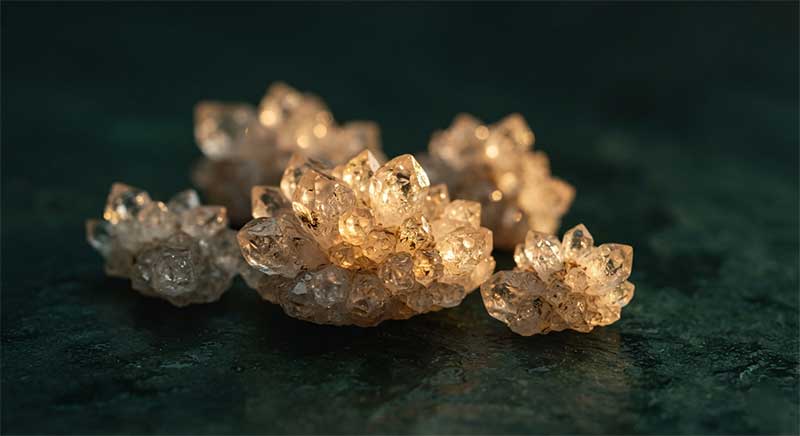
Boron doesn't get the viral attention that shilajit or tongkat ali attract, and that's part of what makes it worth examining closely - it occupies a strange middle ground in the supplement world, quietly recommended in testosterone-support stacks and bone-health formulas without ever becoming the headline ingredient, while carrying a genuinely unusual regulatory story that almost nobody discusses. It's an element more commonly associated with fiberglass manufacturing and industrial ceramics than with human nutrition, and it isn't even formally classified as an essential nutrient by most regulatory bodies - meaning no official body has confirmed the human body has a specific, indispensable biological need for it, even though a growing body of research suggests it plays a real, beneficial role in several physiological processes anyway.
That ambiguous status - present in the diet, plausibly beneficial, but not formally essential - turns out to be exactly the kind of situation where regulatory bodies genuinely struggle to agree, and boron's safety limits are a clean, almost textbook illustration of what that disagreement looks like when you trace it back to its source.

Three Numbers, One Mineral, No Human Data to Settle It
If you look up "boron upper limit" across different national and regional health authorities, you'll find genuinely different numbers, not a rounding difference or a translation quirk between agencies using slightly different methodology on the same underlying evidence.
It's worth being clear about what this disagreement doesn't mean. It doesn't mean boron is dangerous at typical supplemental doses, and it doesn't mean any of the three bodies got the science wrong. It means the honest, evidence-based position is that nobody has pinned down boron's precise long-term human safety ceiling with confidence - and a spread this wide between credible regulators is itself useful information, telling you to treat any single cited "safe limit" with the same caution the regulators themselves are applying.

The Testosterone Claim, Traced Back to Eight Men and One Week
Boron's popularity in men's health supplement stacks rests almost entirely on its proposed hormonal effects - specifically, the claim that it lowers sex hormone-binding globulin (SHBG) and raises free testosterone. This claim has a real study behind it. It's just a much smaller and shorter study than the confidence of the marketing built on top of it would suggest.
The Foundational Testosterone Study
A 2011 study gave approximately 10mg of boron per day to 8 healthy men for one week, reporting a significant decrease in SHBG and an approximately 28% increase in free testosterone alongside reduced estradiol. This is a real, published, frequently cited result - from a sample size smaller than most people's immediate family.
The Original 1987 "Landmark" Study
Nielsen's often-cited depletion-repletion study found boron repletion at 3mg/day markedly elevated estradiol and testosterone in postmenopausal women compared to a low-boron condition - genuinely foundational to the field, but conducted in just 12 women.
Gene Expression in Isolated Human Cells
Some of the mechanistic evidence for boron's hormonal effects comes from studies on isolated human cells in a lab dish, not from people - suggestive of a plausible pathway, but a different and much weaker category of evidence than a human trial.
The Honest Summary
Across the available small studies, the direction of the evidence is consistently positive - higher free testosterone, lower estradiol, reduced inflammatory markers - and the underlying mechanism is biologically plausible. But "consistently positive across several very small, short studies" is a meaningfully different evidentiary standard than "well-established," and it's worth holding that distinction clearly rather than letting the confident tone of most marketing copy blur it.
None of this means boron doesn't affect hormones in the way these studies suggest - the consistency across several small studies, using a plausible mechanism, is genuinely more reassuring than a single isolated result would be. But it does mean boron belongs in a specific, honest evidentiary tier: better supported than an unproven hype ingredient with zero human data behind it, but well short of a large, well-replicated, long-duration trial base. It's a reasonable, low-cost thing to try for someone interested in supporting testosterone through diet and lifestyle changes - not a replacement for addressing the fundamentals of sleep, training, and body composition, and not something to expect dramatic, guaranteed results from based on a single week-long study in eight men.
The Dose-Response Curve Worth Taking Seriously
Separate from the question of whether boron helps, there's a genuine safety signal worth understanding on its own terms, because it follows a pattern this site has flagged before in other contexts - most recently with fadogia agrestis, though the underlying story here is considerably less alarming given how much more established and dietarily normal boron already is.
A systematic review examining boron's effects on sperm quality and testicular tissue across sixteen animal studies found a genuinely dose-dependent pattern: at certain doses (17.5-70mg per kilogram of body weight over 8 weeks in the reviewed studies), some research showed improved measures of spermatogenesis - better sperm movement, concentration, and total volume - while other studies, generally at higher doses, showed clear, dose-dependent reproductive toxicity in the same tissue. The reviewers explicitly noted the conflicting results reflect a real dose-threshold effect rather than simple inconsistency between studies, and called for clearer dosing guidelines as a result.
The reassuring context here matters: the animal doses associated with toxicity in that review are far above what any human supplement protocol uses, and the regulatory upper limits discussed earlier were specifically set using this category of animal data as their reference point, precisely to keep human exposure well below the range where reproductive toxicity emerges. This isn't a reason to treat boron as broadly dangerous - it's a reason to respect the upper limits that exist, even though they disagree with each other by a factor of three, rather than assuming that if a little boron helps testosterone, a lot more will help proportionally more.
A Practical Quality Checklist
Before You Buy a Boron Supplement
Dosing
| Purpose | Typical Dose | Notes |
|---|---|---|
| Ordinary dietary intake | 1 - 3mg/day | Typical intake from apples, nuts, prunes, avocados, and coffee, without supplementation |
| Bone health / mineral metabolism (as studied) | 3mg/day | Reflects the dose used in the original Nielsen depletion-repletion research |
| Hormonal support (as studied) | 6 - 10mg/day, short-term | Reflects the dose used in the small testosterone/SHBG studies - most human research has not tested durations beyond several weeks |
At the doses commonly used in supplementation (3-10mg/day), boron has a favorable safety record with minimal reported side effects - it's frequently compared to table salt in terms of everyday dietary safety. The three regulatory upper limits discussed above (6-20mg/day) all sit above typical supplemental use, but the spread between them reflects genuine scientific uncertainty rather than settled consensus, so staying toward the lower, more conservative end is a reasonable default. Avoid boron supplementation during pregnancy given the animal-derived developmental toxicity data underlying every existing regulatory limit. Acute boron poisoning (from boric acid, an industrial and pesticide-related compound rather than dietary boron) is a distinct and much higher-dose phenomenon, requiring exposure far beyond anything found in a standard supplement.
What It Stacks Well With
Vitamin D
Boron may support vitamin D status, and vitamin D correction has itself been linked to modest testosterone improvements in deficient men - a genuinely complementary pairing.
Magnesium and Calcium
Boron reduces urinary losses of calcium and magnesium, particularly relevant when dietary magnesium intake is already low - a supporting role in bone mineral metabolism.
Zinc
Both are commonly included in testosterone-support stacks - see our zinc guide for the more established side of that combination.
High, Sustained Doses (Caution)
The dose-dependent reproductive toxicity signal in animal research is a real reason to avoid exceeding commonly studied ranges without a specific clinical reason.
Pregnancy (Caution)
Every existing regulatory safety limit for boron is anchored to fetal developmental toxicity data - avoid supplementation during pregnancy specifically.
Boric Acid / Industrial Sources (Caution)
Don't confuse dietary boron supplementation with boric acid exposure from industrial, pesticide, or cleaning products - a distinct and much more hazardous exposure category.