Biotin was discovered in the 1930s, largely because researchers noticed that rats fed a diet containing large amounts of raw egg whites developed a distinctive pattern of skin lesions, hair loss, and neurological symptoms - the classic signs of biotin deficiency. The culprit was avidin, a protein in raw egg whites that binds biotin so tightly that it prevents the vitamin from being absorbed.
This historical discovery set the stage for biotin's modern reputation. The vitamin is genuinely essential - biotin serves as a cofactor for five carboxylase enzymes that are critical for fatty acid synthesis, gluconeogenesis, and the breakdown of certain amino acids. But the leap from "essential" to "must supplement with high doses" is where the evidence often gets shaky.

The Essential Role: What Biotin Actually Does
Biotin's primary role is as a cofactor for five mammalian carboxylase enzymes:
- Acetyl-CoA carboxylase (ACC1 and ACC2): Catalyzes the first committed step in fatty acid synthesis (ACC1) and regulates fatty acid oxidation (ACC2)
- Pyruvate carboxylase (PC): Converts pyruvate to oxaloacetate, a critical step in gluconeogenesis and the Krebs cycle
- Propionyl-CoA carboxylase (PCC): Involved in the metabolism of certain amino acids and odd-chain fatty acids
- 3-methylcrotonyl-CoA carboxylase (MCC): Breaks down leucine, an essential amino acid
These enzymes are central to energy metabolism and the synthesis of building blocks for cell membranes and signaling molecules. Biotin deficiency therefore impacts multiple organ systems - the skin, nervous system, and immune function are particularly vulnerable.
UncontrolledCase Series
LabelNails, 1993
The Avidin Story: When Food Bites Back
Raw egg whites contain avidin, a protein that binds biotin with remarkable affinity (Kd ≈ 10⁻¹⁵ M, one of the highest known non-covalent binding affinities in biology). When you eat a raw egg white, avidin binds to biotin in your digestive tract and prevents its absorption. This is the only common dietary mechanism that causes biotin deficiency in otherwise well-nourished people.
You would need to consume raw egg whites daily for several weeks to months to develop clinically significant biotin deficiency - one raw egg in a smoothie isn't going to do it. Cooking egg whites denatures avidin (egg white becomes solid), rendering it harmless and allowing biotin absorption from the yolk. The real risk population is people on raw-food diets or bodybuilders consuming large quantities of raw egg whites chronically.

Dietary Sources: Nature's Biotin Pills Are Already on Your Plate
Biotin is widely distributed in foods, with some of the richest sources being:
| Food | Biotin Content (µg per 100g) | Notes |
|---|---|---|
| Egg yolk (cooked) | ~50-60 µg | One large egg yolk provides about 5-10 µg, or ~15-30% of the RDA |
| Cooked salmon | ~5-8 µg | Excellent source, with ~20-30% of RDA per 100g serving |
| Almonds | ~4-6 µg | A good plant-based source, also rich in vitamin E |
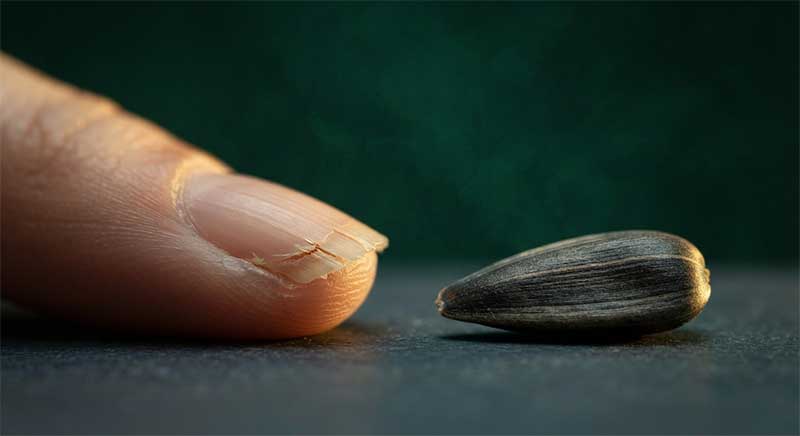
| Sunflower seeds | ~4-5 µg | Another good plant-based option |
| Cooked sweet potato | ~2-3 µg | A modest but meaningful source |
| Cauliflower | ~1-2 µg | One of the few vegetables with measurable biotin content |
The RDA for biotin is 30 µg/day for adults, which is easily met through a varied diet. A single cooked egg, 100g of salmon, or a handful of almonds already covers a substantial portion of the requirement. The Western diet typically provides 40-80 µg/day without any supplementation at all.
Deficiency: Genuinely Rare (But Real)
Clinically significant biotin deficiency is rare in healthy people. Risk factors include:
- Chronic raw egg white consumption - the classic dietary cause, often in raw-food enthusiasts or bodybuilders
- Genetic disorders - biotinidase deficiency (autosomal recessive) or holocarboxylase synthetase deficiency, both of which impair biotin recycling or utilization
- Prolonged parenteral nutrition - IV feeding without adequate biotin supplementation
- Intestinal malabsorption - conditions like Crohn's disease or short bowel syndrome
- Anticonvulsant medications - certain anti-epileptic drugs (e.g., valproic acid, carbamazepine) can lower biotin levels over time
- Pregnancy and lactation - requirements increase modestly, and marginal deficiency has been suggested but is rarely clinically apparent
Symptoms of deficiency include:
- Skin: Scaly, red dermatitis, often around the eyes, nose, and mouth (similar to zinc deficiency)
- Hair: Thinning hair, and in severe cases, total hair loss (alopecia)
- Neurological: Lethargy, depression, hallucinations, and in severe cases, ataxia and seizures (especially in infants with genetic disorders)
- Other: Conjunctivitis, loss of appetite, and in infants, hypotonia (weak muscle tone)
Biotinidase deficiency is a rare inherited disorder (estimated 1 in 60,000-120,000 births) that prevents the body from recycling biotin from its own enzymes. Without treatment, it causes progressive neurological deterioration, seizures, skin rashes, and hearing loss. Newborn screening for biotinidase deficiency is standard in the US and many other countries, and treatment with pharmacological biotin doses (5,000-20,000 µg/day orally) typically results in excellent outcomes when started early. This is the one population where high-dose biotin supplementation is unambiguously life-saving and well-supported by evidence.
High-Dose Supplementation: What's the Evidence Actually For?
The biotin supplement market is enormous, with doses often ranging from 1,000 µg (1 mg) to 10,000 µg (10 mg) per capsule - orders of magnitude above the 30 µg RDA. These products are marketed for:
Hair Growth / Thickness
Several uncontrolled case series and anecdotal reports suggest biotin improves hair growth - but no high-quality RCTs demonstrate benefit in healthy individuals. The only controlled data showing benefit are in patients with proven biotin deficiency or specific conditions (like uncombable hair syndrome), not in normal people.
Brittle Nails
The most-cited nail studies (including Hochman et al., 1993, n=35) reported improved nail thickness and splitting with 2.5mg/day biotin for 6-12 months - but both were open-label with no placebo or control group. Promising direction, not controlled evidence.
Progressive Multiple Sclerosis
A phase 3 RCT (n=642) tested 300mg/day of pharmaceutical-grade biotin against placebo, following a smaller pilot trial that suggested benefit. The confirmatory trial found no significant improvement in disability, and caused real lab-test interference - the clearest example of high-dose biotin actually meeting a rigorous placebo control.
"Metabolic Support" / Weight Loss
Biotin's role in fatty acid and carbohydrate metabolism has led to marketing claims about weight loss and "metabolic support." There is no clinical trial data demonstrating that biotin supplementation causes weight loss or meaningfully alters metabolism in healthy, well-nourished people.
Biotinidase Deficiency
Pharmacological biotin (5-20 mg/day) is the definitive, life-saving treatment for this rare genetic disorder. This is the one use case with unequivocal, high-quality evidence, and it's also the context where supplementation is medically necessary.
Biotin supplementation is genuinely life-saving for people with biotinidase deficiency or other genetic disorders of biotin metabolism. For everyone else - healthy people without documented deficiency - the evidence that high-dose biotin improves hair, skin, or nails is thin and almost entirely uncontrolled. The entire commercial market for high-dose biotin is built on a logical leap from "deficiency causes symptoms" to "more biotin fixes non-deficient people," which is a logical error that doesn't hold up in real data - and the one time this category of claim got a genuinely rigorous test, in progressive MS, it failed. If you have brittle nails, a trial of 2.5mg/day for 6-12 months is reasonable based on open-label data, with realistic expectations about the evidence quality. If you're expecting high-dose biotin to transform your hair, the evidence does not support that expectation.
Safety: One of the Safest Vitamins (But With a Catch)
Biotin has no established upper intake level, and doses up to 10,000 µg/day are generally considered safe in healthy adults. The vitamin is water-soluble, and excess is excreted in urine. There is no evidence of significant toxicity at any dose tested.
High-dose biotin (often >5,000 µg/day) can interfere with certain immunoassays used in clinical laboratory tests, including thyroid hormone assays (TSH, T4, T3), troponin (used for heart attack diagnosis), and other hormone and cardiac markers. This has led to false results and misdiagnoses in patients taking high-dose biotin supplements. The FDA and European medical societies have issued warnings about this issue, and it's a genuine risk for people taking high-dose biotin before clinical blood tests. If you're taking biotin >1,000 µg/day, always inform your healthcare provider before having blood tests.
A Practical Quality Checklist
Before You Buy Any Biotin Supplement
Dosing
| Purpose | Typical Dose | Notes |
|---|---|---|
| General maintenance / RDA | 30 µg/day | Easily met through a varied diet; no supplementation needed for most healthy adults |
| Brittle nails (as studied) | 2.5 mg/day (2,500 µg) | Based on open-label studies (no placebo group) - a personal trial is reasonable, but the evidence quality is weaker than often presented |
| Hair / skin "general support" | No evidence-based dose | No RCT data supports benefit in healthy people - supplementation is not recommended |
| Biotinidase deficiency (medical) | 5 - 20 mg/day (5,000-20,000 µg) | Prescribed medical treatment for diagnosed genetic disorders - not for general use |
Biotin is remarkably safe with no established upper limit and no significant toxicity documented. The main risk is not toxicity but interference with clinical laboratory assays - always inform your healthcare provider if you are taking biotin >1,000 µg/day before blood tests. Biotin does not interact with medications in a clinically significant way at typical supplemental doses.
What It Stacks Well With
B-Complex (All B Vitamins)
Biotin is often included in B-complex formulations, and there's no reason to supplement biotin in isolation for general health - a B-complex is more comprehensive and typically more evidence-based.
Cooked Egg Yolks (Food)
Cooked egg yolks are a rich source of biotin, with avidin denatured by cooking, making the biotin fully available. One egg yolk per day can meaningfully contribute to biotin intake.
Raw Egg Whites (Caution)
Avoid consuming raw egg whites chronically - avidin binds biotin and prevents absorption. Cooking egg whites denatures avidin and eliminates this risk.
Anticonvulsant Drugs (Caution)
Medications like valproic acid and carbamazepine can lower biotin levels over time - if you're on these drugs, discuss biotin status with your healthcare provider.
Unverified "Hair Growth" Marketing (Caution)
Be highly skeptical of biotin products that promise dramatic hair, skin, or nail improvements - the evidence for these claims in healthy people is essentially absent.
High-Dose Biotin Before Blood Tests (Caution)
Always inform your healthcare provider if you are taking biotin >1,000 µg/day before having blood tests - interference with immunoassays is a well-documented risk.